


If your smart home feels like a folder full of orphaned apps, you’re not alone. A new framework called Copilot Star is pitching a fix: one app experience that can reach across brands, device types, and cloud back ends without forcing you to juggle a dozen logins.
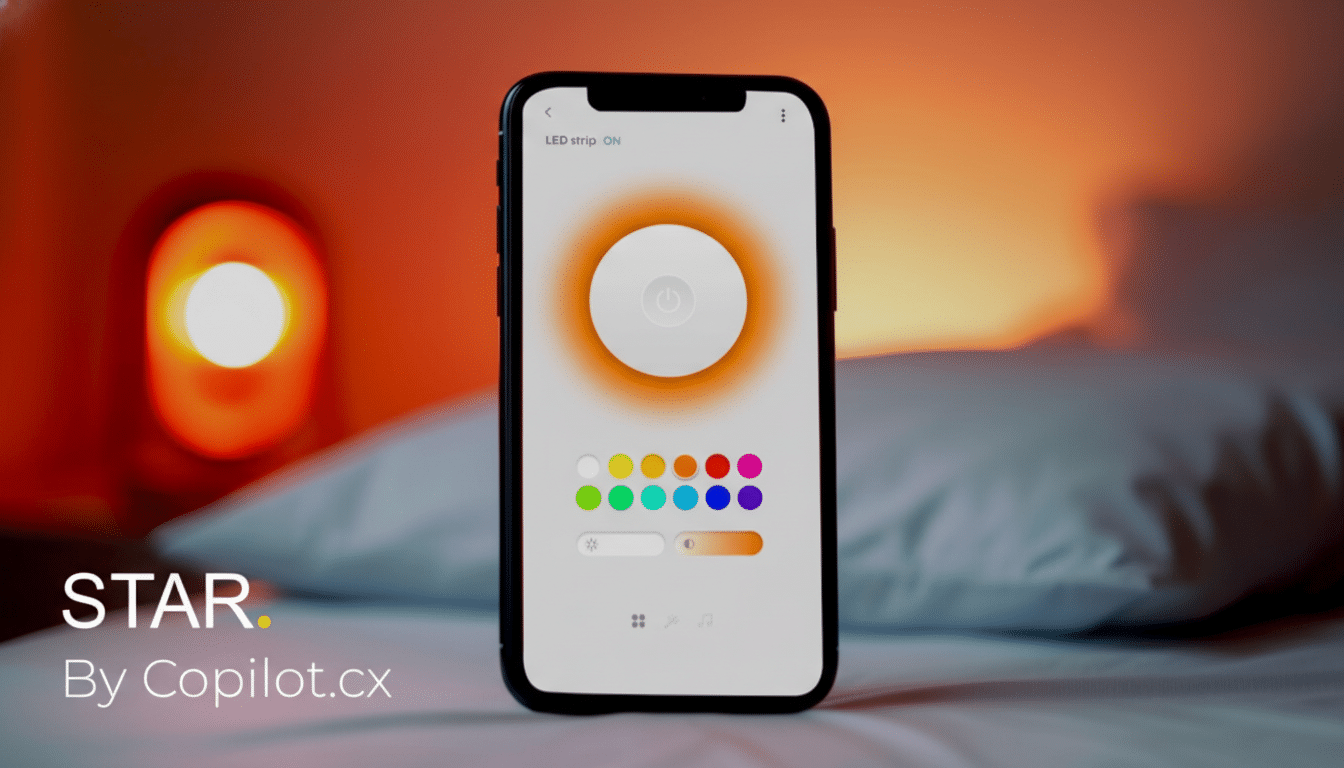
Unveiled at CES by IoT software firm Copilot.cx, Copilot Star is designed as a white-label framework that lets manufacturers ship their own branded app while still giving users a single pane of glass for lights, sensors, cameras, thermostats, and more—even when those products run on different platforms.
Why Smart Home App Fatigue Still Persists For Consumers
Interoperability has improved with Matter, the industry standard stewarded by the Connectivity Standards Alliance, but many homes still rely on older devices, cloud-only products, or categories that are only partially supported. That leaves consumers bouncing among vendor apps, platform apps, and third-party tools.
Parks Associates estimates that roughly half of U.S. internet households own at least one smart home device, and the typical household mixes two to four brands. Fragmentation at that scale magnifies setup friction, support complexity, and abandoned features.
How Copilot Star Works Across Devices And Clouds
Copilot Star is not another ecosystem. It’s an app framework that manufacturers use to build their own applications on a common foundation. Under the hood, it can talk to multiple device clouds and protocols—think Tuya, AWS IoT, and proprietary stacks—then present them in a unified app experience.
In practice, a brand selling a Matter-certified light bulb, a legacy Zigbee sensor via a cloud bridge, a Wi-Fi camera on a proprietary service, and a thermostat tied to a different provider could ship one app that discovers, onboards, and controls all of them. For the consumer, adding another brand’s gear doesn’t mean adding another app; the Copilot-powered app expands to include it.
Copilot.cx says this approach also supports multi-tenant retail scenarios—think store-branded smart bundles—without rewriting the entire software stack for each hardware mix.
What It Means For Smart Home Brands And Retailers
Developing and maintaining high-quality mobile apps is expensive. By standardizing common functions like onboarding, secure authentication, over-the-air updates, and cross-brand control, Copilot Star aims to cut time-to-market and reduce support burdens. Manufacturers retain their branding and direct relationship with customers, instead of deferring the experience entirely to a platform app.
Retailers stand to benefit from simpler merchandising: curated bundles that actually work together out of the box. According to Copilot.cx, that coherence translates into fewer returns and clearer upsell paths, long-standing sore spots in connected-home aisles.
Matter And Copilot Star Are Complementary
Matter defines how devices securely communicate, pair, and interoperate with ecosystems like Apple Home, Amazon Alexa, and Google Home. It enables a bulb from one brand to show up in multiple platforms simultaneously. What Matter doesn’t do is replace vendor mobile apps, which still handle advanced settings, firmware tools, and specialized controls.
Copilot Star targets that app layer. Where Matter reduces protocol chaos, Copilot Star reduces app sprawl. The two can coexist: a device can speak Matter for control and presence in major ecosystems while also surfacing full-featured management through a Copilot-built app.
It’s worth noting alternatives: Home Assistant, for example, aggregates disparate devices locally for power users. Copilot Star differs by focusing on OEM-branded apps, retail scale, and commercial support rather than DIY integration.
Security And Privacy Questions For Unified Apps
Any framework that bridges multiple clouds needs rigorous security. Buyers should look for standards-based auth, end-to-end encryption, transparent data practices, and clear account-linking controls. Independent validation—such as compliance with ISO/IEC 27001 or SOC 2 for cloud operations—would add confidence.
There’s also the data stewardship angle. Consolidating device control consolidates telemetry, so brands using Copilot Star should articulate how diagnostic data, usage patterns, and video streams (for cameras) are stored and shared. Privacy-forward defaults and granular opt-ins will be key to consumer trust.
The Road Ahead For Copilot Star And Smart Homes
Copilot.cx is courting manufacturers and platform providers now, with partnerships likely to determine how quickly consumers feel the impact. Watch for early pilots in multi-category brands and retailer-exclusive kits, where app consolidation delivers immediate value.
The smart home won’t shed every app overnight. But if frameworks like Copilot Star gain traction alongside expanding Matter support, the balance could shift from juggling to simplicity—finally making the promise of “it just works” feel routine, not aspirational.
