


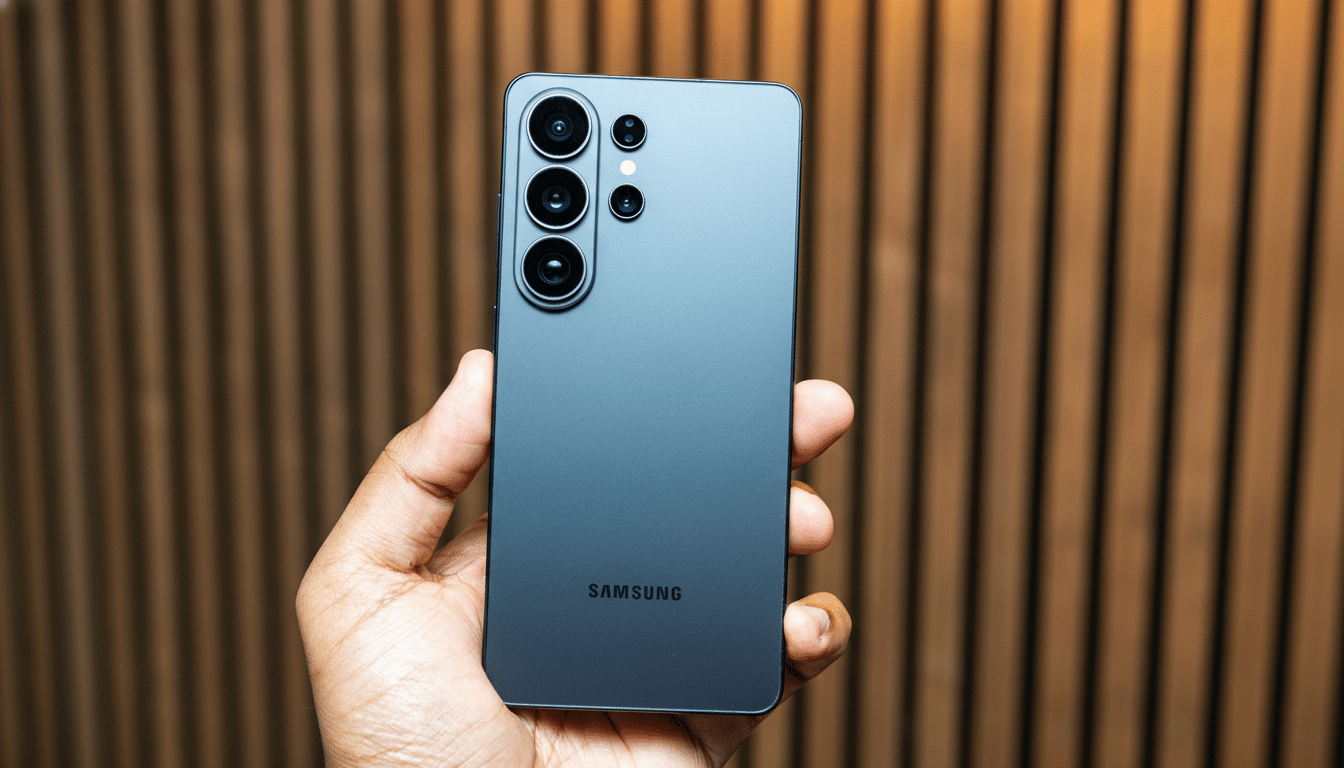
The average smartphone now carries a larger battery than Samsung’s Galaxy S26 Ultra. Fresh analysis from Counterpoint Research pegs the global mean capacity at 5,291mAh in January 2026, a year-on-year jump of about 400mAh and the steepest annual rise since late 2021. That milestone nudges the typical handset past the S26 Ultra’s 5,000mAh pack and signals a decisive shift in what buyers can expect from endurance out of the box.
Two forces are pushing the curve upward: more models shipping with 6,000mAh or larger batteries, and a fast-spreading move to silicon-carbon chemistry that squeezes extra energy into familiar phone dimensions. Put simply, capacity is climbing not because phones are suddenly bricks, but because the chemistry inside is getting smarter.
Silicon Carbon Cells Push Capacities Higher
HONOR was the first big-name brand to go all-in on silicon-carbon batteries, and rivals quickly followed. Xiaomi, OPPO, OnePlus, and vivo have each shipped models using high-silicon anode blends that are often cited for delivering double-digit gains in energy density over traditional graphite-based cells, especially at lower states of charge.
Counterpoint’s device tracker highlights how fast this has scaled. The best-selling phone with a 6,000mAh or larger pack was the Redmi 15C 4G, which relies on a conventional lithium-ion cell. On the bleeding edge, the HONOR X70 5G landed with a massive 8,300mAh battery. Six of the ten top-capacity devices employed silicon-carbon chemistry, underscoring how quickly the new material set is moving from lab talk to mainstream lineups.
China Leads in Smartphone Battery Capacity Averages
A striking detail in Counterpoint’s findings is how many of the largest-battery phones are China-only. Senior analyst Harshit Rastogi notes that manufacturers typically debut extreme-capacity designs at home, where supply chains, certification pathways, and consumer appetite for long-life devices align. The result is a lead of more than 1,000mAh in China’s average capacity compared with the rest of the world.
There are practical reasons for that gap. Tighter logistics, transport, and certification requirements in Europe and North America slow the rollout of outsized batteries. Carriers and retailers also favor known dimensions and weights, and ultra-thin design priorities linger at the top end. Meanwhile, Chinese buyers have rewarded brands that deliver true multi-day stamina, encouraging bolder capacities.
Flagships Face a New Benchmark as Averages Rise
For years, 5,000mAh was the de facto ceiling for premium flagships. Now the global average has edged past that figure, led by midrange and upper-midrange models that are less constrained by razor-thin frames or elaborate camera stacks. It’s an unusual moment when the “typical” phone outguns a marquee flagship on raw capacity.
The path forward is clear. With silicon-carbon cells, stacked packaging, and smarter thermal management, top-tier phones can raise capacity without adding bulk. The industry will watch closely to see when Samsung, Apple, and Google move beyond conventional graphite cells at scale, especially as high-silicon blends mature and supply from firms like ATL, BYD, and Sunwoda ramps.
Bigger Cells Do Not Guarantee Longer Life
Capacity is only part of the battery-life equation. Processor efficiency, display tech (including LTPO and adaptive refresh), modem behavior on 5G, and software power management can swing real-world results dramatically. A well-optimized 5,000mAh flagship can still outlast a poorly tuned 6,000mAh phone.
Charging strategy matters, too. Pairing huge batteries with aggressive fast charging can elevate heat and accelerate wear unless the charging curve and thermal controls are carefully managed. The better implementations use adaptive charging, granular cell monitoring, and health features that limit overnight stress, aiming to preserve capacity beyond the first year.
What to Watch Next in Smartphone Battery Technology
If silicon-carbon adoption spreads beyond China and into more global flagships, the baseline for all-day and even two-day use will rise quickly. Expect iterative gains from stacked cell architectures and higher-silicon anodes, alongside efficiency wins from next-gen chipsets and displays.
For now, the headline is simple and significant: the average smartphone battery has vaulted past the Galaxy S26 Ultra. That single data point captures a broader consumer shift—one that prioritizes longevity in the hand over millimeters on a spec sheet—and puts enduring pressure on premium phones to keep up.

