Business technology works best when systems support one another rather than operating independently. Yet many organizations still manage audiovisual equipment, network infrastructure, security systems, and data analytics separately. This fragmented approach can create unnecessary expenses, technical problems, and missed opportunities.
Coordinated technology planning helps businesses connect systems more effectively and improve overall performance. When organizations treat technology as a connected environment, they can streamline operations, strengthen security, and make better decisions.
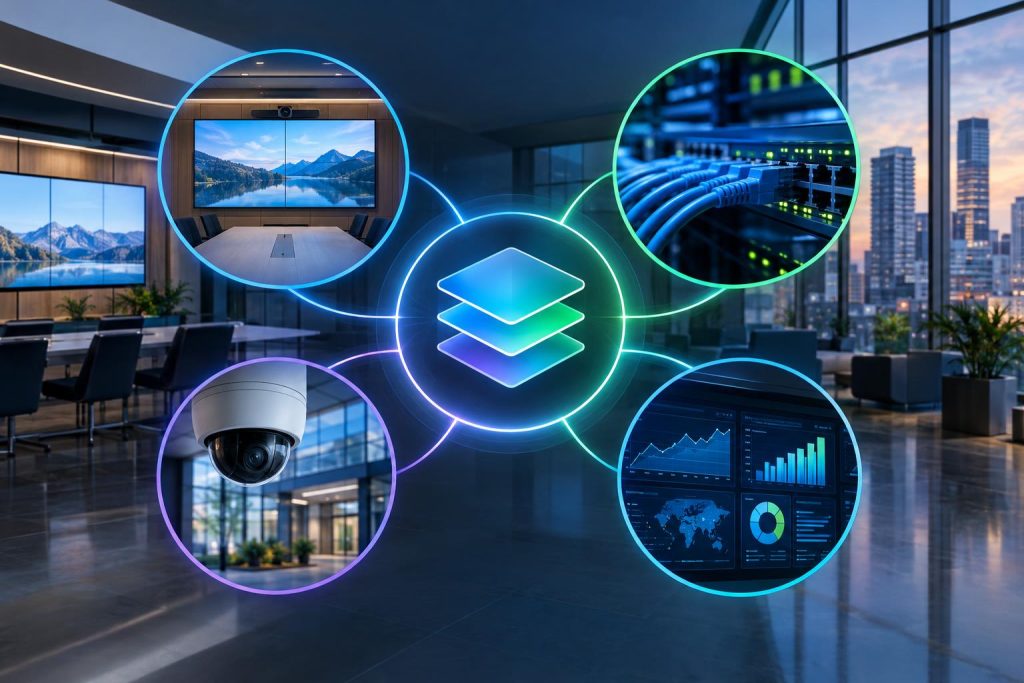
The opportunity is not simply purchasing better equipment. It is building technology infrastructure that supports business goals and delivers lasting value.
Why Integrated Technology Matters for Modern Businesses
Modern workplaces depend on multiple technologies. Video conferencing connects employees across locations. Networks support communication and applications. Security systems protect facilities and sensitive information, while analytics platforms help managers understand performance.
Problems arise when these systems operate independently.
For example, a company might install advanced conference room equipment without considering whether its network supports high-quality video calls. Another organization might upgrade physical security without connecting access controls to broader security policies.
Businesses can address these challenges through integrated technology solutions that connect audiovisual systems, network infrastructure, security capabilities, and analytics into a coordinated environment.
This approach offers several advantages:
- Simplified management: Centralized oversight makes monitoring and troubleshooting easier.
- Improved compatibility: Coordinated planning reduces communication problems between systems.
- Greater efficiency: Connected systems can reduce repetitive administrative work.
- Better scalability: Organizations can plan upgrades around future requirements.
- Consistent experiences: Employees can use familiar tools across different locations.
Integration does not necessarily require replacing existing systems. Organizations can often improve performance by connecting compatible technologies and addressing infrastructure gaps.
How AV, Networking, Security, and Analytics Work Together
Each technology category serves a different purpose. Their combined value becomes clearer when businesses examine how they support one another.
Audiovisual Systems Improve Collaboration
Audiovisual technology includes video conferencing equipment, digital displays, microphones, speakers, and room control systems.
These tools help employees communicate and share information, especially in workplaces that combine in-office and remote participation.
Yet even advanced AV equipment depends on reliable connectivity.
When conference room technology is designed alongside network infrastructure, businesses can account for bandwidth requirements, connection quality, and device management.
This coordination can reduce meeting disruptions and improve collaboration.
Network Infrastructure Provides the Foundation
Networks connect devices, applications, and users across a business.
Without reliable infrastructure, technology investments may struggle to perform.
An integrated network strategy considers wireless coverage, bandwidth, device compatibility, and future capacity.
For example, a growing business might need its network to support additional video conferencing devices, security cameras, and connected building systems.
Planning for these requirements early can prevent expensive upgrades later.
Network design also affects security. Separating sensitive systems from general business traffic can help limit unauthorized access.
Security Protects Connected Operations
As businesses connect more devices, they must consider how those connections affect security.
Physical access controls, surveillance cameras, cybersecurity tools, and network monitoring can support a broader protection strategy.
The National Institute of Standards and Technology’s Cybersecurity Framework identifies six core functions: Govern, Identify, Protect, Detect, Respond, and Recover.
This framework reinforces the value of managing security as an ongoing business process rather than treating it as separate products.
Integrated planning helps organizations establish consistent access policies, identify vulnerabilities, and coordinate responses.
Still, connecting systems does not automatically make them safer. Businesses need secure configurations, regular updates, and clear management responsibilities.
Analytics Turns Technology Into Business Intelligence
Connected technology generates useful operational data.
Meeting room systems may reveal which spaces employees use most frequently. Network monitoring identifies performance problems. Security platforms provide information about access activity and system health.
Analytics tools turn this information into practical insights.
Consider an office building where meeting rooms frequently appear fully booked. Utilization data might reveal that some rooms remain empty despite reservations.
Facility managers could use those findings to adjust booking policies or reconsider future space investments.
The goal is not collecting more data. It is identifying information that supports meaningful decisions while respecting privacy.
Building a Business Case Beyond Equipment Costs
Technology integration should be evaluated as a business investment, not simply an IT project.
A strong business case considers implementation costs alongside operational benefits, risk reduction, and long-term flexibility.
Identify operational problems. Organizations should determine where disconnected technology creates difficulties, such as meeting interruptions, lengthy troubleshooting, inconsistent security controls, or limited visibility into facility usage.
Calculate total ownership costs. Equipment prices represent only part of the investment. Businesses should account for installation, software subscriptions, maintenance, training, support, and future upgrades.
Establish performance indicators. Useful metrics include system downtime, help desk requests, meeting room utilization, maintenance expenses, and incident response times.
Prioritize interoperability. Technology should communicate securely with existing systems. Open standards, supported integrations, and clear vendor documentation help prevent unnecessary limitations. The Cybersecurity and Infrastructure Security Agency (CISA) also recommends network segmentation to improve security and control access between connected systems.
Implement changes gradually. A phased approach allows businesses to test integrations, resolve issues, and evaluate performance before expanding.
Assign clear responsibilities. IT teams, facilities managers, and security personnel should understand who maintains each system and handles problems.
Successful integration depends on technical compatibility and coordinated management.
Connected Technology Is a Smarter Long-Term Investment
The strongest business case for integrated technology is its ability to support multiple organizational priorities through one coordinated strategy.
Reliable AV systems improve communication. Strong networks support productivity. Security measures protect connected operations. Analytics provides information that guides future investments.
When these capabilities work together, businesses can reduce complexity and gain greater control over their technology environments.
Integration requires thoughtful planning, realistic budgets, and ongoing maintenance. Yet organizations that evaluate technology as a connected business asset are better positioned to adapt as their needs change.
The objective is straightforward: make technology easier to manage, more useful for employees, and better aligned with long-term business performance.