


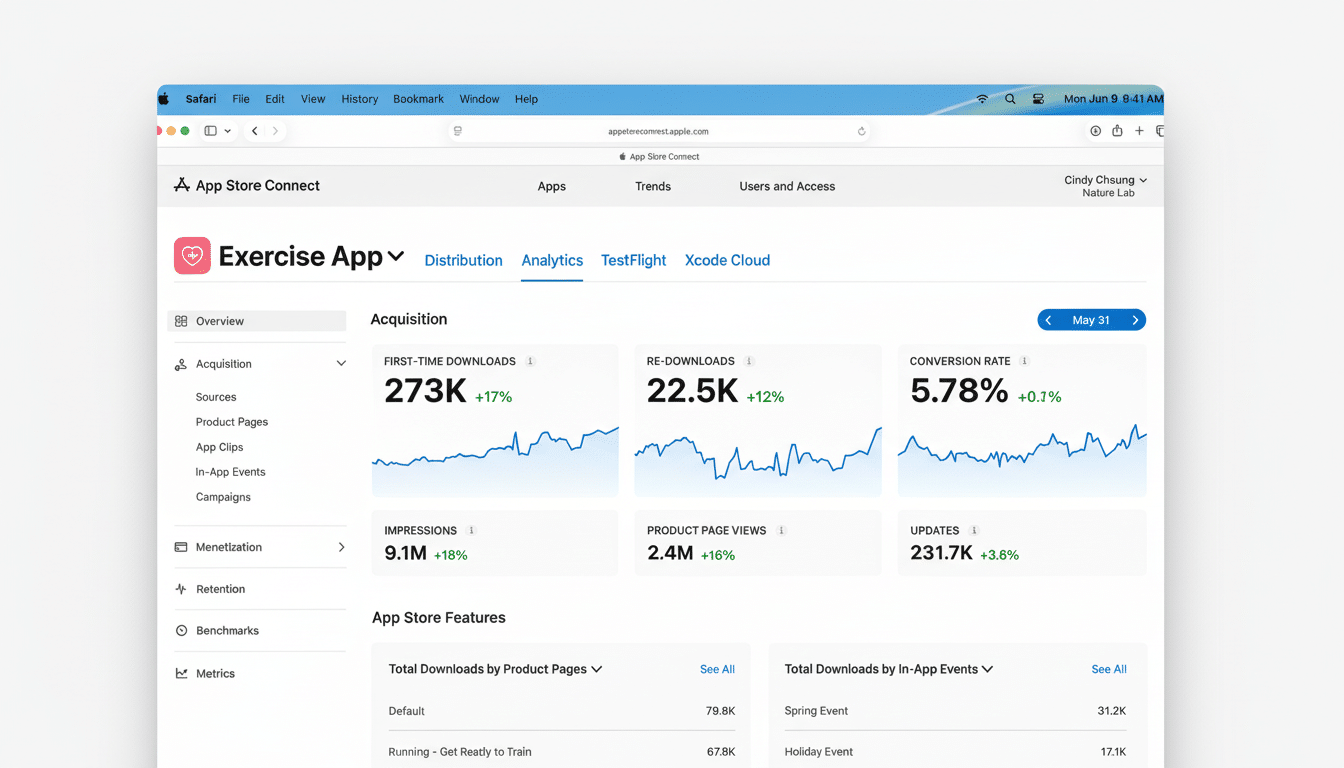
Apple is giving developers a much deeper lens on their businesses, rolling out a major overhaul of App Store Connect that adds more than 100 new first-party metrics, expanded reporting, peer benchmarks, and fresh tools to slice performance data. For app makers who live and die by subscription conversion, retention, and lifetime value, this is the biggest analytics update Apple has delivered in years—and it’s built on Apple’s own transaction and engagement data rather than estimates.
What’s New in App Store Connect and Why It Matters
The update centers on richer monetization and subscription analytics, in-app purchase performance, and offer effectiveness. Developers can now export subscription reports via an API, enabling automated feeds into data warehouses and BI tools for offline analysis. Apple also added peer group benchmarks that compare download-to-paid conversions and proceeds per download against similar apps—critical context for knowing whether a drop is an app-specific issue or a market headwind.
- What’s New in App Store Connect and Why It Matters
- Deeper Cohorts and Smarter Filters for Analysis
- Benchmarks to Calibrate Performance Against Peers
- Privacy Guardrails Remain Intact With Aggregation
- AI Context and Strategic Timing for Apple’s Update
- How Developers Can Use This Now to Drive Growth
- Bottom Line: First-Party Analytics Built for Decisions
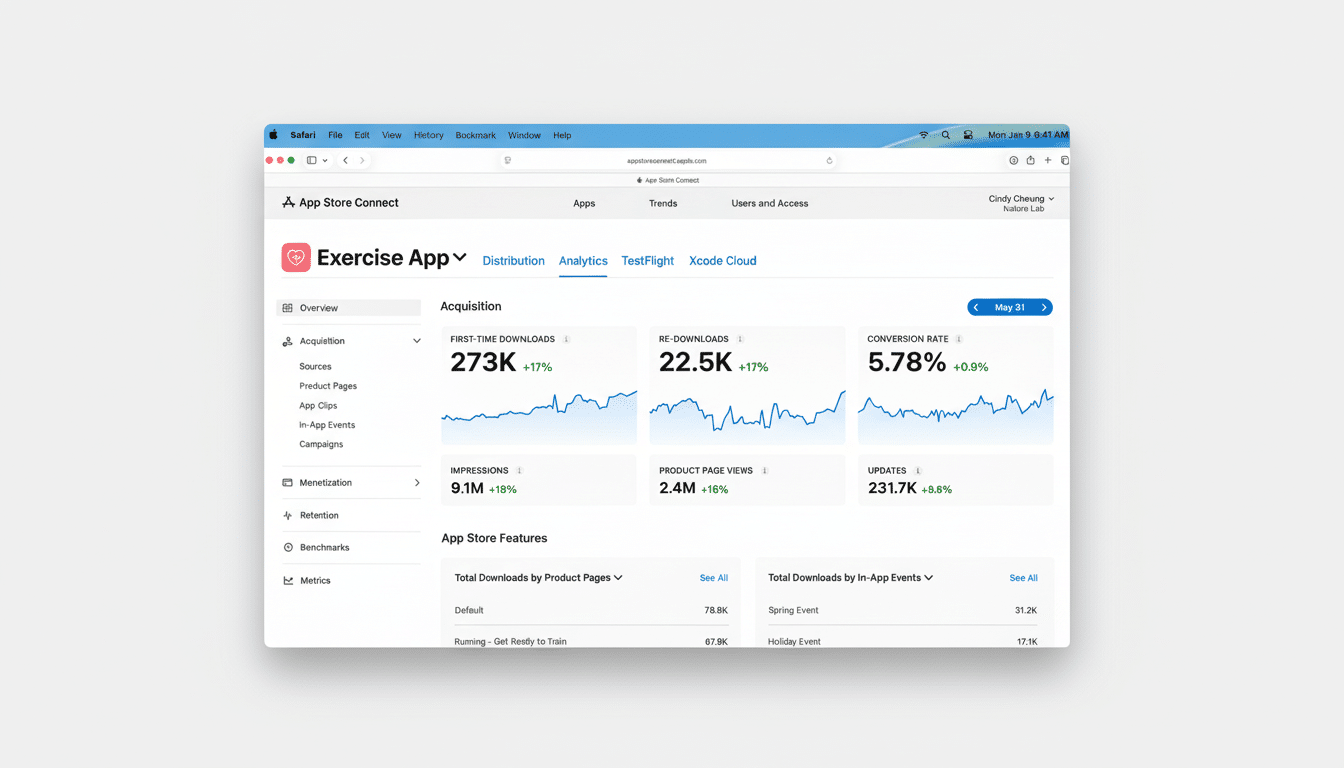
Because these metrics originate from Apple’s back end—not scraped storefront ranks or modeled receipts—they provide ground-truth signals for cohort health, real conversion rates, and proceeds after fees and taxes. That’s a meaningful advantage over third-party intelligence platforms like data.ai and Sensor Tower, which excel at market sizing and competitive research but rely on extrapolated datasets.
Deeper Cohorts and Smarter Filters for Analysis
App Store Connect now allows cohorting by factors such as download date, source, and offer start date, letting teams analyze how specific promotions, geographies, or product changes influenced trial starts, conversions, renewals, and reactivations over time. Apple says developers can apply up to seven filters simultaneously, making it possible to zoom in on, for example, users acquired from a particular campaign during a regional rollout who accepted an introductory offer and then lapsed after a price change.
The practical upshot: growth and product teams can quantify the ROI of paywall variants, win-back discounts, and storefront optimizations with far less guesswork. Pairing these cohorts with exportable reports means you can track billing retry success rates, involuntary churn, seasonality effects, and upgrade paths within your own dashboards without stitching together noisy sources.
Benchmarks to Calibrate Performance Against Peers
Peer group benchmarks are a notable addition. By positioning an app’s download-to-paid conversion and proceeds per download against similar titles, Apple is giving developers a sanity check on whether metrics are above or below category norms. That’s particularly useful for subscription apps that share dynamics—think meditation, fitness, or productivity—where small changes in onboarding or pricing can swing results. While subscription-focused services like RevenueCat offer valuable insights across platforms, Apple’s benchmarks should reflect the App Store’s own taxonomy and transaction records, improving apples-to-apples comparisons.
Privacy Guardrails Remain Intact With Aggregation
Apple emphasizes that aggregated cohort data and differential privacy techniques protect user identities and shield the performance of individual developers. That balance—more granular diagnosis without user-level tracking—follows Apple’s broader privacy posture while still giving teams enough fidelity to make decisions on pricing, packaging, and lifecycle messaging.
AI Context and Strategic Timing for Apple’s Update
The timing is strategic. With AI agents increasingly capable of acting inside apps, the definition of “engagement” is shifting. According to reporting from Bloomberg, Apple is expected to showcase a more capable Siri that can complete tasks within apps at its developer conference. If AI-driven workflows funnel users to specific in-app actions, developers will need first-party telemetry to see how those automations affect trial starts, conversion steps, and revenue. The new App Store Connect suite lays the groundwork for that future by clarifying what happens after an intent is triggered.
How Developers Can Use This Now to Drive Growth
Operationally, teams should stand up the export API and integrate Apple’s reports into their analytics stack, aligning naming with existing mobile attribution and product analytics. Start with three playbooks: measure the lift from new offer variants by cohort, track involuntary churn and billing recovery by territory, and compare download-to-paid performance to peer benchmarks before changing pricing. Use the seven-filter view in App Store Connect to validate findings quickly, then codify successful segments in your CRM and paywall logic.
The broader business case is clear. A study commissioned by Apple and conducted by Analysis Group estimated the App Store facilitated over $1 trillion in billings and sales in 2022. Even small improvements in conversion or retention compound meaningfully at that scale. With first-party metrics, developers can cut through attribution noise, shorten experiment cycles, and defend roadmap priorities with reliable data.
Bottom Line: First-Party Analytics Built for Decisions
Apple’s overhaul of App Store Connect transforms it from a basic dashboard into a decision engine for subscription and in-app purchase businesses. By combining exportable first-party metrics, robust cohorting, and category benchmarks—wrapped in privacy-conscious aggregation—Apple is handing developers the tools to tune growth with precision just as AI begins to reshape how users interact with apps.
Apple has also published a new App Store Analytics Guide inside App Store Connect’s Help section, which is worth a cover-to-cover read. For developers, the message is straightforward: wire the data in, pressure-test your assumptions, and let reliable signals—not gut feel—drive the next set of product and pricing bets.

