


The AI skills gap has arrived, and the divide is widening fastest inside the workplace. A new economic impact report from Anthropic finds no evidence of broad job losses tied to AI so far, yet it shows a sharp split between everyday users and power users who are extracting far greater value—and compounding that advantage over time.
Anthropic’s head of economics, Peter McCrory, says labor markets remain resilient and that workers in AI-exposed roles are not, on average, seeing higher unemployment than peers in less-exposed jobs. But the company’s latest analysis highlights early, uneven effects: younger and entry‑level workers face the greatest risk if they can’t learn to collaborate productively with AI tools.
That caution aligns with warnings from Anthropic CEO Dario Amodei, who has raised the possibility that a large share of entry-level white‑collar roles could be automated within a few years. The message is not that displacement is inevitable, but that adoption patterns—and who masters them—will determine who benefits.
What the New Data Shows About AI Usage and Exposure
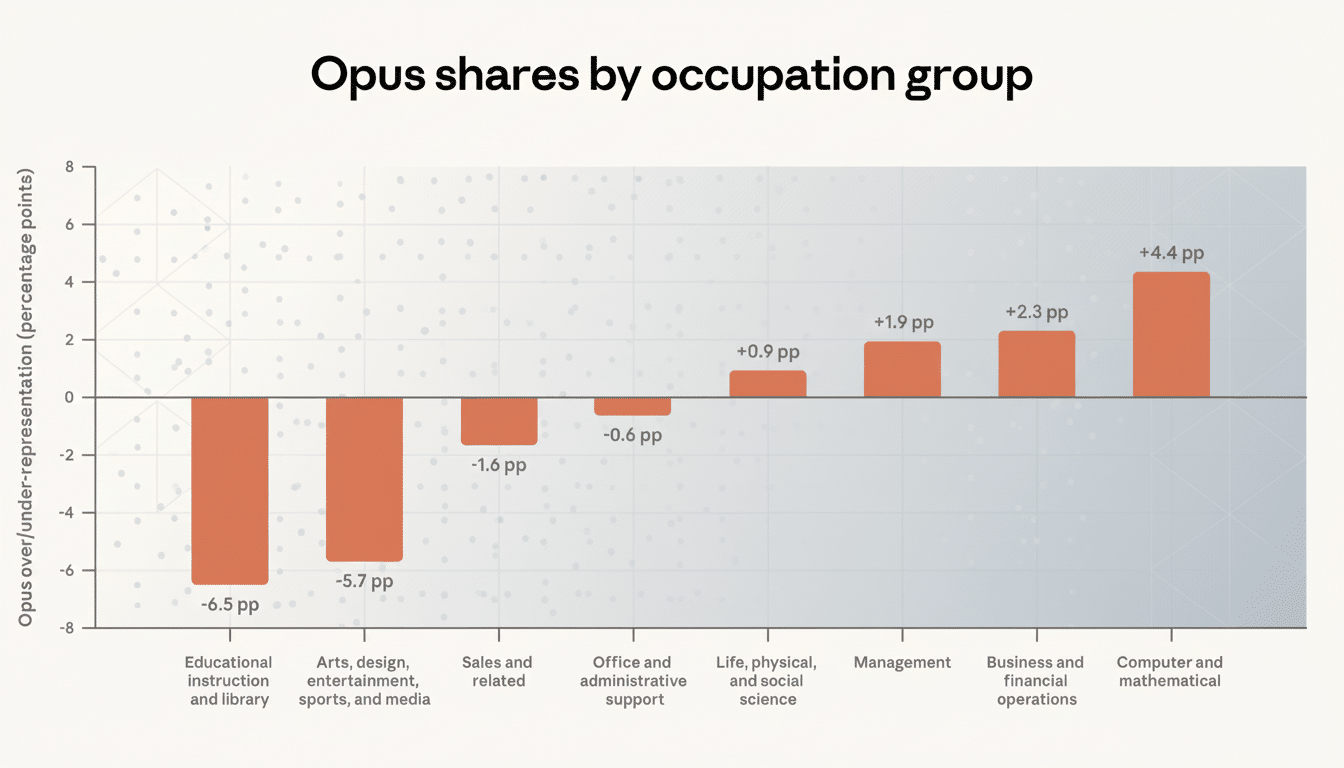
Anthropic mapped jobs by how central AI-capable tasks are to day‑to‑day work. Roles heavy on language, pattern recognition, and digital manipulation—think technical writing, customer support, data entry, and software development—are most exposed. Jobs requiring physical dexterity and in‑person interaction remain less automatable.
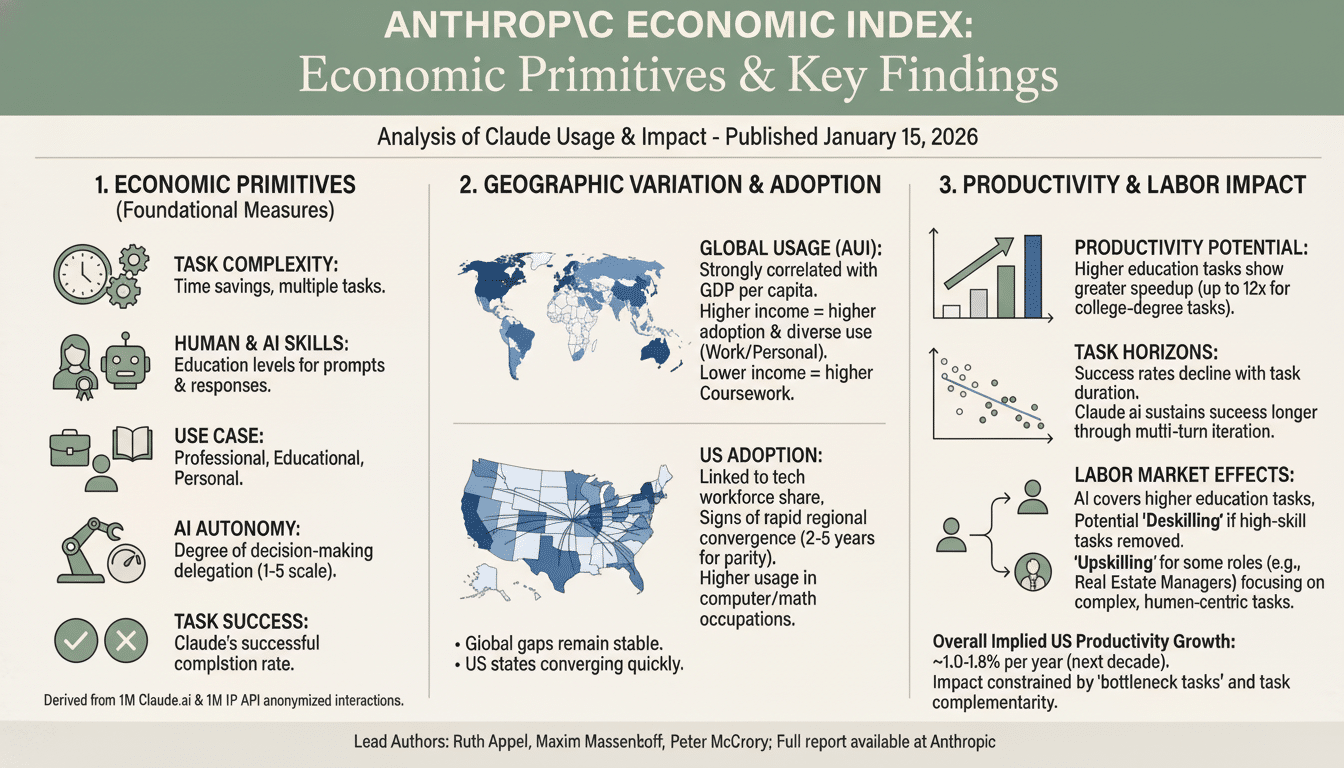
The headline finding: usage intensity matters more than simple access. Early adopters are deploying models like Claude for iterative drafting, code review, and feedback—using systems as “thought partners” embedded in workflows rather than for one‑off queries. The report also notes geographic concentration: more intensive use in high‑income countries, and within the U.S., in regions dense with knowledge workers, clustered around a narrow set of specialized tasks.
Why Power Users Are Pulling Ahead with AI at Work
Power users don’t just prompt; they design processes. They chain prompts, create reusable templates, and connect models to data sources, spreadsheets, and APIs to automate repeatable work. A marketing analyst, for example, might build a daily performance brief that ingests ad metrics, drafts insights, proposes A/B tests, and schedules updates—turning a morning ritual into a near‑real‑time system. Casual users ask the model for ideas; power users instrument the workflow.
Evidence of the payoff is accumulating. A widely cited study from MIT and Stanford on generative AI in customer support found a 14% productivity lift on average, with the largest gains accruing to less‑experienced workers. GitHub reported developers completed coding tasks up to 55% faster with Copilot assistance. Microsoft’s Work Trend Index found that a large majority of early Copilot users felt more productive and spent less time on routine tasks. As teams reinvest time savings into more experimentation, the gap widens further.
A Growing Inequality Risk from Uneven AI Adoption
Global institutions are flagging distributional concerns. The IMF estimates roughly 40% of jobs worldwide are exposed to AI, rising to about 60% in advanced economies, warning that without policy and training, inequality could increase. The World Economic Forum’s most recent Future of Jobs report projects 83 million roles could be displaced by 2027 even as 69 million new ones emerge, with 44% of workers’ skills disrupted. Entry‑level positions—already the proving ground for new talent—look especially vulnerable to redesign or reduction.
Geographic concentration adds another layer. If advanced usage clusters in high‑income regions and elite firms, incumbents gain better tools and tacit know‑how. That advantage becomes self‑reinforcing as power users produce more output, learn faster from feedback, and climb internal promotion ladders sooner.
How Employers Can Close the AI Skills Gap Right Now
Start with a clear skills taxonomy for AI fluency. Baseline everyone on prompt design, verification habits, and model limits; then layer advanced capabilities such as tool use, retrieval‑augmented generation, and lightweight automation. Treat models as systems that must be evaluated—create checklists for accuracy, bias, and privacy, and build team rituals for red‑teaming high‑stakes outputs.
Shift from “playground” pilots to workflow redesign. Pick a handful of high‑leverage processes—reporting, outreach, QA, documentation—and rebuild them with AI at the center. Measure not only speed but quality and error rates. Pair novices with power users, host internal show‑and‑tells, and publish template libraries so good patterns spread quickly.
Protect the on‑ramp for early‑career talent. Redesign junior roles to include AI oversight, data hygiene, and customer context that models can’t learn on their own. Create apprenticeship paths where newcomers learn to supervise, not just consume, AI output. Ensure equitable access to tools and training across regions and functions so advantages don’t pool in a few teams.
The lesson from Anthropic’s findings is not that AI is erasing work today—it’s that value is concentrating with those who master it. Power users are already sprinting. The rest of the workforce needs the tools, training, and redesigned workflows to keep pace.

