


There is a temptation, once the evenings turn cool and the growing season winds down, to simply stop thinking about the yard. The grass slows, the flowers fade, and it feels like the lawn can fend for itself until spring. But what you do in these last few weeks of the season has an outsized effect on how your yard wakes up in April. A little effort now saves a lot of frustration later.
Winterizing your yard is really about setting it up to rest well and rebound strong. Think of it the way you would prepare a house before a long trip: a few deliberate steps that protect what you have and prevent problems while you are not paying attention. Here is a practical, end-of-season checklist to work through before the first hard freeze.
- Give the Lawn One Last Feed
- Keep Mowing, but Lower the Bar
- Clear the Leaves, Within Reason
- Aerate and Overseed the Thin Spots
- Winterize the Irrigation System
- Cut Back, Mulch, and Protect the Beds
- Seal the House Against Uninvited Guests
- Do One Last Weed Patrol
- Store Your Tools and Furniture
- A Little Work Now, a Better Spring Later
Give the Lawn One Last Feed
If you do only one thing on this list, make it a fall fertilization. This is the single most valuable step for a healthy lawn, and most homeowners skip it because it feels counterintuitive to feed grass that is about to go dormant.
Here is why it works. In autumn, cool-season grasses shift their energy from growing blades to growing roots and storing nutrients. A fall feeding, sometimes called a winterizer, gives the grass the resources to build a deep, strong root system and bank energy through the winter. That stored energy is what fuels the thick, green flush you see the following spring. A lawn that goes into winter well-fed greens up earlier, crowds out weeds, and shrugs off stress far better than one that went in hungry.
Apply it a few weeks before the ground freezes, water it in, and let the grass do the quiet work of getting ready underground.
Keep Mowing, but Lower the Bar
Do not put the mower away just yet. Grass keeps growing until the ground gets cold, and letting it grow long and then leaving it that way under snow is asking for trouble. Long grass mats down under winter weight and traps moisture against the crown, which invites disease like snow mold.
Keep mowing on your normal schedule as long as the grass is actively growing. For your last cut or two of the season, drop the mower deck a notch and take the lawn a little shorter than usual, down around two to two and a half inches for most cool-season grasses. That final shorter cut helps the lawn dry out and reduces the matting that causes problems. Just do not scalp it, since the grass still needs some blade to photosynthesize until it fully goes dormant.
Clear the Leaves, Within Reason
A thick blanket of wet leaves is one of the worst things you can leave on a lawn over winter. It blocks light and air, holds moisture, and can smother and kill the grass beneath it, leaving you with bare, dead patches come spring.
You do not have to obsess over every last leaf, though. A light scattering can be mowed right into the lawn, where the shredded pieces break down and feed the soil. The problem is accumulation. If you can see more leaf than grass, it is time to rake or mulch-mow. Getting the heavy layers off before they get wet and pack down is the goal. Whatever you clear makes excellent compost or mulch for your beds, so nothing has to go to waste.
Aerate and Overseed the Thin Spots
Fall is prime time to repair a tired lawn. Over a long season, soil gets compacted by foot traffic, mowers, and play, and compacted soil chokes roots by squeezing out the air and water they need. Core aeration, which pulls small plugs of soil from the lawn, relieves that compaction and lets everything breathe.
Aeration pairs perfectly with overseeding. The holes give new grass seed ideal contact with the soil, and the cool, moist autumn weather is far friendlier to germination than the heat of summer. If your lawn has thin, worn, or bare areas, aerating and overseeding now means those spots fill in and establish before winter, so spring arrives with a fuller, denser lawn rather than a patchy one.
Winterize the Irrigation System
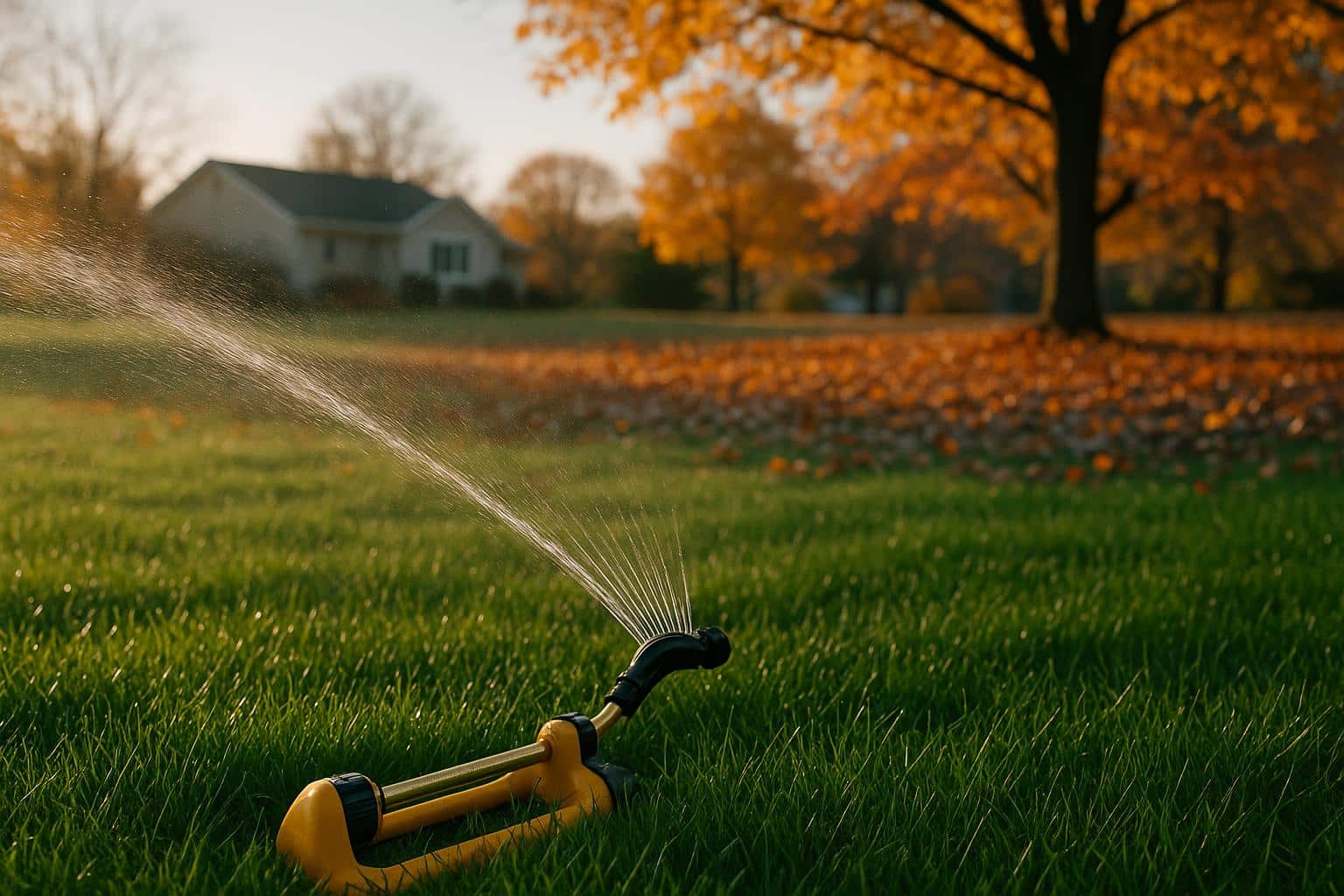
This is the step that, if skipped, can turn into an expensive spring surprise. Any water left sitting in sprinkler lines and valves will freeze, expand, and crack the pipes and heads. Repairing a burst irrigation system is a far bigger job than draining it was.
Before the first hard freeze, shut off the water supply to the system and drain it fully. Many systems, especially in colder climates, need to be cleared with compressed air in a process called a blowout, which pushes every last bit of water out of the lines. If you are not sure how to do this correctly, it is worth having a professional handle it, because getting the pressure wrong can damage the very system you are trying to protect. Either way, do not head into winter with water in the lines.
Cut Back, Mulch, and Protect the Beds
Turn your attention from the lawn to the garden beds. Cut back spent perennials and remove dead annuals, which tidies things up and removes hiding and overwintering spots for pests and disease. A few plants, like ornamental grasses and some seed-bearing perennials, are better left standing for winter interest and to feed birds, so use a little judgment rather than clear-cutting everything.
Once the beds are cleaned up, add a fresh layer of mulch. A few inches of mulch over the soil insulates plant roots against the freeze-and-thaw cycles that heave plants out of the ground, holds moisture, and gives your beds a finished look through the bare months. Young trees and tender shrubs may also appreciate a little extra protection, whether that is a wrap on a thin-barked trunk or a mound of mulch over the root zone.
Seal the House Against Uninvited Guests
Here is the part of end-of-season prep that homeowners most often forget: as the weather cools, pests are looking for somewhere warm to spend the winter, and your house is the most appealing option on the block. Mice, spiders, ants, and overwintering insects all start moving toward shelter in fall, and once they are inside, they are much harder to evict than they were to keep out.
A little prevention now goes a long way. Walk the perimeter of your home and seal the gaps: caulk cracks in the foundation and around windows, add or repair weatherstripping on doors, screen vents, and close up any opening where a pipe or wire enters the house. Move firewood, mulch piles, and yard debris away from the foundation, since those make convenient staging areas for pests before they slip indoors. Trim back branches and shrubs that touch the house and give insects a bridge inside.
Because the yard and the home are really one connected system, this is a good moment to bring in help if the job feels bigger than a caulk gun can handle. A company that handles both lawn and pest, like SolTerra Lawn & Pest in the Salt Lake Valley, can treat the perimeter and set up a barrier before the fall migration indoors begins, which is far easier than dealing with an infestation in January. Fall treatment is one of the most effective and least glamorous pest steps there is, precisely because it stops the problem before it starts.
Do One Last Weed Patrol
Weeds are opportunists, and many of the worst ones, like dandelions and clover, are actually storing energy in fall just like your grass is. That makes autumn a surprisingly effective time to deal with them. A weed treated now, while it is pulling resources down into its roots, is a weed that will not come roaring back in spring.
Walk the lawn and beds one more time, pull or spot-treat what you find, and you will start next season with a real head start instead of a jungle. Getting ahead of the weeds in fall means fewer of them fighting your grass for space and nutrients when the warm weather returns.
Store Your Tools and Furniture
Finally, take care of the gear that took care of your yard all season. Drain the gas or stabilize the fuel in the mower and trimmer, clean the caked grass off the mower deck, and give the blade a sharpen so you are ready to go in spring. Coil and drain the hoses before they can freeze and crack, and store them somewhere they will not split. Clean and cover the patio furniture and the grill, or move them into the garage or shed.
None of this is glamorous, but a mower that starts on the first pull and a hose that has not burst are small spring luxuries you will be grateful for.
A Little Work Now, a Better Spring Later
Winterizing your yard is not about doing everything perfectly. It is about doing a handful of the right things while there is still time, so your lawn, your garden, and your home come through the cold months in good shape. Feed the grass, clear the leaves, protect the irrigation and the beds, seal out the pests, and put your tools away clean.
Work through this checklist over a weekend or two, and when spring finally arrives, your yard will not just survive the winter. It will be ready to take off.

