


In the agile method of working, the Scrum Master is the main player. The Scrum Master acts as the silent force behind the scenes. Modern teams work in constantly changing environments where collaboration, clarity, and constant improvement are much more important than strictly defined plans. In this scenario, the Scrum Master plays a critical role in aiding teams to stay focused, eliminate obstacles, and provide the best results consistently.
As per the 15th State of Agile Report, 68% of companies believe that Agile increases team efficiency. Teams with solid Scrum Master support report higher engagement and quicker delivery times. In this article, we will discover how Scrum Master support is so important and why the Scrum Master is central to team success today.
- Understanding the Scrum Master’s True Role
- Removing Obstacles That Slow Teams Down
- Building High-Performing, Self-Managing Teams
- Acting as a Change Leader in the Organization
- Improving Communication and Collaboration
- Supporting Motivation and Team Well-Being
- Key Skills That Make Scrum Masters Effective
- To Build Successful Teams
- Conclusion
Understanding the Scrum Master’s True Role
Many people misunderstand the Scrum Master role. A Scrum Master is not a project manager, team boss, or meeting scheduler. Instead, the Scrum Master is a servant leader who helps the team use Scrum effectively.
The Scrum Guide explains that the Scrum Master is accountable for the team’s effectiveness. This includes coaching the team, supporting the Product Owner, and helping the organization understand Scrum. When done right, this role creates clarity, trust, and momentum across the team.
These are questions that are mostly on your mind, explained simply.
1. What does a Scrum Master actually do?
A Scrum Master helps the team work better by guiding Scrum practices, removing blockers, and improving collaboration. They support the team without managing or controlling them.
2. Why is a Scrum Master important for team success?
A Scrum Master keeps the team focused, removes obstacles, and builds trust. This helps teams deliver faster, work smoothly, and continuously improve.
3. Is a Scrum Master a manager?
No. A Scrum Master is not a manager. They are a servant leader who coaches the team and helps them become self-managing.
4. How does a Scrum Master improve productivity?
By clearing blockers, improving communication, and running effective Scrum events, the Scrum Master helps teams spend more time delivering value and less time handling problems.
5. Can a team succeed without a Scrum Master?
Teams can work without a Scrum Master, but success is harder to sustain. A Scrum Master helps prevent delays, confusion, and burnout, making long-term success more likely.
Removing Obstacles That Slow Teams Down
One of the most valuable contributions of a Scrum Master is impediment removal. These obstacles may include unclear requirements, delayed approvals, tool limitations, or organizational policies.
When teams are blocked, productivity drops and frustration increases. The Scrum Master identifies these issues early and works with stakeholders to resolve them. Sometimes they fix problems directly; other times, they help the team solve them independently.
According to Scrum.org research, teams that actively address systemic impediments improve delivery predictability and team morale significantly.
Building High-Performing, Self-Managing Teams
Scrum teams are designed to be self-managing, but this does not happen automatically. The Scrum Master coaches teams to take ownership of planning, decision-making, and continuous improvement.
By facilitating effective Sprint Reviews and Retrospectives, the Scrum Master helps teams reflect on what works and what doesn’t. Over time, teams become more confident, collaborative, and adaptable.
A study by McKinsey shows that empowered teams can improve performance by up to 25% compared to traditionally managed teams. Scrum Masters play a direct role in creating this empowerment.
Acting as a Change Leader in the Organization
The Scrum Master’s influence goes beyond the team. Scrum Masters help organizations shift from command-and-control thinking to a culture of trust and learning.
They work closely with leaders to explain Agile values, encourage transparency, and reduce unnecessary bureaucracy. This organizational coaching helps teams operate in an environment where Scrum can truly succeed.
Improving Communication and Collaboration
Strong communication is essential for team success. Scrum Masters create safe spaces where team members can speak openly, raise concerns, and share ideas without fear.
They also improve collaboration between Developers, Product Owners, and stakeholders. Clear communication reduces misunderstandings, aligns expectations, and ensures everyone works toward the same goal.
According to PMI research, poor communication is a primary cause of project failure in over 30% of projects. Scrum Masters help prevent this by fostering transparency and regular feedback loops.
Supporting Motivation and Team Well-Being
Motivation is not driven by pressure or deadlines alone. Scrum Masters help teams stay motivated by focusing on purpose, progress, and people.
Scrum Masters mostly find fulfillment in seeing others succeed. By recognizing achievements, encouraging learning, and protecting teams from burnout, they create a healthy and sustainable work environment.
Engaged teams are more productive, innovative, and resilient—key ingredients for long-term success.
Key Skills That Make Scrum Masters Effective
Successful Scrum Masters share several important traits:
- Curiosity and continuous learning
- Emotional intelligence and empathy
- Strong facilitation and coaching skills
- Courage to challenge unhealthy behaviors
These skills help Scrum Masters “read the room,” address hidden issues, and guide teams toward better outcomes.
To Build Successful Teams
Choosing a CSM certification course helps you understand teamwork, communication, and leadership in a simple, practical way. It prepares you to guide teams, solve problems faster, and deliver better results. Become the key reason your team grows, improves, and succeeds together.
Conclusion
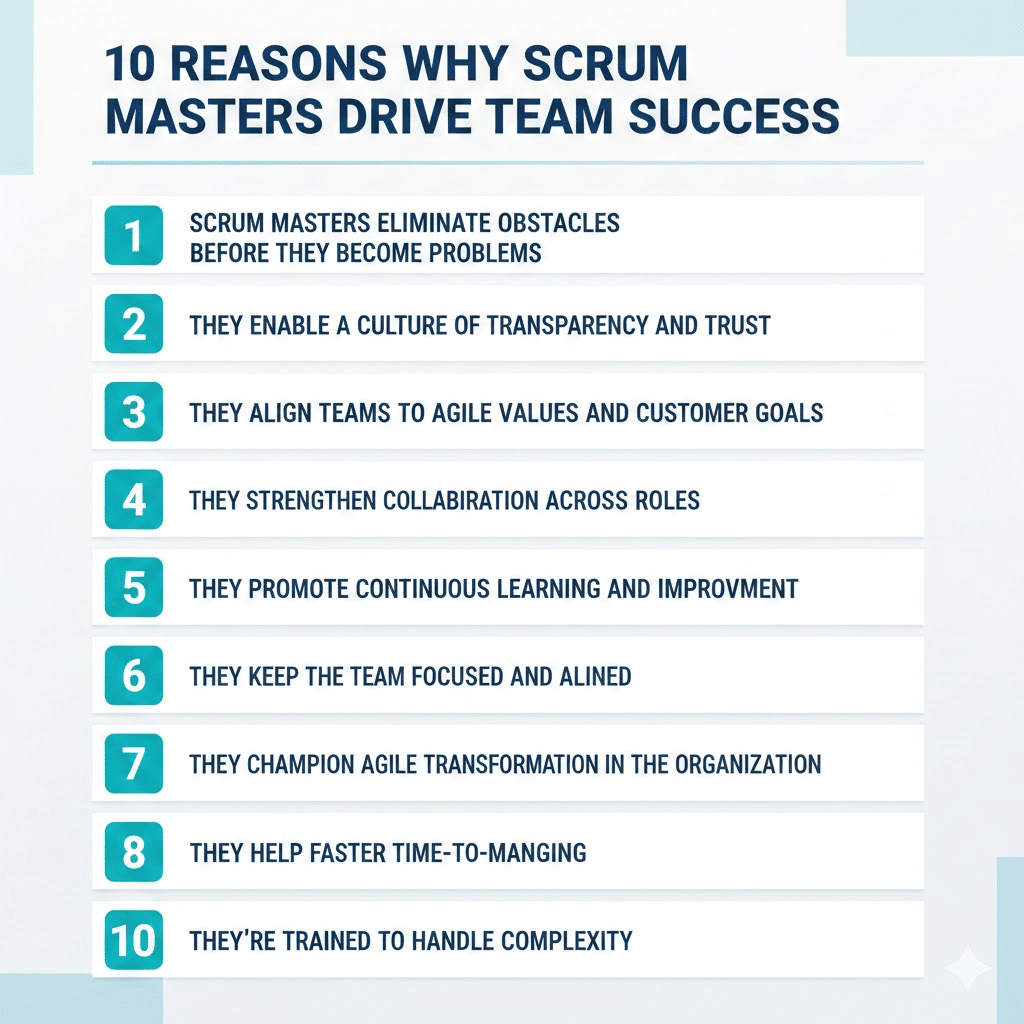
A Scrum Master is far more than a facilitator of meetings. They are coaches, problem-solvers, and change leaders who help teams work better together. By removing obstacles, building trust, and enabling continuous improvement, Scrum Masters unlock a team’s true potential.
In today’s complex and fast-moving work environments, the Scrum Master is not optional; they are the key to sustainable team success.
