


Whoop is expanding beyond wrist-based metrics with a women’s health blood test and new menstrual cycle features, positioning the performance brand squarely in the fast-maturing femtech space. The test, available through Whoop Labs, zeroes in on hormonal regulation, thyroid status, nutrition, and bone-related markers while the app adds predictive insights on symptoms and cycles built from each member’s historical data.
A Lab Panel Built For Hormones And Performance
The Whoop Labs women’s health panel analyzes 11 biomarkers frequently discussed in reproductive and endocrine care: Anti-Müllerian Hormone (AMH), Progesterone, Prolactin, Thyroid Peroxidase Antibodies (TPOAb), Free T4, Free T3, Leptin, Vitamin B12 (Cobalamin), Folate, Magnesium, and Phosphate (as Phosphorus). Taken together, these markers can help illuminate ovarian reserve (AMH), luteal function (Progesterone), thyroid autoimmunity and activity (TPOAb, Free T4, Free T3), energy availability and metabolic status (Leptin), and nutrient sufficiency that underpins neurologic and bone health (B12, Folate, Magnesium, Phosphate).
- A Lab Panel Built For Hormones And Performance
- Cycle Modeling Moves Beyond Calendars And Averages
- Why These Biomarkers Matter Now For Women’s Performance
- Market Momentum And Whoop’s Growing Women’s Segment
- From Waitlist To Rollout Of Whoop Labs Women’s Panel
- What To Watch As Consumer Blood Testing Expands
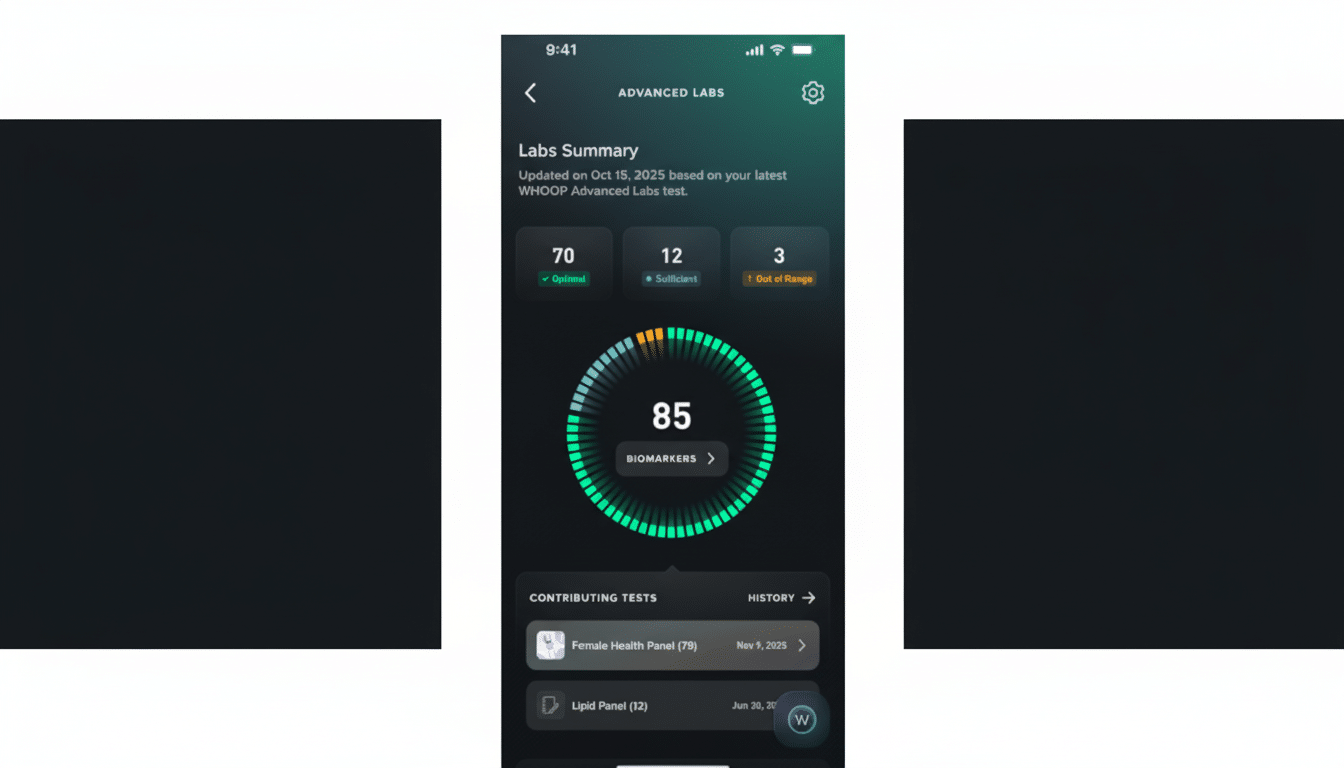
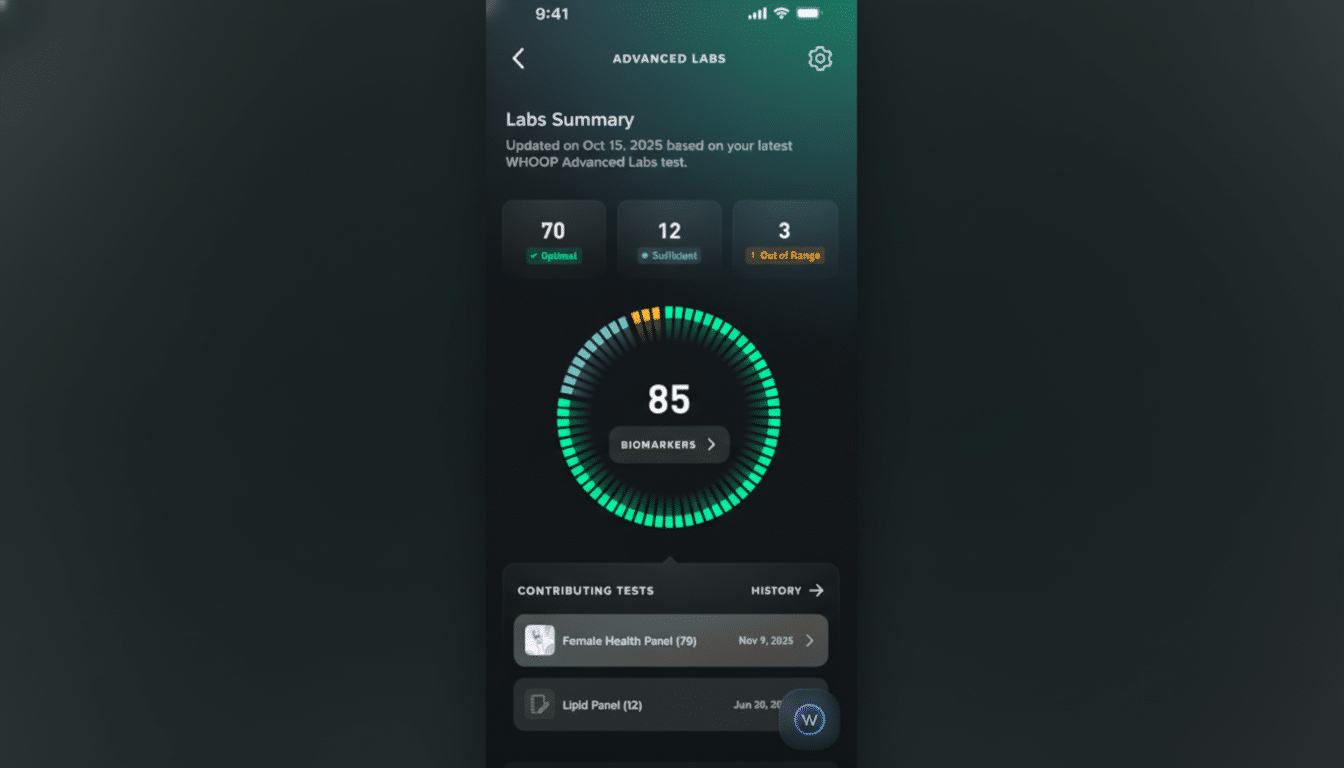
Whoop says the test is designed to complement data already captured on the band—sleep, strain, and recovery—so members can see how physiology, training, and symptoms intersect. Within the app, lab values are organized into “optimal,” “sufficient,” or “out of range” categories to quickly flag results that may warrant attention or deeper discussion with a clinician.
Cycle Modeling Moves Beyond Calendars And Averages
Alongside the panel, Whoop is rolling out Hormonal Symptom Insights and Predictions, a feature that builds a personalized model of menstrual cycles from prior logs and physiologic trends. Members can see projected windows for the next period, typical and changing cycle lengths, and individualized symptom patterns rather than one-size-fits-all averages.
That approach aligns with guidance from the American College of Obstetricians and Gynecologists, which notes that ovulation timing varies substantially and calendar-only tools can miss irregularities. Whoop has also published a menstrual cycle white paper describing the modeling behind these features—an uncommon level of transparency in consumer wearables and a signal to coaches, clinicians, and researchers who want to scrutinize methods.
Why These Biomarkers Matter Now For Women’s Performance
The focus reflects an evolving understanding of women’s physiology in sport and daily life. The North American Menopause Society estimates that more than a million women in the U.S. enter menopause annually, a life stage linked to shifts in sleep, thermoregulation, and bone density. The Bone Health and Osteoporosis Foundation reports that 1 in 2 women over 50 will experience an osteoporosis-related fracture, underscoring the value of tracking nutrient and bone-related markers like Magnesium and Phosphate alongside training loads.
Thyroid conditions are another overlooked performance limiter. The American Thyroid Association notes women are far more likely than men to develop thyroid disorders, which can quietly drive fatigue, mood changes, or changes in heart rate—signals that often surface in Whoop’s recovery metrics. On the metabolic front, leptin is a useful readout of energy availability; chronically low levels are associated with the spectrum of Relative Energy Deficiency in Sport described by the International Olympic Committee.
Market Momentum And Whoop’s Growing Women’s Segment
Consumer demand for women-centered insights has accelerated across wearables. Whoop reports a 150% increase in women using its products year over year, calling it the company’s fastest-growing segment. The company also says women engage 30% more with its Whoop AI assistant, suggesting an appetite for context-rich explanations rather than raw numbers.
Rivals are moving too. Oura recently introduced a women’s health AI model and conversational insights layered over its smart ring data, while mainstream platforms like Apple and Fitbit have continued to refine cycle tracking and fertility awareness features. The difference here is the deeper foray into lab-based physiology and the attempt to stitch those results to daily recovery and strain—bringing concepts long used in elite sport and endocrine clinics to a broader audience.
From Waitlist To Rollout Of Whoop Labs Women’s Panel
Whoop’s entry into lab testing began with Whoop Labs, introduced with a sizable waitlist that the company said exceeded 350,000 people at launch. The women’s health panel is the most targeted offering yet, providing a template for condition- or cohort-specific testing that could expand into other areas of performance medicine.
What To Watch As Consumer Blood Testing Expands
As blood tests move into consumer fitness, two questions will determine impact: interpretability and privacy. Clear reference ranges can help members act on results without over-pathologizing normal variation, and transparent data policies are essential given the sensitivity of reproductive and endocrine information. Advocacy groups and medical societies have urged companies to adopt strict safeguards, especially for menstrual and fertility data.
If Whoop can pair rigorous modeling with responsible data practices—and continue validating its insights in peer-reviewed forums—it could become a go-to platform for women who want lab-informed training and health context in one place. For a category that has historically treated women’s physiology as an edge case, that would be a meaningful shift.

