


Spotify’s updated Lossless tier delivers CD-quality, 16-bit/44.1 kHz FLAC streams with support for up to 24-bit/48 kHz streaming, recording and work files, but the real question is whether it is worth paying for. Short answer: yes, but only if you fit special criteria. Without them you’ll pay more, in terms of both data and money, for little — arguably even no — audible improvement over the regular Premium tier.
Your Playback Chain is Respecting the Bits
Lossless only glimmers if your gear can convey it intact from phone to ear. The most guaranteed route is wired, a phone and competent USB-C DAC or 3.5 mm jack into decent-quality headphones (or amp alongside) will pass the full-resolution stream without fuss. You don’t have to want some exotic audiophile stack but a hardwired path bypasses the biggest quality killer anyway: Bluetooth re-encoding.
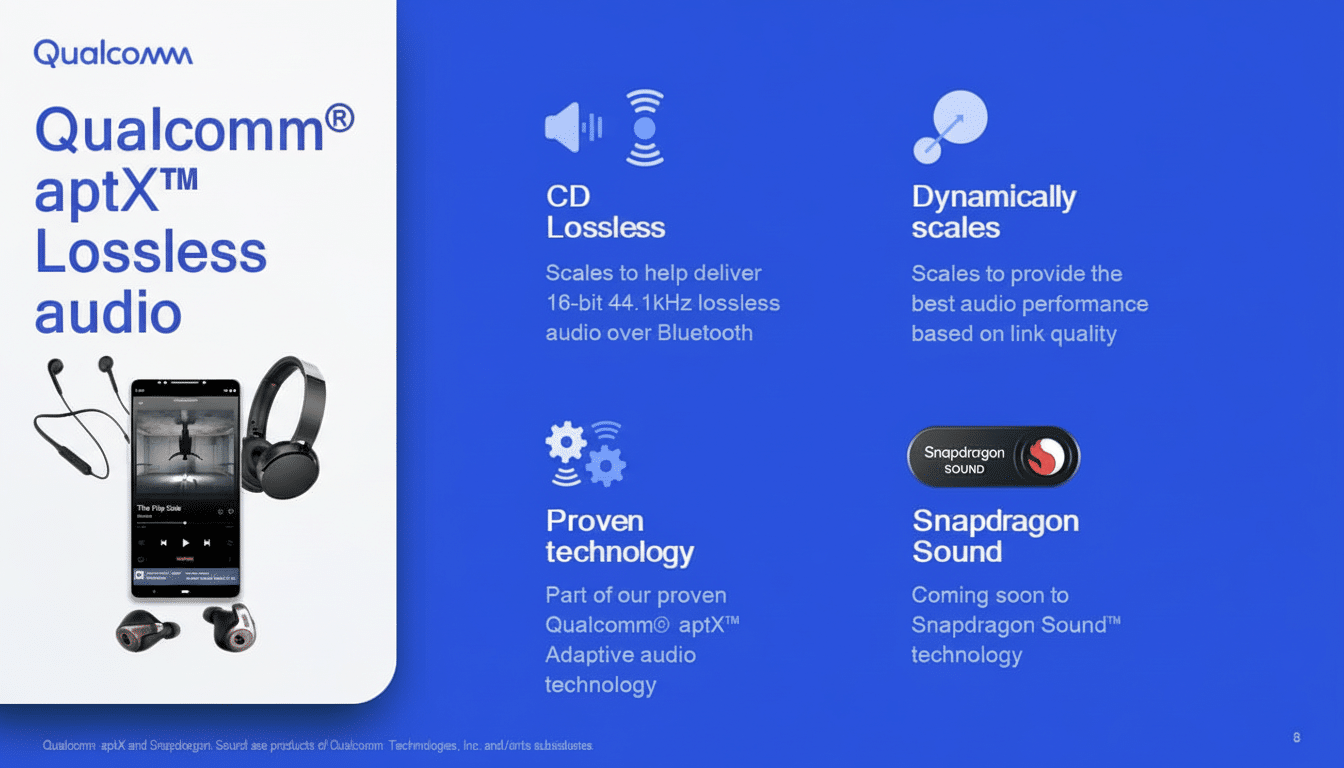
Bluetooth almost always will compress audio again, stripping out much of lossless’ benefit. Sony’s LDAC can push up to 990 kbps and usually runs at 660 kbps, making it the best widely available option on Android. Qualcomm’s aptX Lossless likewise reaches for near-bit-perfect 16/44.1 within the aptX Adaptive wrapper, though support in headphones remains sparse. Standard aptX Adaptive will max out at around 420 kbps in most real-world scenarios, and also remember that’s still lossy audio compared to aptX HD at 576 kbps. If your setup defaults to AAC (which should be a set bitrate of 256 kbps on most phones and earbuds) or the entry-level SBC codec, Lossless is an intangible concept.
If you’re living in Apple’s ecosystem, keep in mind that AirPods and iPhones use AAC over Bluetooth. It’s efficient and sound quality is good for its size, but it’s not lossless. You will need wired headphones, a quality USB audio interface or a home setup that can handle lossless tracks to hear any sort of true difference. At home, lossless streams can be sent via Spotify Connect devices and the desktop app to receivers, DACs and powered speakers; web playback in a browser is usually reduced quality.
Your Data Plan And Nervous Connectivity Can Take It
Higher fidelity means bigger files. Spotify’s own materials indicate that Lossless could consume roughly 1 GB an hour compared to its streaming competitors. For reference, the Premium “Very High” setting at 320 kbps comes in at about 150–180 MB per hour. That’s about seven times as much — before you start mixing in new playlists, skipping tracks or popping onto flaky networks.
Translate that to a day-to-day level and the math turns dismal quickly. A 90-minute round trip commute five days a week can nibble through more than 6 GB in a week and north of 25 GB in a month for music alone. Caching can mitigate that if you replay the same albums, and downloading over Wi‑Fi is your buddy, but not so much with a small data plan if streaming Lossless while you roam.
Throughput matters too. Continuous 1.5–2 Mbps is a reasonable baseline to maintain lossless stream stability; that’s going to depend on your coverage, congestion, and carrier policies. Studies of mobile network data from companies like Opensignal routinely display disparities in consistency by area. Wobble your signal and you’ll have stutters that take away from the “premium” experience.
Your Listening Habits Justify The Upgrade
Lossless pays off most when you’re actually listening — quiet room, good speakers or headphones and time to hear reverb tails, cymbal decay, stereo imaging. On a bus, gym or noisy street, ambient sound quiets those subtleties. Occupational noise exposure comparisons typically list a city bus at 75–85 dB; even under such conditions, fairly well-encoded 256–320 kbps streams are damn close to lossless.
That’s not just anecdote. Research also discussed in the Audio Engineering Society and blind tests under ITU-R BS.1534 (MUSHRA) procedures, prototype modern codecs have consistently been rated as nearly transparent at 256–320 kbps for most listeners and program material. Translation: Unless you’re in a controlled environment or very well-trained, the delta between MQA and top-tier lossy can be extremely subtle.
There is also the fact that mastering quality is often the deciding factor over format. And merely because it’s lossless won’t make a compressed, “loudness-war” master bloom magically (while an album properly mastered to 320 kbps can sound great). If your listening is limited to chart playlists in loud areas, a regular Premium stream might be the sweet spot. If you go back to those beloved recordings at home, and if you care about every microdetail, that’s where Lossless pays its rent.
Bottom line: when Spotify Lossless is worth paying for
Only pay for Spotify Lossless if you can check all three boxes: your playback chain is actually going to preserve the resolution (ideally wired, LDAC, aptX Lossless or a proper home setup), and meaningfully reward you with better quality; your data plan and connectivity won’t punish you for it; and your listening environment and habits are biased towards attentive, quiet sessions. If you’re lacking any of those, Premium’s Very High setting will bring you nearly all of the way there with far less compromised.
If you do qualify, Lossless could be a real step up (especially when piped through a desktop app or Spotify Connect into high-quality speakers or headphones). Otherwise, save your money and data plan and enjoy the mammoth catalog you already have without the friction.
