


WhatsApp is introducing AI-generated suggested replies that draw on the context of your ongoing conversations, extending its Writing Help tool from simple rewrites to full draft responses. The update brings one-tap, context-aware options directly into the chat box, signaling a new phase of assistive messaging on a platform used by billions every day.
What The New AI Can Do Inside WhatsApp Suggested Replies
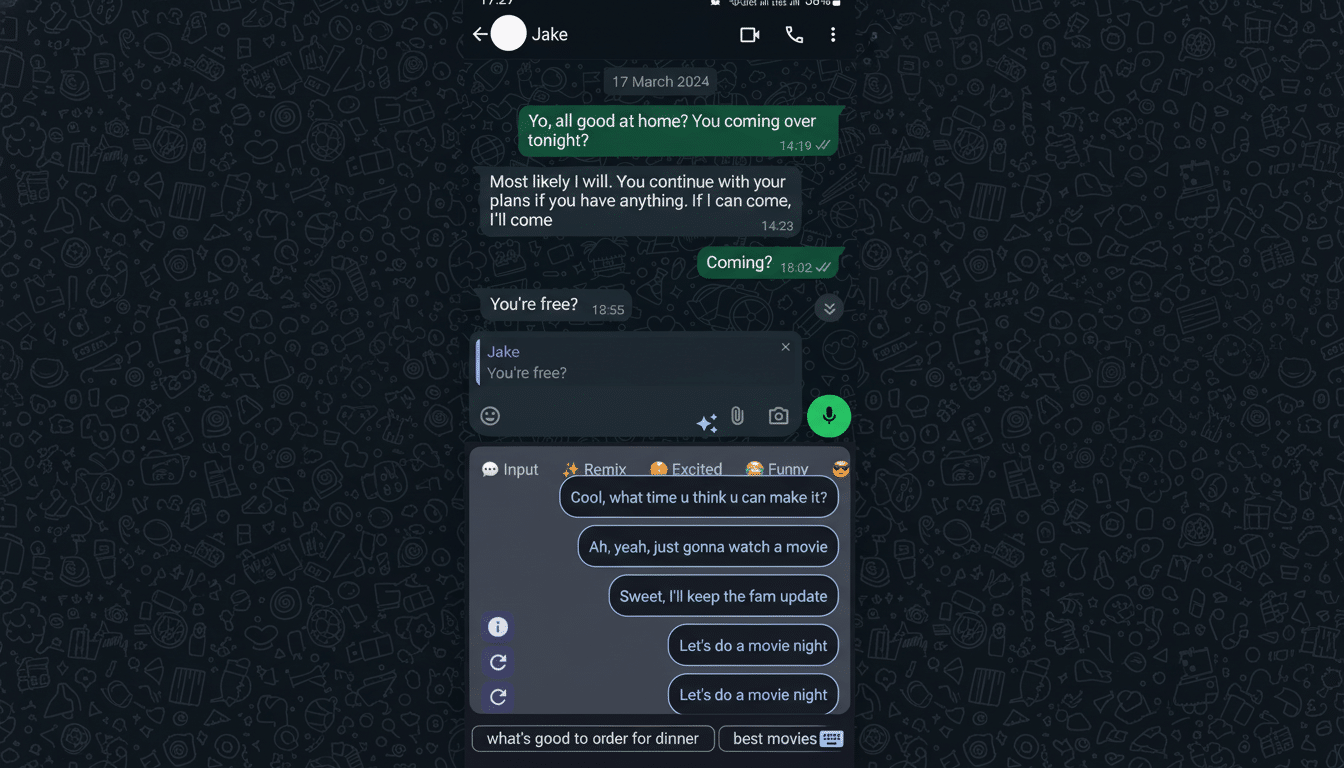
Writing Help originally focused on rephrasing, proofreading, and tone adjustments. With this expansion, it can now propose entire replies tailored to what’s been said in a thread—think quick confirmations, polite declines, or concise follow-ups—so you can respond faster without starting from a blank box. You can regenerate options, tweak their tone, or edit them before sending, keeping control over voice and nuance.
- What The New AI Can Do Inside WhatsApp Suggested Replies
- How To Access It And Use AI-Suggested Replies In Chats
- Why It Matters On WhatsApp’s Scale For Everyday Messaging
- Privacy And Security Claims For WhatsApp’s AI Replies
- How It Compares To Other Messaging Apps’ AI Replies
- Real-World Uses And Pitfalls When Relying On AI Replies
- Implications For Businesses Using WhatsApp AI Replies
- Related Updates Rolling Out Across WhatsApp And Meta AI
- Availability And What To Watch As WhatsApp Rolls Out AI
How To Access It And Use AI-Suggested Replies In Chats
To try the feature, tap the chat bar, open the sticker icon in the typing field, then select the pencil-with-sparkles AI button. WhatsApp will surface suggested replies based on the last turns of your conversation. Tap to insert, adjust if needed, and send. The flow works in one-on-one and group chats, and it’s designed to feel like any other quick-reply shortcut—just smarter and more adaptable.
Why It Matters On WhatsApp’s Scale For Everyday Messaging
Small time savings compound at WhatsApp’s size: the service has more than 2 billion users and has previously said it handles over 100 billion messages a day. Even modest adoption could materially change how quickly people respond, how often they reply at all, and the tone that travels across massive social and family networks. We’ve seen similar effects elsewhere—Gmail’s Smart Reply normalized brief, efficient responses—now the same dynamic arrives in the world’s most popular chat app.
Privacy And Security Claims For WhatsApp’s AI Replies
WhatsApp says chats remain private when using Writing Help, reiterating that end-to-end encryption continues to protect messages. The company indicates that AI assistance is designed with privacy safeguards, though the precise technical details—what context is processed, for how long, and where—will be closely watched by security researchers and privacy advocates. As with any assistive AI, the practical test will be transparency and data minimization, particularly in regulated markets.
How It Compares To Other Messaging Apps’ AI Replies
Suggested replies aren’t new, but bringing them to WhatsApp is consequential. Google offers Magic Compose in Android Messages and Smart Reply in Gmail; Microsoft has Copilot-powered drafting in Outlook and Teams. WhatsApp’s twist is ubiquity and intimacy: you’re not just accelerating work email—you’re potentially smoothing family logistics, school chats, and neighborhood groups where tone and trust matter. That raises the bar for quality and cultural sensitivity in the AI’s suggestions.

Real-World Uses And Pitfalls When Relying On AI Replies
Expect common, low-stakes scenarios to shine first: confirming plans, acknowledging updates, sending a quick thanks, or following up on a missed call. For example, after a friend says “We’re meeting at 7,” the AI might suggest “Got it, see you at 7” or “Running late by 10 minutes” based on the thread. Users should still read before they tap—context can shift quickly in chats, and a too-generic response can come off as impersonal.
Implications For Businesses Using WhatsApp AI Replies
For the WhatsApp Business app, AI-drafted replies can reduce response times for common inquiries—order status, appointment changes, or store hours—without forcing teams to maintain rigid templates. Meta has previously said the WhatsApp Business app serves over 200 million users, a group that’s highly sensitive to both speed and tone. Expect tighter integrations with catalogs, quick replies, and automated flows, with human review remaining essential for escalations or sensitive topics.
Related Updates Rolling Out Across WhatsApp And Meta AI
Alongside AI replies, WhatsApp is adding storage controls to delete large files directly within any chat, letting you clear media without wiping message history. Meta AI can now touch up photos in-chat—removing distractions, changing backgrounds, or applying styles—bringing lightweight editing to the thread. The app also supports moving chat history between iOS and Android and allows two accounts simultaneously on iOS. Sticker suggestions now surface when you type emojis, making reactions more expressive.
Availability And What To Watch As WhatsApp Rolls Out AI
The features are rolling out now and will reach all users soon. Watch for regional variations, language quality in suggestions, and controls to manage or disable AI prompts. The big question is behavioral: will people lean on AI in intimate spaces, or reserve it for logistics and customer service? With WhatsApp’s reach, even a careful, limited embrace could reshape the rhythm of daily messaging.

