


A health app can display a percentage, a streak, and an encouraging message within seconds of receiving an entry. The speed makes the feedback convenient. It can also make the result feel more authoritative than the information behind it deserves.
For a consumer, the central question is what the dashboard measures. A record of completed exercises is different from a measured health outcome. A change in self-reported drinking is different from evidence that a particular product caused the change. A score created by an app may be useful for reflection without being a clinical assessment.
- Identify What the Number Represents
- Distinguish a Program Description From an Outcome Claim
- Ask How Missing Information Is Handled
- Examine the Measurement Behind a Drink Count
- Look Beyond Testimonials and Star Ratings
- Keep Privacy Questions Beside Feature Questions
- Recognize the Decisions a Dashboard Cannot Make
- Use the Dashboard as a Starting Point
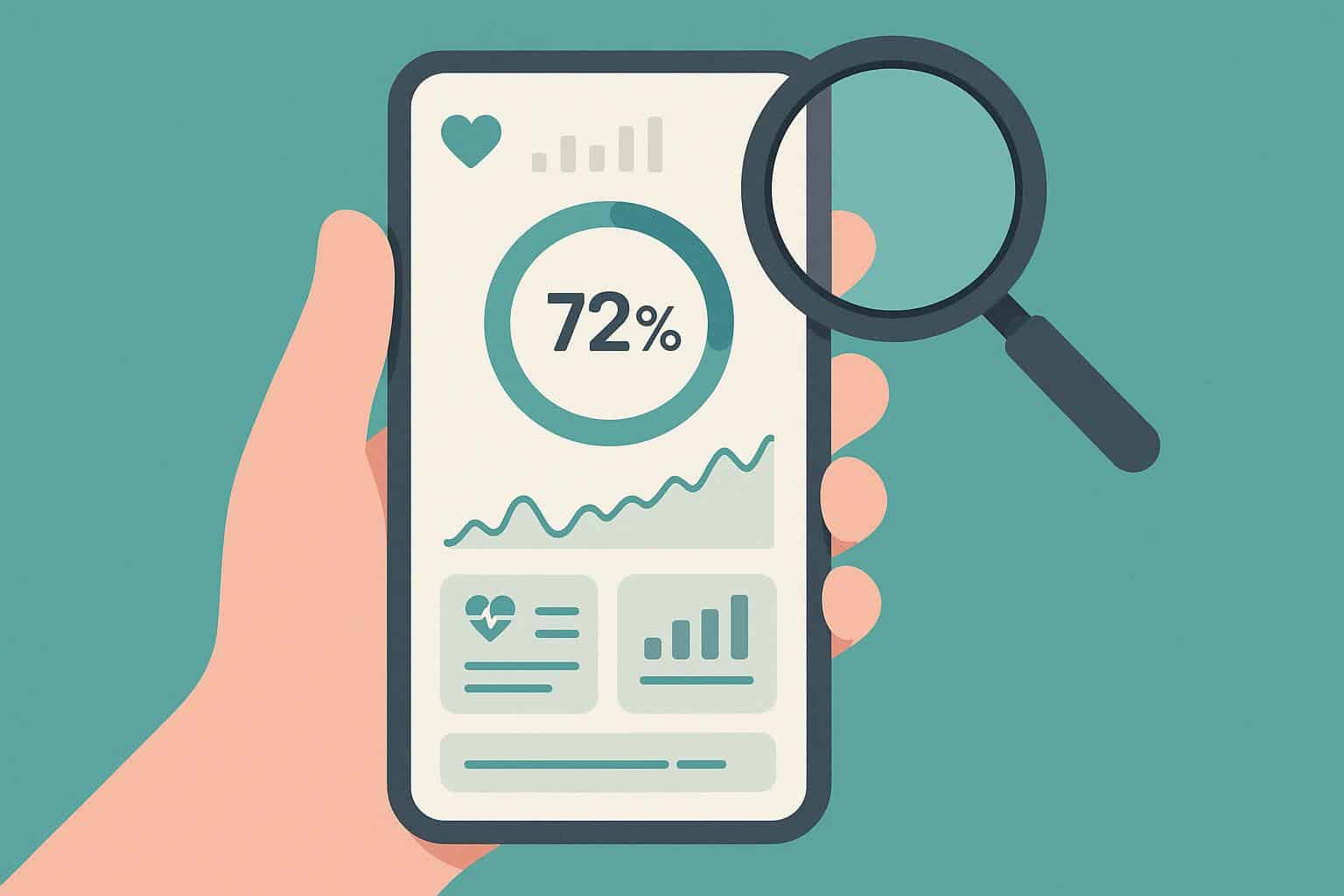
These distinctions are easy to lose on a small screen. They become more important when a product discusses sleep, stress, alcohol, or other subjects that can influence medical decisions.
Before treating a health app’s progress dashboard as evidence, examine the input, the calculation, and the claim separately. You do not need technical expertise to ask those questions. You need an explanation that connects the number on the screen with something the product can genuinely know.
Identify What the Number Represents
Start with the label. Does the figure describe entries completed, drinks recorded, minutes spent in an exercise, or a symptom rating? Each can be useful, but they answer different questions.
A streak may show that you opened the app every day. It does not establish that the activity improved your health. A lower weekly total may reflect a real change, missing entries, or a different way of estimating servings.
Look for a definition close to the chart or in the help information. If the company cannot explain what a score represents in ordinary language, avoid using it to make a consequential health decision. Visual precision is not the same as measurement accuracy.
Distinguish a Program Description From an Outcome Claim
A company can describe what its product offers without having proved every benefit a user might hope for. The duration of a program, the availability of exercises, and the presence of a diary are product details. A claim that the program treats a condition requires a different kind of support.
For example, Unconscious Moderation’s alcohol habit program presents a structured approach to changing a person’s relationship with alcohol. Consumers can examine whether the format suits their goals while separately asking what evidence supports any health-outcome claim.
This distinction applies across wellness products. Evidence that an activity has been studied does not automatically establish that every app offering that activity produces the same result. The product, population, and outcome need to match the claim being made.
Ask How Missing Information Is Handled
Most personal records are incomplete at some point. People forget entries, change phones, travel, or stop using a feature. A trustworthy dashboard should make the resulting uncertainty understandable.
Check whether an empty day means no activity or no information. If the product compares weeks, ask whether both weeks contain the same number of completed days. A chart can be mathematically correct while encouraging the wrong interpretation of missing data.
Retrospective entries deserve attention too. A note added days later may be useful but less precise than one made at the time. The app should let you correct mistakes without making the revised record difficult to understand.
Examine the Measurement Behind a Drink Count
Alcohol tracking illustrates why definitions are necessary. A count of glasses does not describe a consistent quantity unless serving size and strength are specified. Two beverages with the same volume can contain different amounts of alcohol.
NIAAA defines a U.S. standard drink as approximately 14 grams of pure alcohol. That is a unit of measurement, not a statement that a particular number is safe for an individual. Definitions also vary internationally.
When reviewing UM’s planning and drink-tracking features, or any comparable tool, check how the current interface records quantities. A user should be able to distinguish a measured serving, an estimate, and a missing entry before interpreting the weekly total.
Look Beyond Testimonials and Star Ratings
A testimonial can describe one person’s experience. It cannot tell you how typical the result is, how many people stopped using the product, or what else changed in that person’s life.
App-store ratings can help identify usability complaints, but they are not clinical trial results. Someone may award five stars because an interface is pleasant, support replied quickly, or the product helped them keep records. Those are different from demonstrated treatment outcomes.
When a company cites research, check the original study if it is available. Look at who participated, what was compared, and what was measured. Be cautious when a broad statement about a method is presented as proof of a specific app’s effectiveness.
Keep Privacy Questions Beside Feature Questions
A useful diary may contain sensitive notes about drinking, mood, relationships, or medication. Before entering them, find out what the company says it collects and how the account can be deleted.
Review sharing and notification settings. A reminder visible on a lock screen may disclose something you expected to keep private. Check whether you can export information for your own use and whether canceling payment also closes the account.
Do not infer a particular privacy protection from a medical-looking design. Read the relevant policy and ask the provider about anything consequential that remains unclear. A simpler record may be preferable if a feature requires information you are uncomfortable providing.
Recognize the Decisions a Dashboard Cannot Make
A wellness dashboard cannot establish that you are safe to drive, determine whether medication can be mixed with alcohol, or assess withdrawal risk. Those decisions require information and expertise beyond a personal log.
If dependence is possible, get medical advice before abruptly stopping alcohol. If symptoms or other health concerns persist, bring the record to a qualified professional rather than waiting for an app to produce a clearer score.
The record may still be valuable. It can help you describe frequency, timing, and uncertainty more accurately during an appointment. Its strongest role may be supporting a conversation rather than delivering an answer on its own.
Use the Dashboard as a Starting Point
The most useful health app dashboard helps you understand what was recorded, how the summary was produced, and what remains unknown. It makes correction possible and leaves room for professional interpretation.
Before choosing a product, test those basics. Can you explain one chart without repeating marketing language? Can you locate the entries behind it? Can you identify the decisions it cannot support? A clear answer to those questions is more valuable than another brightly colored score.

