


Your water heater is quietly working on borrowed time the moment it hits year eight. On the mainland, a tank typically lasts ten to fifteen years. In Hawaii, that number shrinks because of one thing you can’t escape: the corrosive bite of island air and hard water. This guide tells you how long your unit realistically has left, what warning signs mean you’re about to get a cold shower, and exactly when paying for a repair is throwing money away.
Here’s what we’ll cover: the actual lifespan math for island homes, the four failure signals that matter most, a straight cost comparison of repair versus replacement, and the maintenance steps that genuinely add years to a tank. By the end, you’ll know whether to call for a fix or start shopping.
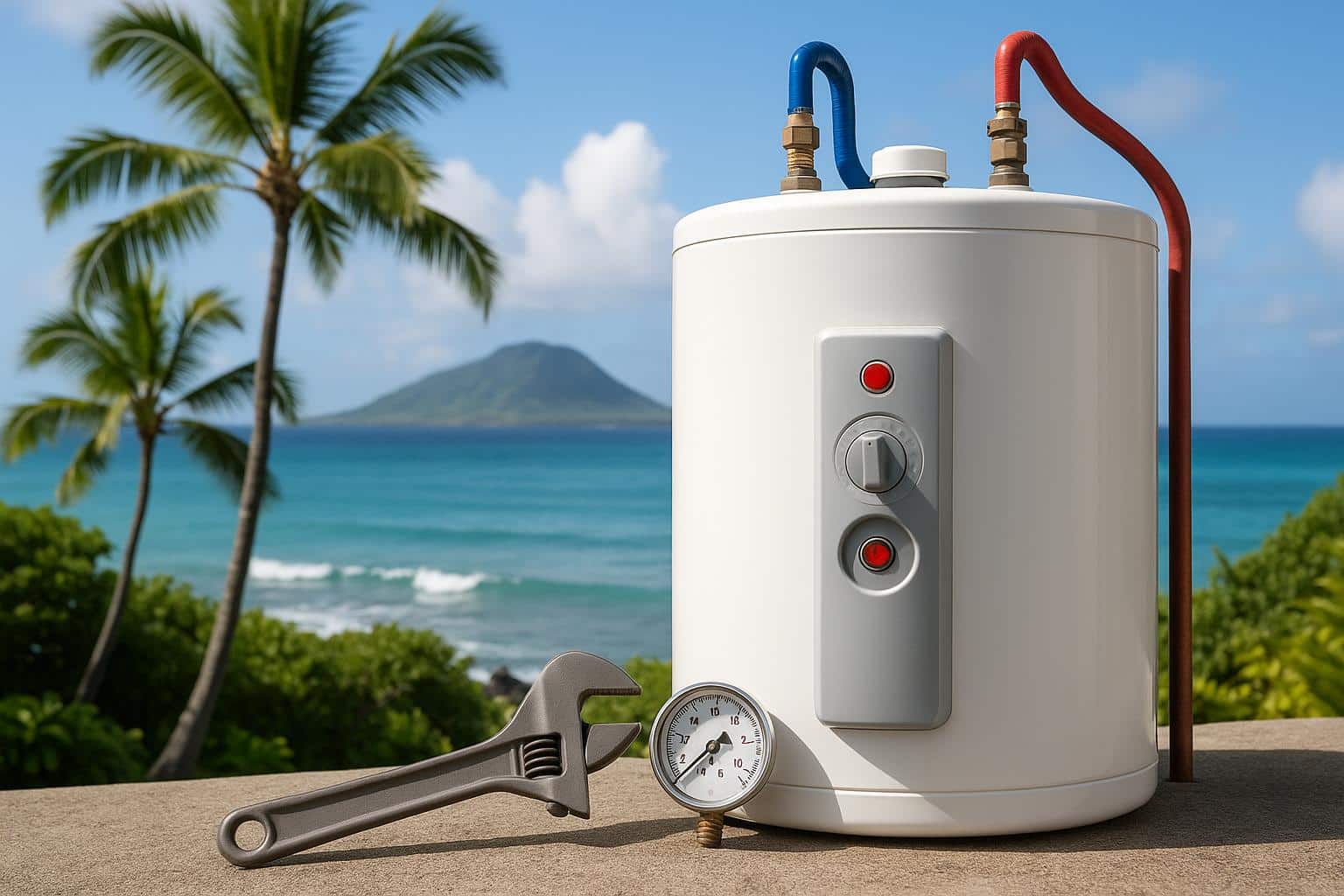
Why Hawaii Is Rough on Water Heaters
Salt-laden air, warm humidity, and mineral-heavy water create a triple threat that mainland units never face. The metal tank exterior corrodes faster when salt particles settle on it. The interior battles scale buildup from hard water that insulates the heating element and forces it to work harder. That extra work shortens the unit’s life in ways manufacturers don’t account for in their standard ratings.
If you live near the coast, the problem compounds. The Department of Energy notes that sediment accumulation inside the tank is the leading factor that reduces efficiency and heats water unevenly. In 2024, the agency’s guidance highlighted that this buildup also causes the tank to run longer cycles, which accelerates metal fatigue. Each extra minute of heating is another minute of stress on a system already fighting the elements.
The takeaway isn’t doom and gloom. It’s calibration. You can’t apply a mainland lifespan to an island unit and expect accuracy. A realistic expectation window for a tank water heater in Hawaii sits between eight and twelve years, with coastal homes trending toward the lower end and inland properties closer to twelve. Tankless units do better, often reaching twenty years, but they carry their own maintenance demands.
The Four Signs Your Unit Is About to Quit
Water heaters rarely die without warning. They send signals. Most homeowners ignore them until the cold shower moment arrives. Don’t be that person. Watch for these four indicators:
Rust-colored water. If hot water comes out brown or reddish, your anode rod has already sacrificed itself to corrosion. Once that rod is gone, the tank’s steel walls are next. This is the beginning of the end, not a small issue.
Rumbling or popping sounds. That noise is steam bubbles escaping through layers of sediment at the bottom of the tank. The sediment insulates the water from the burner or element, causing localized boiling. Prolonged rumbling means the tank floor is overheating and weakening.
Visible rust on the tank exterior. Check the top and sides of the unit. Any orange or brown streaking on the outside means moisture is already penetrating the metal. A tank that leaks externally cannot be sealed with patch kits. It’s done.
Age plus frequent repairs. If your unit has passed year eight and needed two service calls in the last eighteen months, you’re feeding a losing machine. Each repair buys months, not years.
Here’s the texture most guides skip: your utility bill tells a story too. A water heater that runs fine but causes a steady monthly electric bill increase of fifteen to twenty dollars is losing efficiency. The Environmental Protection Agency reported in 2023 that water heating accounts for roughly eighteen percent of a typical home’s energy use, so when that percentage climbs due to tank inefficiency, you’re paying monthly for a unit that’s already failed at its job. That silent drain is harder to spot than a leak, but it costs more over a year.
Repair or Replace: A Honest Cost Breakdown
Here’s the decision framework I use, and it’s simpler than the industry wants you to think. Apply the fifty percent rule. If the repair estimate exceeds fifty percent of the replacement cost, replace the unit. But even below that threshold, replace if the tank is past its expected lifespan and the repair is to the tank itself rather than a bolt-on part.
| Scenario | Typical Cost Range | Smart Move |
|---|---|---|
| Replace heating element | $150 – $300 | Repair, if the tank is under eight years old |
| Replace thermostat | $100 – $250 | Repair, if no other issues exist |
| Fix a slow tank leak | $400 – $800 for diagnostics | Replace. Leaks mean the tank structure is failing |
| Replace pressure relief valve | $120 – $250 | Repair. This is a safety part, not a tank failure |
| Full tank replacement in Hawaii | $1,800 – $3,500 | Replace when the tank is past year eight |
That price gap matters. Replacing an element on a year-old tank makes sense. Doing the same repair on a ten-year-old tank is rearranging deck chairs. The element fails because sediment built up, and sediment buildup doesn’t stop. The next failure is already scheduled.
The Upgrade That Pays for Itself Faster Than You Think
Heat pump water heaters sound like a futuristic expense until you run the island math. These units pull heat from the surrounding air rather than generating it directly, which makes them dramatically more efficient in Hawaii’s warm climate. Your garage or utility closet never drops below seventy degrees, and that ambient warmth becomes free energy for your water.
The state is actively pushing this switch. In 2024, Hawaii’s energy office published updated guidance showing that heat pump water heaters can cut water heating costs by up to seventy percent compared to standard electric tanks. That’s not a small margin. On a typical island electric bill, water heating consumes a quarter to a third of your usage. Cutting that slice by two-thirds changes your monthly budget noticeably.
Federal rebates stack on top of state incentives, and when you factor in the fifteen to twenty-year lifespan of these units versus the ten-year standard tank, the total cost of ownership tilts hard in favor of the upgrade. Many homeowners in Kapolei and Ewa Beach tell me the payback period lands between three and five years, after which the savings are pure margin.
One caveat: heat pump units need adequate air space around them and perform best in unconditioned or semi-conditioned areas. A cramped indoor closet can choke the airflow and reduce efficiency. If you’re unsure whether your space works, ask a local contractor who has installed these units in island homes before, not someone who only works on the mainland model.
Maintenance That Actually Extends Tank Life
The gap between an eight-year and a twelve-year tank is not luck. It’s maintenance. Three practices make the difference, and two of them cost almost nothing:
Flush the tank twice a year. Attach a garden hose to the drain valve, open it, and let sediment run out until the water runs clear. This takes thirty minutes and removes the scale that forces your heating element to work overtime. If you have never done this, the first flush will surprise you with the amount of chalky buildup that comes out.
Check the anode rod every two years. This sacrificial metal bar attracts corrosion so your tank walls don’t. When it’s heavily depleted, replace it for roughly fifty to one hundred dollars. This single part is the difference between a tank that rusts from the inside at year nine and one that survives to year thirteen. The Department of Energy’s guidance on water heater maintenance emphasizes that checking the sacrificial anode and flushing sediment are the two highest-impact tasks a homeowner can perform. Most people skip both.
Set the thermostat to 120 degrees. Higher temperatures accelerate mineral scaling and increase tank pressure. A medium setting keeps water hot enough for showers while reducing internal stress. This is also a safety measure for households with young children.
If you’re not comfortable doing these yourself, a licensed professional can handle it during an annual tune-up. The service usually runs under two hundred dollars, which is cheap insurance against a twelve hundred dollar emergency replacement.
When to Call a Professional
Some signs demand immediate attention. A puddle forming around the base of the tank is not a condensation issue in Hawaii’s humidity. It’s a leak. Water pooling near the pressure relief valve discharge pipe is another red flag that the tank is overpressurizing.
Gas units need professional eyes for any work involving the burner assembly or venting. Carbon monoxide risks are not worth DIY savings. Similarly, if you notice a sulfur or rotten egg smell in your hot water, that indicates bacterial growth inside the tank, which requires proper flushing and sometimes anode replacement. That’s a job for someone with the right equipment.
For homeowners on Oahu facing these decisions, having a reliable local team on speed dial matters. Whether you need an emergency repair, a leak diagnosis, or a full replacement quote, the right move is getting a professional assessment from plumbers in kapolei hi who understand island plumbing conditions specifically. Their familiarity with local water quality and coastal corrosion patterns means you get advice calibrated to your actual situation, not a mainland default answer.
Book a service call before your unit forces the issue. An inspection costs far less than an emergency visit, and you’ll get a professional opinion on how many years your current tank realistically has left. That information lets you budget for a replacement on your terms rather than scrambling after a failure.
Your water heater has a finite life. The question is whether you’ll meet its end on your schedule or its own. A thirty-minute inspection today beats a cold shower and a flooded utility closet next month. What’s your unit’s age, and when did you last think about it?

