


Varda Space Industries says the novelty has worn off. After safely returning a batch of space-grown pharmaceutical crystals to Earth, and securing a reusable reentry license, the startup now aims to make microgravity manufacturing into a dependable, repeatable service — less spectacle and more schedule.
Why Pharmaceutical Companies Care About Microgravity
Crystallization can make or break a drug’s effectiveness. Up in orbit, the turbulence, sedimentation and convection that plague crystal growth on Earth become almost nonexistent: Scientists can get particles closer to a desired size and more precisely control which polymorph — that’s the specific arrangement of molecules inside a crystal lattice — they end up with. That control is not academic: there is a famous switcheroo of ritonavir polymorphs in the late 1990s that resulted in yanking the drug off the market and reformulating it, at great expense, as a reminder that structure moves clearly to stability and bioavailability.
- Why Pharmaceutical Companies Care About Microgravity
- From One-Off Stunt to a Repeatable Space Manufacturing Service
- The Domino Economics of ‘Neverlaunch’ in Spaceflight
- Regulatory Firsts and Best Practices for Space Reentry
- Edge Hypersonic Testing as a Product in Dual-Use
- What Being Boring Actually Means for Drug Manufacturing

Varda’s first return payload carried ritonavir crystals grown in space, which can target a form that is harder to produce consistently on Earth. Its bet harks back to years of experiments by big drugmakers on the International Space Station U.S. National Laboratory, on which teams from Merck and Bristol Myers Squibb have reported more even crystals and better insights into processes for complex molecules. Varda’s innovation isn’t the science — it’s the commercialization path.
From One-Off Stunt to a Repeatable Space Manufacturing Service
The company intentionally has a lightweight flow of work. A small, cone-shaped W‑1 capsule (about 90 centimeters wide, 74 centimeters in height and less than 90 kilograms in weight) is coupled with a Rocket Lab Photon spacecraft bus for power, propulsion and communications. Rideshare flights with SpaceX provide lift. Following a crystallization run in orbit of weeks to months, W‑1 separates and reenters at about 30,000 kilometers per hour using a heat shield based on NASA’s carbon ablator. A parachute sequence takes over for the final mile to a ground range.
The aim is for Dull Reliability: a reliable recipe, standardized hardware and a cadence for landing that pharma partners can plan around. In Varda’s hands, space is just another adjustable process parameter — a “gravity knob,” in the company’s words, to set alongside temperature, pressure and agitation — rather than a destination.
The Domino Economics of ‘Neverlaunch’ in Spaceflight
Varda’s model breaks from traditional space enterprises. Constellation operators purchase a finite number of launches, and then make money in orbit. Space manufacturing, on the other hand, links launches directly to production demands. More demand means more flights. It also matters for launch economics: Steady, scalable demand can justify infrastructure and help push prices down.
SpaceX has already driven down the costs and lead times with its fixed-price rideshare — currently advertised at around $5,500 per kilo to sun-synchronous orbit — providing reliable access. Pair that with off‑the‑shelf buses by companies like Rocket Lab, and the supply chain to orbit behaves more like contract manufacturing than it does bespoke aerospace. The thesis is that if unit economics close first for high-value drugs, as well, bring-it-on entrepreneurs believe they will, scale will yank costs down until other categories pencil out.
Regulatory Firsts and Best Practices for Space Reentry
Demonstrating repeatability was a labyrinthine process. Varda’s first capsule spent months in orbit as the team worked through, for the first time ever, coordination for a commercial land reentry. The Utah Test and Training Range, which was created for defense missions, had to harmonize its flight procedures with the commercial reentry regime of the Federal Aviation Administration. Neither side was willing to take on liability if the path turned out to be unsuccessful.
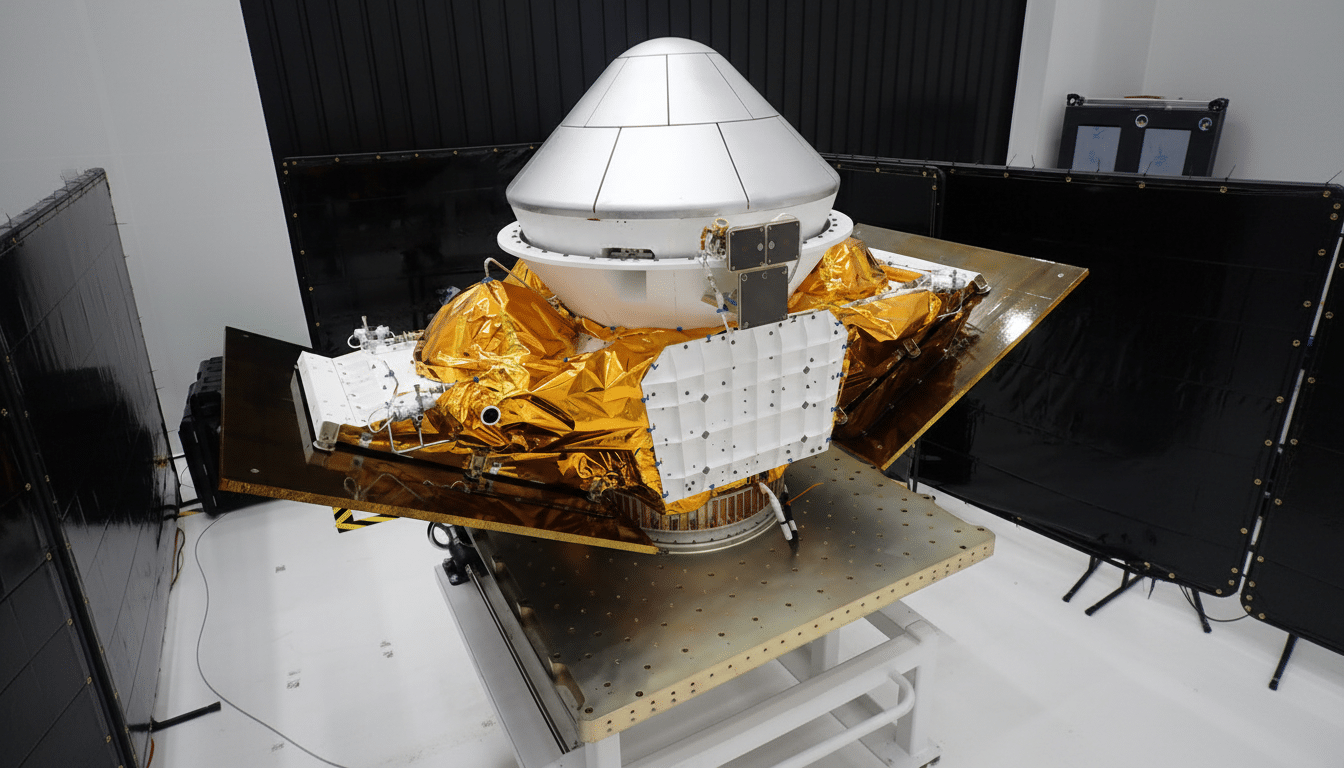
The eventual landing marked two firsts: one of the first non-government spacecraft landings on a U.S. military range and one of the earliest reentries approved under Part 450, a new framework from the FAA that makes commercial operations more flexible. Varda has since included an Australian site and received an FAA operator license that limits paperwork for successive flights — two elements of turning launches into a managed schedule instead of one-off events.
Edge Hypersonic Testing as a Product in Dual-Use
Almost nothing gets to experience real atmospheric flight at Mach 25. That makes Varda’s returning capsules a rare testbed for materials and sensors that would have to live through the plasma and shock layers of hypersonic reentry. Experiments that Varda vehicles have already flown on behalf of the Air Force Research Laboratory include optical diagnostics of the shock environment — data that ground facilities are unable to reproduce entirely.
This “flying wind tunnel” business will never rival pharma, but it pays for costs and builds relationships with government customers who appreciate the recurring ability to access true flight conditions without $100M one-off tests.
What Being Boring Actually Means for Drug Manufacturing
Boring, to the pharmaceutical industry, is compliance and consistency. Even so, space-grown crystals still have to fit into a flowchart of procedures on Earth that is compliant with good manufacturing practices (GMPs), complete with documentation for the chemistry, manufacturing and controls that would withstand regulatory review. The next threshold in credibility is clearly a clinical program that depends on an input that was space-manufactured: evidence that the value proposition survives dosing, stability and scale-up review.
Varda has raised about $329 million to date, including for an El Segundo lab buildout and hiring structural biologists and crystallization specialists. Beyond small molecules, the team is looking at biologics — antibodies and other complicated modalities that make up more than a $200 billion market globally — with help from microgravity in tamping down formulation and stability challenges regarding these higher-order structures. None of that is certain, but the blueprint is this: iterate capsules, freeze schedules and allow process discipline — not heroics — to shoulder the burden.
If the company is successful, space manufacturing could recede back into a backdrop of drug development that is invoked not in a headline but with a line in a methods section. And that, in Varda’s opinion, is the point. The future feels less like tonight’s moonshot and more like an invoice every month.
