


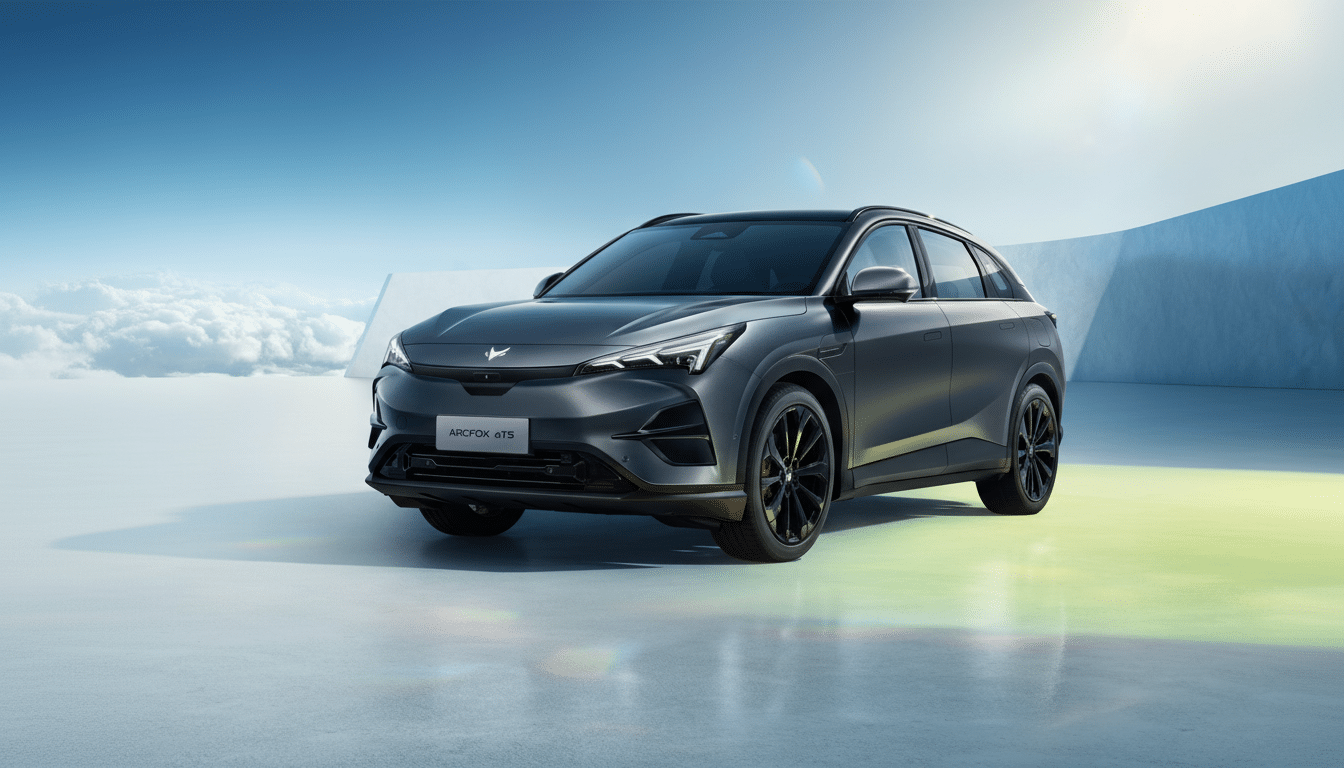
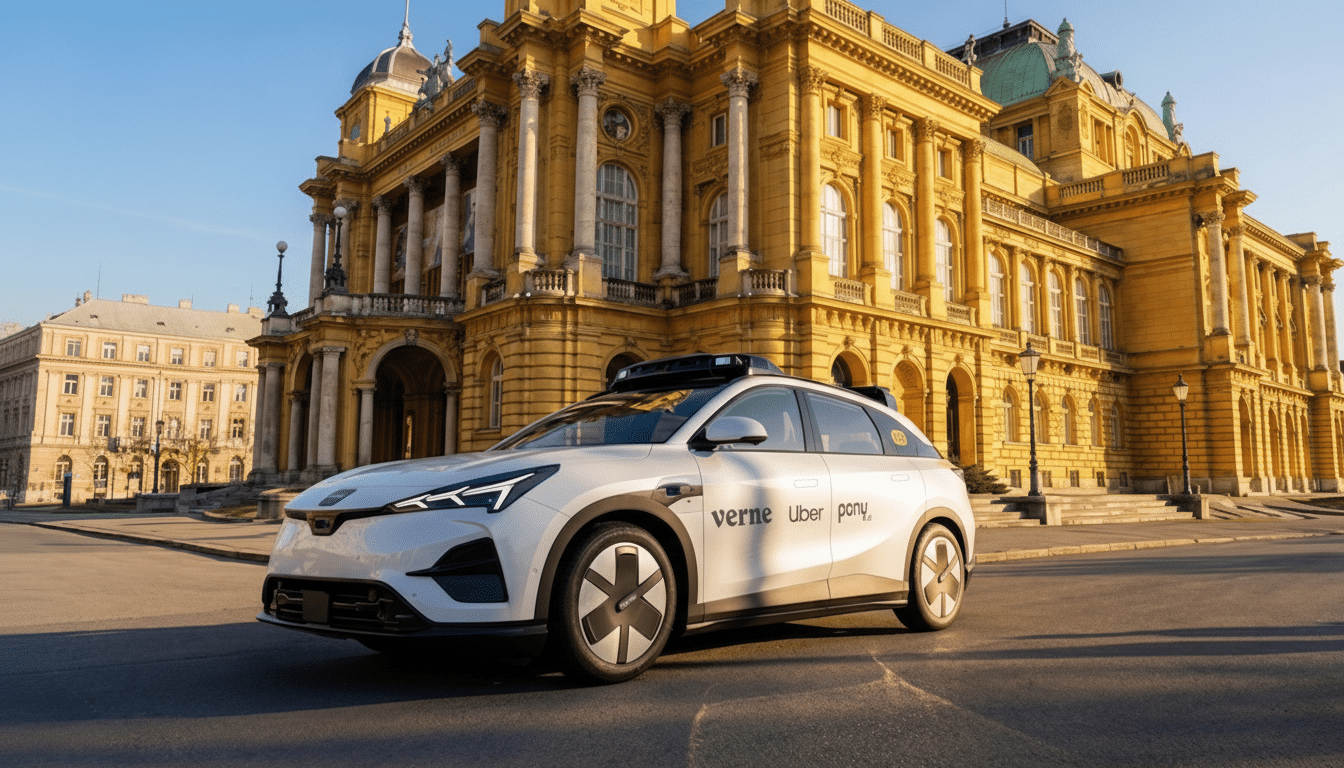
A quiet force from Croatia is stepping into the robotaxi race, and it’s not going alone. Verne, a spinout from Rimac Group, is teaming with Uber and Pony.ai to launch a commercial autonomous ride-hailing service in Europe, beginning in Zagreb. Pony.ai supplies the self-driving stack and the Arcfox Alpha T5 robotaxi developed with BAIC, Verne will own and operate the fleet, and Uber brings instant scale through its marketplace — plus a planned strategic investment.
Testing is already underway on public roads in Zagreb, a home-field advantage for Verne. Riders will be able to hail the robotaxis either through Uber’s app or Verne’s own, a dual-channel approach designed to build demand fast while collecting high-fidelity operational data.
A Three-Way Bet On European Autonomy And Scale
The partnership is a study in complementary strengths. Verne focuses on vehicle design, fleet operations, and the end-to-end platform — including cleaning, charging, maintenance, and routing. Pony.ai, among China’s most seasoned autonomy developers, provides the driverless system and integration with the Arcfox Alpha T5, a production-grade EV engineered with redundant sensing and compute. Uber unlocks distribution, trusted payments, and dynamic pricing across a user base built over a decade.
Europe’s rules for autonomous vehicles are exacting and fragmented, but not immovable. UNECE regulations enable type approvals for automated functions, while national authorities grant city-by-city permissions and define operating domains. Launching in Zagreb gives Verne a manageable geofence, close regulator access, and ready access to Rimac engineering talent.
From Hypercars To Hands-Free Rides In European Cities
Verne’s origin story runs through Mate Rimac, the founder behind Bugatti Rimac and the wider Rimac Group ecosystem, which also includes Rimac Technology and Rimac Energy. Verne began as Project 3 Mobility inside the group before spinning out with €100 million in launch funding to pursue a purpose-built urban robotaxi.
Unlike rivals that attempt full-stack autonomy, Verne deliberately avoided reinventing the self-driving brain. Its bet is on the vehicle, the app, and the real-world playbooks for keeping a driverless fleet clean, charged, safe, and profitable. The company has already produced and tested dozens of verification prototypes and is preparing a factory in Lučko to build its own two-seat EV tailored for dense European streets.
The long-term plan remains a compact, two-seater robotaxi that maximizes utilization and lowers total cost per ride. For the initial rollout, however, Verne will field the Pony.ai–BAIC Arcfox Alpha T5 to accelerate time to market and validate operations at scale.
Why Uber Is Leaning In On European Robotaxis
Uber has steadied its autonomy strategy around partnerships rather than owning hardware or core AV software. It previously integrated with Waymo in the United States and has worked with multiple autonomy and delivery robotics providers. Backing Verne in Europe fits an asset-light model: Uber supplies the demand and marketplace, while partners supply vehicles and autonomy.
Analysts at McKinsey and BCG have projected that autonomous ride-hailing could lower cost per mile for dense urban trips by double digits once fleets are industrialized, driven by higher utilization and the removal of driver costs. For Uber, every credible partner that can safely field a commercial fleet opens a path to lower prices, higher liquidity, and better reliability in cities where growth has plateaued.
Europe’s Robotaxi Moment Takes Shape In Zagreb
Europe has moved cautiously but steadily toward autonomy, with the European Commission backing cooperative, connected, and automated mobility programs and member states running dozens of city pilots. Safety frameworks defined by UNECE and ISO standards are pushing the sector beyond demos and toward repeatable, auditable operations. That creates room for a local operator like Verne to stitch together approvals city by city.
Zagreb offers a pragmatic proving ground: mixed traffic, four-season weather, and manageable complexity for building high-confidence operational design domains. Success here can translate into a playbook for mid-sized European capitals where Uber already has strong demand and municipal leaders are seeking lower-emission, lower-congestion transport options.
Risks And Realities Of Scaling European Robotaxis
The hard part isn’t building one robotaxi; it’s building a business. Europe’s regulatory mosaic, privacy rules such as GDPR, and city-level permitting can slow rollouts. Public trust must be earned trip by trip, especially after high-profile incidents in other markets that underscored the need for rigorous safety cases, transparent incident reporting, and conservative expansion.
Operational excellence will be the make-or-break factor. That means optimizing depot design, minimizing time spent charging and cleaning, orchestrating remote assistance, and ensuring redundancy for edge cases like construction zones and severe weather. Verne says it aims to scale to thousands of vehicles over the next few years — an ambition that will test everything from sourcing and serviceability to software release cadence.
What To Watch Next As Verne And Uber Scale Up
Three milestones will reveal whether this bet pays off.
- Sustained driverless operations in Zagreb with high completion rates and low disengagements.
- Expansion into a second city, proving the regulatory and operational model travels.
- Progress on Verne’s purpose-built two-seater and the Lučko plant, which would unlock tighter unit economics.
For now, a Croatian upstart has assembled a coalition with real teeth: a proven autonomy supplier, the world’s largest ride-hailing network, and a founder known for turning audacious hardware projects into reality. If the service delivers on safety, reliability, and cost, Europe’s robotaxi era may have found an unexpected catalyst in Zagreb.

