


A bright room sounds ideal until afternoon sun hits a laptop screen, washes out the TV, heats the sofa, or makes the space feel exposed. The best shade is not simply the one that blocks the most light. It is the one that gives you the right light when you actually use the room.
Watch the window for a day first. East-facing rooms often get stronger morning sun, while west-facing windows can become harsh late in the day. Once you know when the problem appears, it becomes easier to choose between light-filtering, solar, cellular, room-darkening, and blackout options.
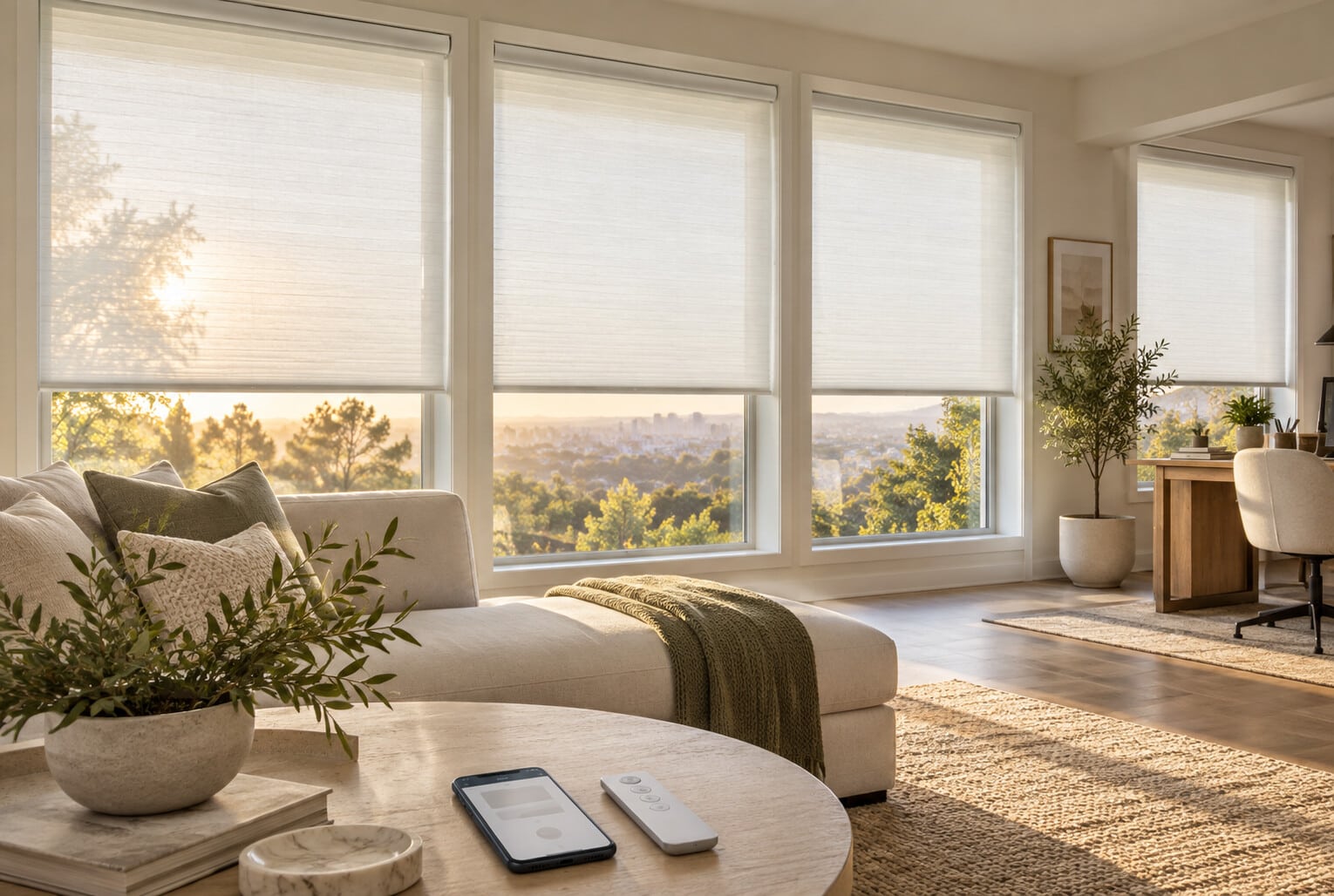
Light-Filtering Roller Shades for Everyday Brightness
For living rooms, kitchens, dining areas, and home offices, the goal is usually to keep daylight while taking the edge off it. Light filtering roller shades diffuse direct sunlight instead of shutting the window down completely. The softer light can reduce contrast on screens and countertops while keeping the room open and usable.
This type works well for people who spend most of the day in the room. Motorized controls can make adjustments easier on tall or hard-to-reach windows. For street-facing spaces, check the fabric after dark; a material that feels private in daylight may still show silhouettes when interior lights are on.
Solar Shades for Glare, Views, and Strong Exposure
A bright room with a view has a different problem. You may want less glare without losing the yard, skyline, or patio. Solar shades are designed around fabric openness. A tighter weave generally gives stronger glare and privacy control, while a more open weave preserves more of the outside view.
They are useful in west-facing living rooms, sunrooms, and offices where low-angle afternoon light lands on screens. Darker interior-facing fabrics can improve view-through and glare control, while lighter exterior-facing surfaces can reflect more solar energy. If a room repeatedly overheats, consider window direction, glass area, fabric openness, and shade placement rather than color alone.
Cellular Shades When Bright Rooms Also Run Hot
Some bright rooms have a second issue: temperature swings. Large windows can make a space warmer in direct sun and cooler near the glass in winter. Cellular shades use honeycomb-shaped pockets that trap air, so they are worth considering when insulation matters along with brightness.
Choose a light-filtering cellular fabric for a breakfast area, family room, or home office that should stay bright. A room-darkening version makes more sense in a guest room or TV room. This style also suits homeowners who want a softer fabric look without full drapery.
Layered Shades for Rooms That Change All Day
One shade cannot always solve a room that needs bright daylight at 10 a.m., screen comfort at 3 p.m., and privacy after dinner. Layering creates separate modes instead of forcing one fabric to compromise.
A light-filtering shade paired with a blackout layer works well in multipurpose rooms and bedrooms that double as workspaces. If the room opens onto a porch or patio, people searching for double blinds may get better results from adding an exterior shade layer rather than another indoor fabric. The exterior layer handles intense sun before it reaches the glass, while the indoor shade manages privacy and softer daylight.
This approach also fits households with different schedules: daylight for daytime use, then a darker setting for movies, naps, or late-shift sleep.
Room-Darkening and Blackout Shades for Specific Needs
Blackout is not automatically the best choice for a bright room. It is the right choice when darkness is the task. Nurseries, bedrooms for day sleepers, media rooms, and projection spaces usually need stronger light control than kitchens or living rooms.
Room-darkening shades sit in the middle. They cut ambient light and glare without trying to create full darkness, which can suit TV rooms and guest rooms. True blackout performance depends on more than fabric. Light can still leak around an inside-mounted shade, so outside mounts, greater overlap, side channels, or layered treatments may be needed.
Before ordering, test a fabric sample at the actual window in daylight and after dark. The right shade should match the room’s brightest hour, the person using it, the view you want to keep, and the privacy you need.

