


Threads.com/?hl=en” target=”_blank” rel=”noopener noreferrer”>Meta’s Threads is expanding its assault on topic-based forums, doubling the number of communities available on the platform and experimenting with visible recognition for so-called power users. The update also brings dozens of new interest hubs and introduces tests with user flair and a Champion badge for super engaged members: an explicit play to create stickiness around community-minded aspirations — and suck activity away from rivals where communities are already mooring daily conversation.
Communities Double As Team And Interest Hubs
Threads launched communities in October with just more than 100 topic spaces focused on staples like basketball, television, K-pop and books. The feature is now rolling out to over 200 communities, along with team-specific zones like Lakers Threads, Knicks Threads and Spurs Threads that will finally give fans a distinct place to talk games, share highlights and trade GIFs and memes without having to sift through wider feeds.
The playbook is well-trod: Forge lasting “interest graphs” that give people a reason to return. Reddit’s subreddits — such as r/NBA and r/books — are always-on places to gather; likewise, on X and Bluesky, lists or feeds operate as they do now. Threads is hustling to turn its own destinations sticky enough that users lean on it for niche conversations, not just general timeline browsing.
Flair And Champion Badges Aimed At Power Users
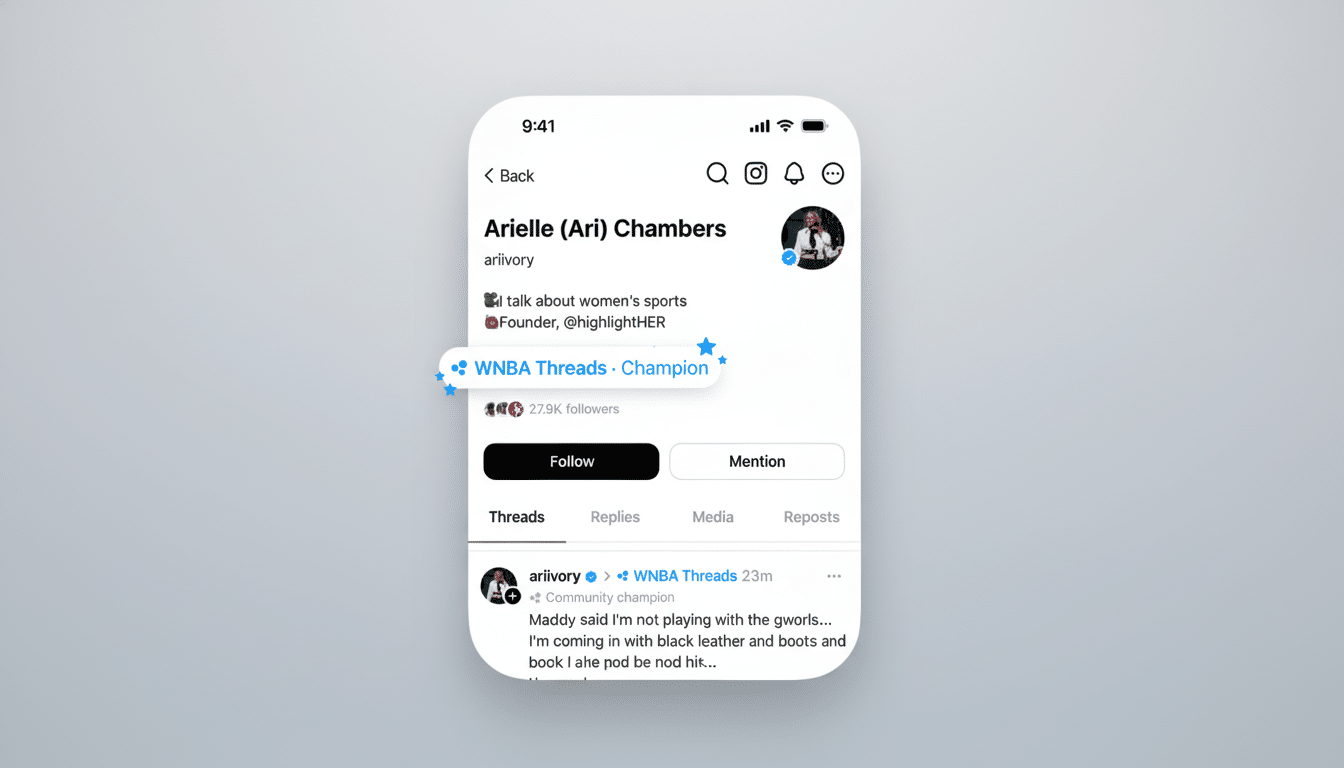
With the new communities, Threads is trialing two engagement mechanics. For one thing, user flair — customizable labels beneath a username — allows members to signal identity or expertise within a particular space. In the N.B.A. community, fans can tag their team of choice; in books, authors or genre junkies can raise their hands at a glance. This model has been popular on Reddit for years, and it works similarly with Discord’s server roles.
Second, a brand-new Champion badge will be used to spotlight community contributors who are highly engaged. The badge is restricted during testing, according to Meta, and will be given to accounts that are not only widely followed within a community but also maintain regular activity in conversations. Recognition systems, like badges and roles, are also tried-and-true across other platforms — Stack Overflow’s “reputation” levels and Discord’s role hierarchies incentivize helpful behavior but also help make it faster to unearth trusted voices.
Academic gamification coverage, such as the analyses presented by MIT Sloan Management Review, has long referred to the ability of clear reputation signals to elicit contributions when deployed transparently and linked to positive actions. The real challenge for Threads will be in ensuring badges correlate with quality and not just quantity, to prevent encouraging spammy posting.
Why This Is Important For Growth And Retention
Threads’ audience has grown rapidly, with the company saying in August that it counted more than 400 million total users and now sees over 150 million people daily. As the network grows up, retention depends less on spikes in growth and more on daily routines — group chat, DMs, ephemeral content — and now communities, which become your regular hangout spots as a fan, creator or subject matter expert.
Communities also provide Threads with an easier-to-understand structure for discoverability. New users can join conversation-ready rooms rather than constructing a feed from nothing, reducing the friction to entry. For creators and publishers, the notion that one can add some flair and a visible positioning as a Champion might at least provide a lightweight means of accruing credibility within spaces in much the same way subreddit “OP” tags or verified contributor labels have done elsewhere.
Moderation And Integrity Considerations for Threads
Any system of rewards will include edge cases. Badges can encourage valuable contributors — or lower-quality content posted to game for visibility. Sites like Reddit have learned to couple flair and awards with robust mod tools, and to maintain clear rules; community-led moderation is frequently the key to stopping brigading and preserving tone. Whether Threads needs similar guardrails and transparent criteria to earn and hold a Champion badge, along with rules for rotating recognition so that a few voices don’t become entrenched, will probably present challenges.
Identity signaling also raises issues of equity. To the extent badges become associated with follower counts, more modest yet important contributors risk being sidelined. A balance considering endorsements by peers, quality metrics and positive engagement could preserve credibility while incentivizing new voices.
What to Watch Next as Threads Tests Communities and Badges
For now, the test will be whether new communities and badges move the needle in daily active participation and post quality. Metrics to keep an eye on include growing active members per community, type of comments on topic threads and whether the use of flair as a way to classify posts becomes standard in larger rooms such as those for sports, entertainment and books.
Brand and league partnerships should be expected as well. Structured spaces attract sports teams, TV shows, publishers and fandoms. They coalesce around them much more quickly than they might around an unstructured space, if only because top contributors are easily found. If the pilot lands well, Threads could expand the badge program, give more advanced mod tools to mods as a whole and further integrate with its parent’s universe so that becoming part of a community, expressing your identity in it and discovering new groups feel just as native on the app.
