


I got an early look at Tensor’s Robocar, a luxury electric car that, unlike the autonomous vehicles built by other companies, is designed first to be privately owned and actually driverless. The big reveal on the show floor hits home with a clear message: it’s not some science project bolted into an existing car, but rather a machine designed from the ground up for Level 4 use, both for enthusiasts and everyday ownership.
Tensor positions the Robocar as an “agentic” vehicle that can predict needs and communicate proactively. Think traffic briefings before a trip; naturalistic voice interaction; decisions made based on context, rather than simply following predetermined routes. The company rides its robotaxi lineage, but the intended driver is a family, not a fleet manager.
- Level 4 autonomy built for purpose from day one
- Sensors and onboard compute are fully integrated inside
- A lounge-like cabin where comfort and calm take priority
- Safety and the real-world boundaries of Level 4 autonomy
- How it plays in the market as production approaches
- First impressions from an autonomy-first consumer EV
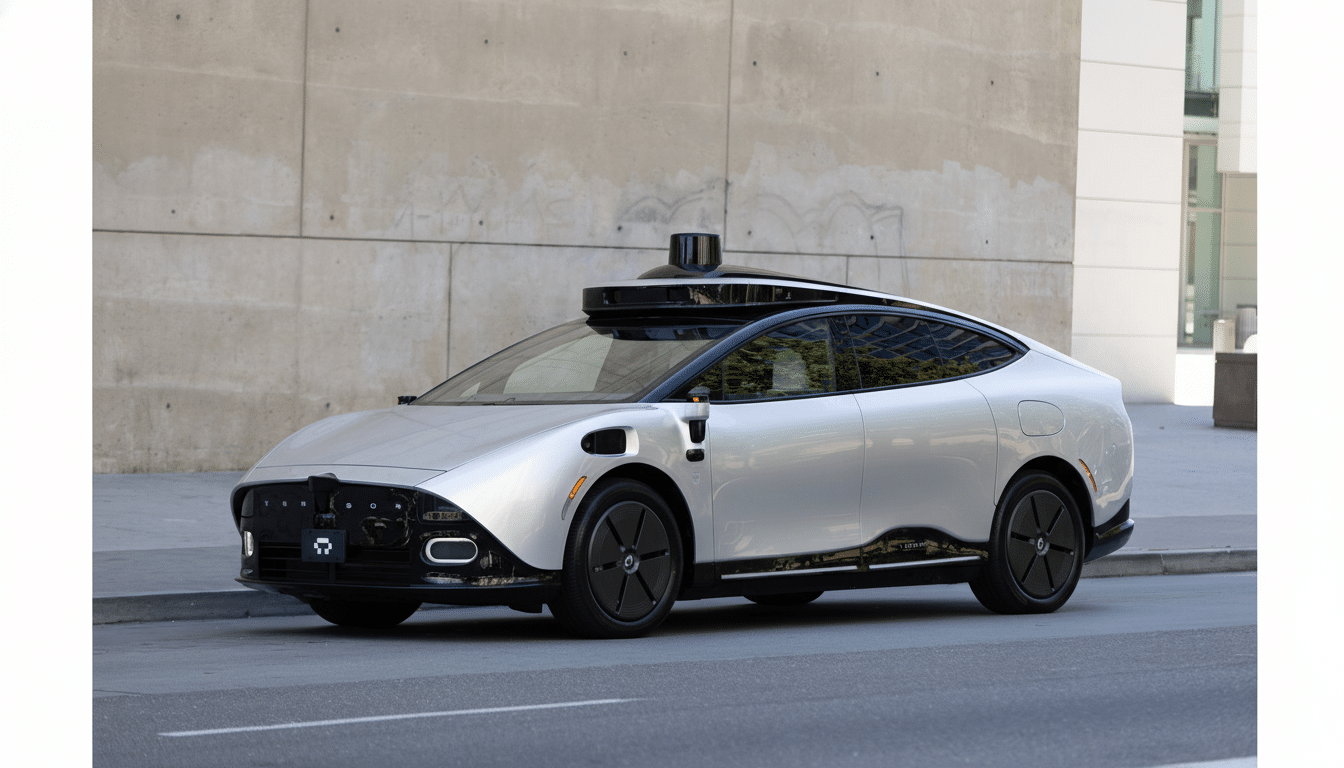
Level 4 autonomy built for purpose from day one
Under SAE, Level 4 autonomy entails the vehicle’s ability to drive itself within a system-defined operating domain absent human oversight. Tensor’s pitch is that developing around that need from the beginning makes for cleaner packaging, better sensor placement and a systems-ready system than trying to bolt autonomy onto a traditional frame. As one manager said to me, “We didn’t just bolt autonomy on a traditional car; we started with autonomy and then made it something you’d want to own.”
For now, anyway, Robocar retains a driver-facing steering wheel. With Autoliv’s help, Tensor developed a folding steering wheel that collapses completely during self-driving mode and emerges again for driver control. It’s the first of its kind, according to the company, and it includes occupant protection systems that move as the wheel vanishes in order to help open up the front cabin. It speaks of choice: independence when you feel like it, participation when you don’t.
Sensors and onboard compute are fully integrated inside
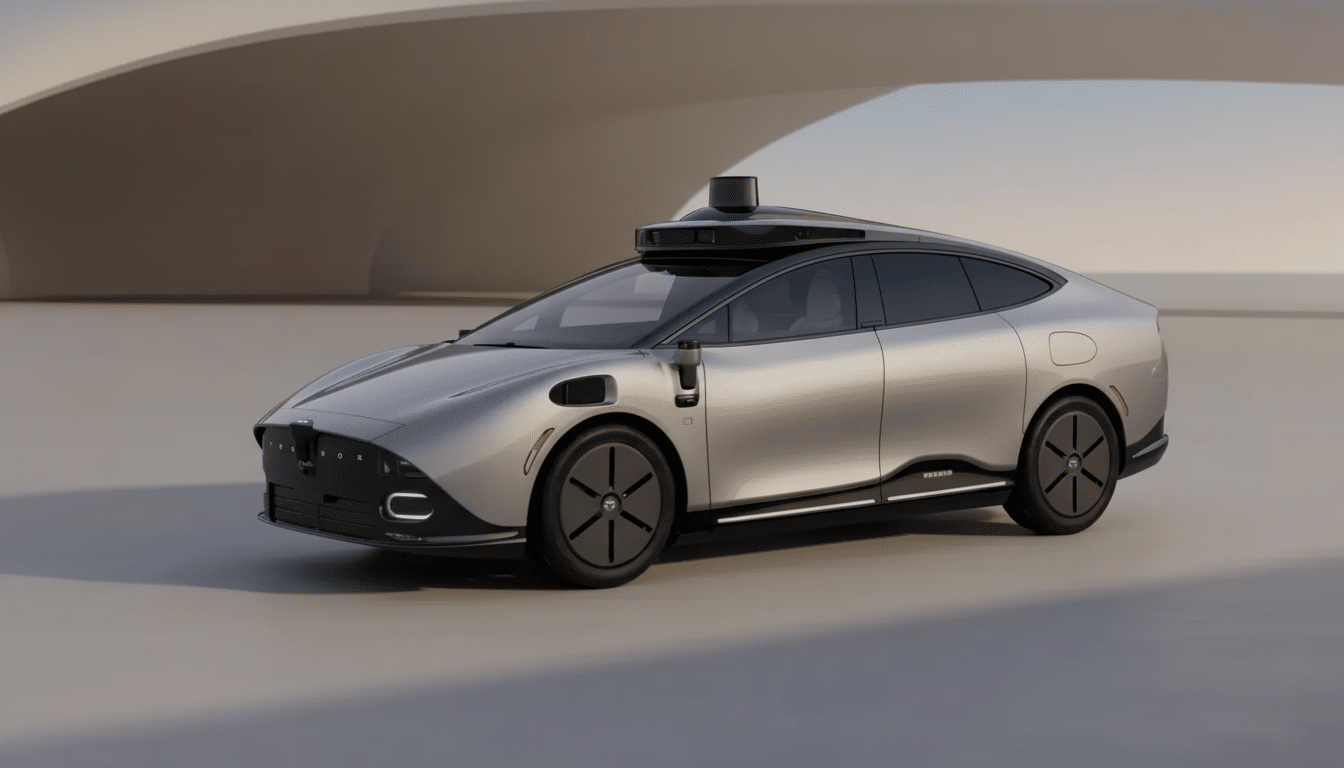
The exterior signals intent. A low, slippery profile is capped with a roof-mounted halo-style LiDAR (alongside four additional LiDARs), radar and more than a dozen cameras. Tensor says the car contains more than 100 sensors in total. Drag is minimized with camera-based side mirrors and flush lighting, all of which adds up to an appearance that’s predictable rather than shouty.
Within the stack, Tensor uses Nvidia automotive hardware for adaptive synchronization and real-time sensor fusion to plan. Because data is processed locally rather than sent wholesale to the cloud, the company bills it as both a latency win and privacy armor. Edge-first autonomy also addresses connectivity gaps and renders the system less reliant on flawless networks — helpful when traversing a thick urban canyon or a rural dead zone.
There is an implicit philosophical divide here. Some programs focus on minimal sensors and heavy reliance on the cloud; others have a belt-and-suspenders sensor suite. Tensor plainly prefers the latter, closer to robotaxi blueprints than driver-assist systems. For context, several high-profile services have employed retrofitted SUVs or crossovers; Tensor’s clean-sheet strategy allows engineers to place sensors where they want them as opposed to wherever the donor body can accommodate.
A lounge-like cabin where comfort and calm take priority
The cabin is all about comfort and clear thinking. There are massage seats, Dolby Atmos sound systems and massive displays that feel less like a cockpit with toggles and more like a lounge. The front row, too, has the feeling of a compact salon rather than a more conservative driver’s seat, which matches the car’s self-driving job description.
Materials and interfaces are discreet — premium without overreaching or trying too hard — and the spatial layout is enriched by the flat floor of an EV platform. It is a design to encourage passengers to talk, work or decompress while the car takes care of boredom.
Safety and the real-world boundaries of Level 4 autonomy
Level 4 always depends on the operational design domain: geography, weather and traffic conditions delineate where the system drives itself. Tensor says its stack is designed to work around this and not require the owner to be an engineer. The folding wheel is still there for edge cases, no doubt, but the idea should be to minimize handoffs and make transitions predictable.
Consumer trust will be the other battleground. “It was pretty wide-eyed and innocent,” Mr. Nygaard said of the tech mission. “You wanted to believe. You saw a car park itself, you were convinced that five years from now it would be all self-driving cars.” But it’s not just accidents causing fear in drivers: In a recent poll by AAA, 68 percent of drivers said they are afraid of fully self-driving vehicles. If you want Robocar to win over the skeptics, it all comes down to clarity: easy-to-read status displays, unambiguous handover procedures and transparent safety messaging. There is serious hardware in these parts; the human factors work should measure up.
How it plays in the market as production approaches
Tensor places Robocar in the same high-end market space, referring to the vehicle’s sensor loadout, compute platform and luxurious interior. Pricing is still a secret, and the company says production ramps in the second half of this year. That will place it next to a fragmented landscape of geofenced robotaxi services in certain cities, driver-assist-heavy consumer vehicles and a regulatory environment that’s increasingly specific about the performance and reporting requirements for automated driving systems.
Robocar’s monolithic design should make it easier to maintain and validate than retrofit fleets, the early services built on top of donor SUVs. Relative to camera-based approaches, its multi-sensory environment addresses redundancy in rain, glare and low-light conditions. Those are expensive and complex choices, but they could pay dividends in reliability and owner confidence.
First impressions from an autonomy-first consumer EV
It’s one of the most committed autonomy-first consumer cars I’ve seen on a show floor. The sensor packaging appears deliberate, the cabin seems truly reconfigurable, and the software story is clearly prioritizing practicality over demo theatrics. I didn’t get road time, so the jury’s out on driving behavior — yet, without a doubt, that integrated execution smacks of a team building an actual product, not just a prototype.
It remains to be seen if the handoffs are smooth, if the ODD is wide enough for daily life and if that ownership experience is as stress-free as it has been made out to be. If it can do that, then Robocar could turn autonomy from a pie-in-the-sky promise into something people actually want to buy, live with and trust.
