


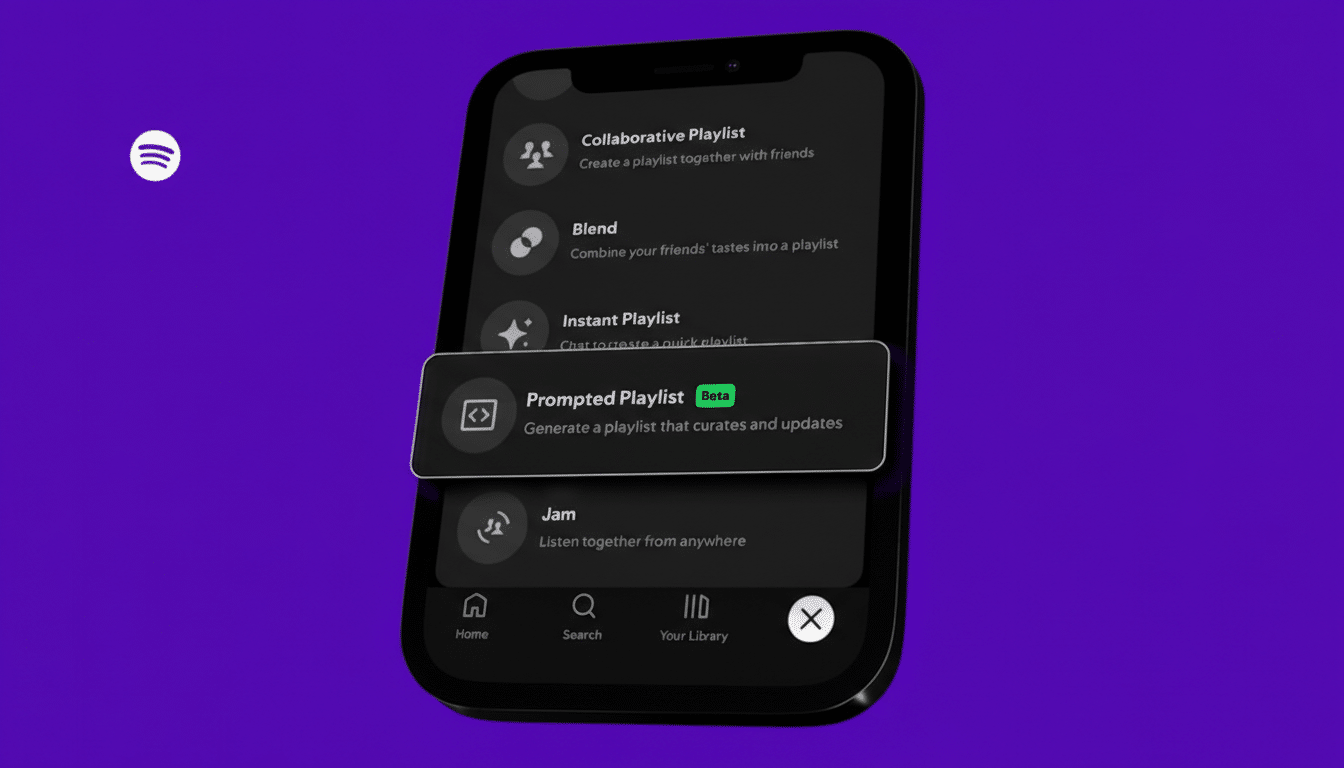
Spotify is testing a new way to build playlists that starts with your own words. Called Prompted Playlists, the beta feature lets Premium listeners in the US and Canada describe what they want to hear, then turns that brief into a living playlist that updates on a schedule you choose. It’s a small shift in interface with big implications for how recommendations get shaped.
What Prompted Playlists Are and How They Personalize Music
Instead of picking artists or toggling filters, you type a prompt—anything from a mood to a scene to strict constraints—and Spotify assembles a playlist that matches the intent. The company says it blends your description with your listening history and current trends to deliver a “vibe” that feels personal yet fresh.
- What Prompted Playlists Are and How They Personalize Music
- How the Feature Works Inside Spotify’s Recommendation Engine
- What You Can Ask It to Build with Free‑Form Playlist Prompts
- Controls, Refresh, and Where to Find It in the Spotify App
- How It Differs From Other Spotify Tools
- Why This Matters for Music Discovery and Listener Control
- Privacy and Personalization in Prompted Playlists Recommendations
- Availability and Early Limitations for US and Canada Premium Users
How the Feature Works Inside Spotify’s Recommendation Engine
Under the hood, Prompted Playlists likely combine natural language understanding with Spotify’s long-running recommendation engine. Your words are parsed into attributes—genre, era, energy, tempo, even cultural cues—then matched to track embeddings and audio features such as danceability or acousticness that Spotify already uses in its API. The system weighs that against your past behavior to balance discovery with familiarity.
Practically, you enter a prompt, preview the seed results, and refine with follow-up instructions. You can include or exclude genres, enforce time windows, or lean toward emerging artists. Once saved, the playlist can auto-refresh daily or weekly, so it evolves without you micromanaging it.
What You Can Ask It to Build with Free‑Form Playlist Prompts
Free-form text is the point. Examples that work well:
- Discover Weekly style but only hip-hop from the last 30 days
- Early morning focus tracks under 90 BPM with minimal vocals
- Bollywood dance hits for a wedding reception with 2015 to today
- First songs I ever streamed here ordered by the exact date
- Sun‑soaked indie rock with female vocals similar to Alvvays but no repeats from my liked songs
Prompts can be playful (“road trip through the desert at golden hour”) or surgical (“Afrobeats released in the last 60 days, energy 7–9, skip explicit”). The model interprets both.
Controls, Refresh, and Where to Find It in the Spotify App
You’ll see Prompted Playlists in the Create menu. After entering your prompt, you can:
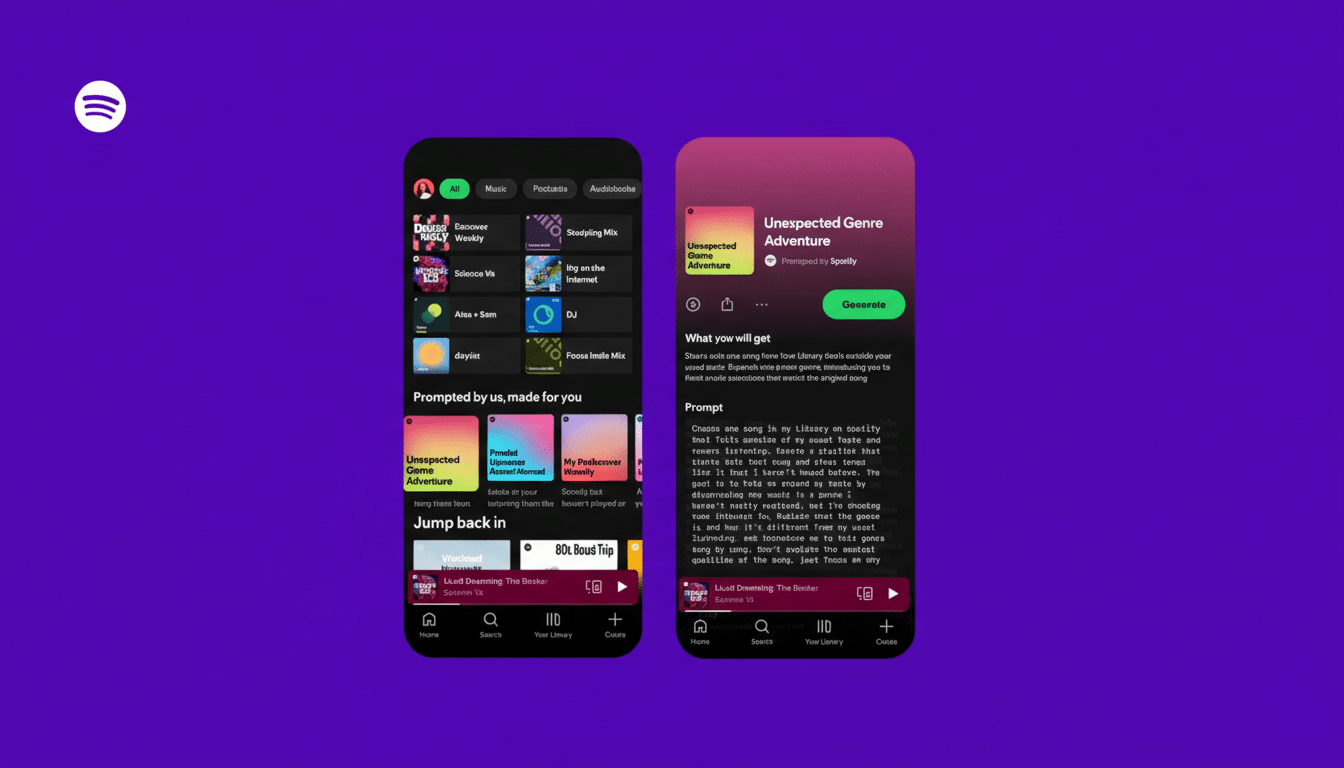
- Set refresh cadence to daily or weekly
- Add or ban genres, eras, or artists
- Emphasize new releases and emerging acts
- Adjust order (e.g., newest first, energy arc)
These are the kinds of levers power users have long accessed through third-party tools or the public API; Spotify is now surfacing them in plain language for everyone.
How It Differs From Other Spotify Tools
Discover Weekly and Daily Mix push algorithmic bundles to you with minimal input. The AI DJ adds narration and context but still drives the session. Prompted Playlists flips the dynamic: you give the brief, and the system executes. It’s closer to YouTube Music’s “Create a radio” or Apple Music’s Discovery Station, but with far more nuance because it accepts full-text instructions rather than a handful of toggles.
Why This Matters for Music Discovery and Listener Control
Personalized playlists are central to how people find songs today. Spotify has reported repeatedly that recommendation features account for a significant share of listening, and industry surveys from organizations like IFPI show that algorithmic suggestions are a top pathway to new music. By letting listeners articulate intent directly, Prompted Playlists could reduce the trial‑and‑error that often comes with traditional search and radio.
For artists, the upside is targeted exposure. A prompt like “left‑field R&B with analog synths” can surface niche creators who might never land on a broad editorial list. The daily/weekly refresh setting also increases the rotation of new tracks entering these lists, which can translate to more first-time streams.
Privacy and Personalization in Prompted Playlists Recommendations
Because prompts are blended with your listening history, the results should feel tailored without being a carbon copy of your Liked Songs. Spotify notes that it factors in cultural and music trends, suggesting there’s a novelty bias to avoid staleness. As with other personalized features, what you play and skip will continue to train future recommendations.
Availability and Early Limitations for US and Canada Premium Users
Prompted Playlists are in beta for Premium subscribers in the US and Canada, with broader rollout likely if engagement holds. Expect occasional misses with highly specific or obscure prompts, and remember that catalog availability and metadata quality can constrain results. Still, early impressions suggest a rare blend of control and surprise—exactly what listeners want when they say, “Play something like this, but better.”
