


Spotify is rolling out its AI-powered Prompted Playlists to Premium subscribers in the US and Canada, turning simple descriptions into fully formed, personalized mixes. The feature, piloted in New Zealand, lets people build playlists by describing a vibe, activity, or even a story, without needing to know genres or insider music terminology.
Unlike earlier experiments that leaned on short, utilitarian prompts, Prompted Playlists accept longer, conversational directions and apply them to your history, the wider culture of what’s trending, and Spotify’s editorial intelligence. It’s the clearest signal yet that playlist curation is shifting from tapping and sorting to talking and steering.
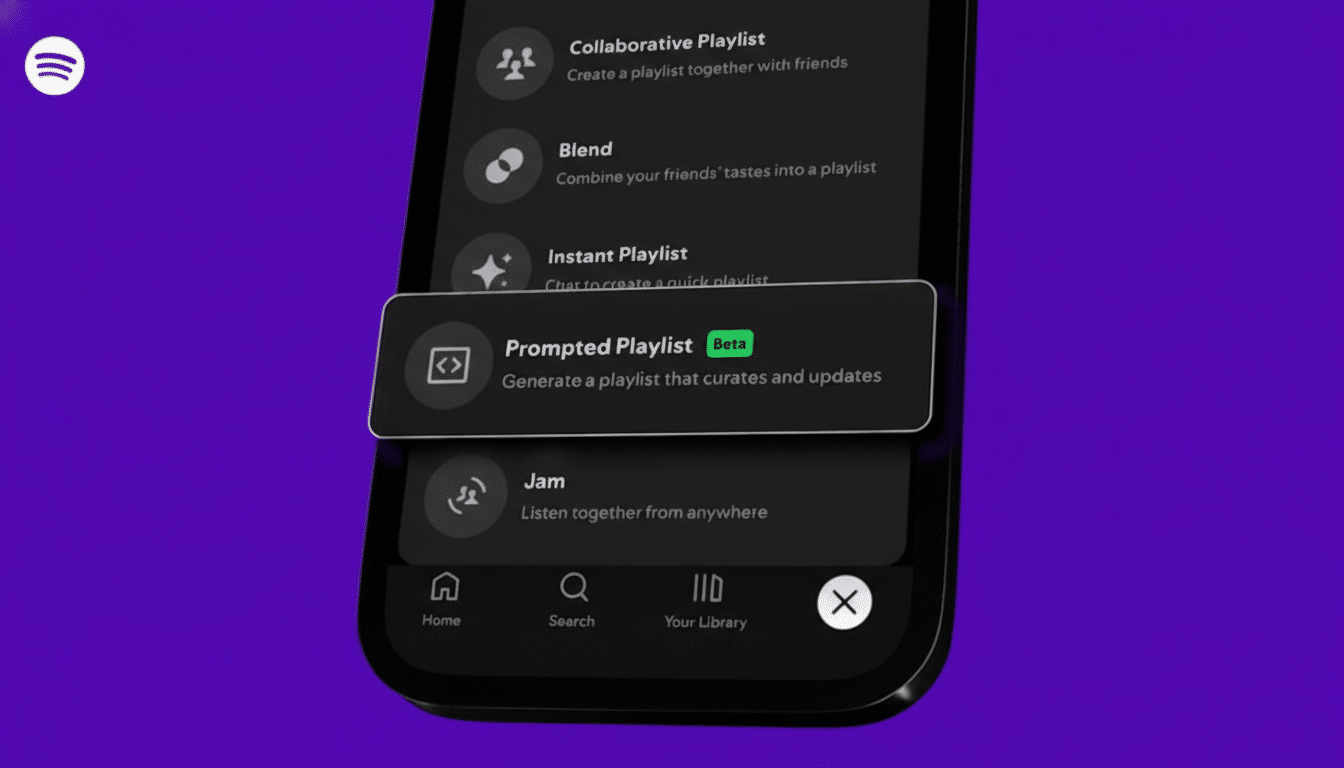
How Spotify’s AI Prompted Playlists Build Mixes
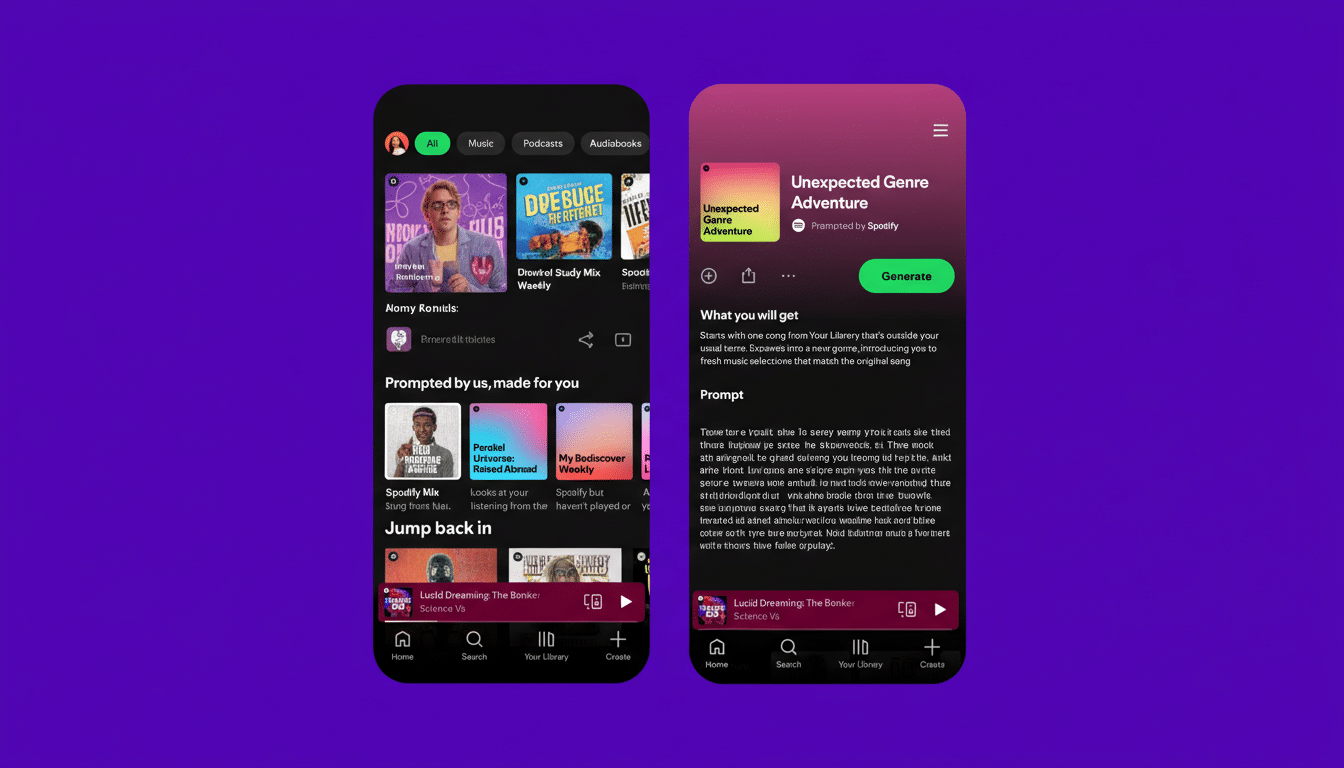
Users type a natural-language request—anything from “soundtrack a snowed-in Sunday with cozy indie folk” to “introduce me to a jazz legend I’ve barely explored, front-load five tracks I’ll love, then dig into deep cuts.” Spotify’s system parses intent, balances personal taste with broader context, and sequences songs to match the brief.
The model looks at a listener’s full history on the service, not just recent plays, while also reading the room on what’s moving in charts, scenes, and subcultures. If you’re trying to break habits, you can explicitly ask the tool to ignore your history or to emphasize artists you’ve never heard. The resulting playlist is yours to tweak—reorder, remove, save—like any other.
Prompts can be shared so others can “run” the same idea. Because each output is personalized, two people using the identical prompt will still get different mixes. That dynamic could empower a new type of creator who trades in great prompts rather than long tracklists—an evolution of the way fans already swap blend codes and editorial playlist links.
A Shift in Music Discovery and Playlist Curation
Spotify’s curation team, known for Today’s Top Hits, New Music Friday, and RapCaviar, has long paired editorial taste with data. Prompted Playlists extends that “editorial mindset” to everyone. The practical upshot: if you can describe a feeling or scenario, you can generate a fitting soundtrack—no need to know release years, subgenres, or scene-specific tags.
This matters because streaming discovery is increasingly conversational. YouTube Music has experimented with text-based queries for mood-based listening, and smart assistants have trained people to speak their intent rather than menu-dive. By making freeform prompts central to playlist creation, Spotify is betting that intent-rich language will yield stickier sessions and fresher recommendations.
There are implications for artists, too. When users ask for “a soulful introduction to a rising R&B vocalist from Toronto” or “post-rock without vocals for deep focus,” the system can surface catalog cuts and niche acts that fit the brief, not just the usual heavy-rotation suspects. IFPI’s latest Global Music Report underscores why that matters: streaming makes up roughly 67% of recorded music revenue worldwide, and discovery pathways shape who gets heard within that pie.
Competitive Landscape and Spotify’s Business Context
Spotify has been layering AI across the product since AI DJ, Daylist, and Niche Mixes, but Prompted Playlists push deeper into co-creation. For a company with more than 220 million Premium subscribers globally, according to recent earnings disclosures, even modest gains in engagement can move retention and lifetime value, especially in high-ARPU markets like North America.
Rivals are circling. Apple Music leans on editorial stations such as Discovery Station and curated playlists, while Amazon and YouTube have tested conversational flows that turn text requests into listening sessions. Industry analysts at MIDiA Research have consistently noted that personalization features rank among the top reasons subscribers stay put; owning the most intuitive, flexible playlist builder is a logical moat.
There are open questions. Generative systems reflect training data and user behavior, so transparency around why a track is chosen will matter for trust and for artists who want to understand exposure. Spotify says the model weighs trends, charts, culture, and history alongside personal taste, which suggests a blend of editorial rules, real-time signals, and recommendation algorithms rather than a black box purely hallucinating results.
Availability, language support, and current limitations
Prompted Playlists are rolling out to Premium subscribers in the US and Canada in English, with usage caps while the feature remains in beta. The company plans to learn from these markets before expanding more broadly.
Notably, the new tool won’t replace Spotify’s earlier AI playlist feature; both will coexist. The older option still suits quick, short prompts, while Prompted Playlists favor longer, more descriptive inputs and finer control. For listeners, that dual approach should cover everything from a spur-of-the-moment gym mix to a carefully staged introduction to an artist’s catalog.
If the New Zealand tests are any guide, expect a steady stream of inventive prompts to ripple across social feeds as users compare results. The most compelling sign of success will be simple: more people building more playlists more often—without ever feeling like they had to “learn” curation to get something that sounds just right.
