


Most couples wait way too long to try couples therapy. Months go by. The same fight keeps popping up like a glitch in a video game that never gets patched. One person starts keeping score in their head. Nobody presses pause. And waiting almost never makes things easier.
Here’s the thing though. In Mississauga, couples therapy is not only for people who are about to break up. A lot of couples who go aren’t standing at the edge of a cliff. They’re just stuck, like a bike chain that keeps slipping off the gear. Catching that early is usually what turns things around.
- What Is Couples Therapy?
- Signs You and Your Partner May Benefit From Couple Counseling
- Normal Relationship Problems vs. Patterns That Need Professional Help
- How Couples Therapy Can Help
- Do You Need Therapy Even If Your Relationship Isn’t in Crisis?
- When Therapy May Not Be the Right First Step
- What to Expect From Your First Therapy Session
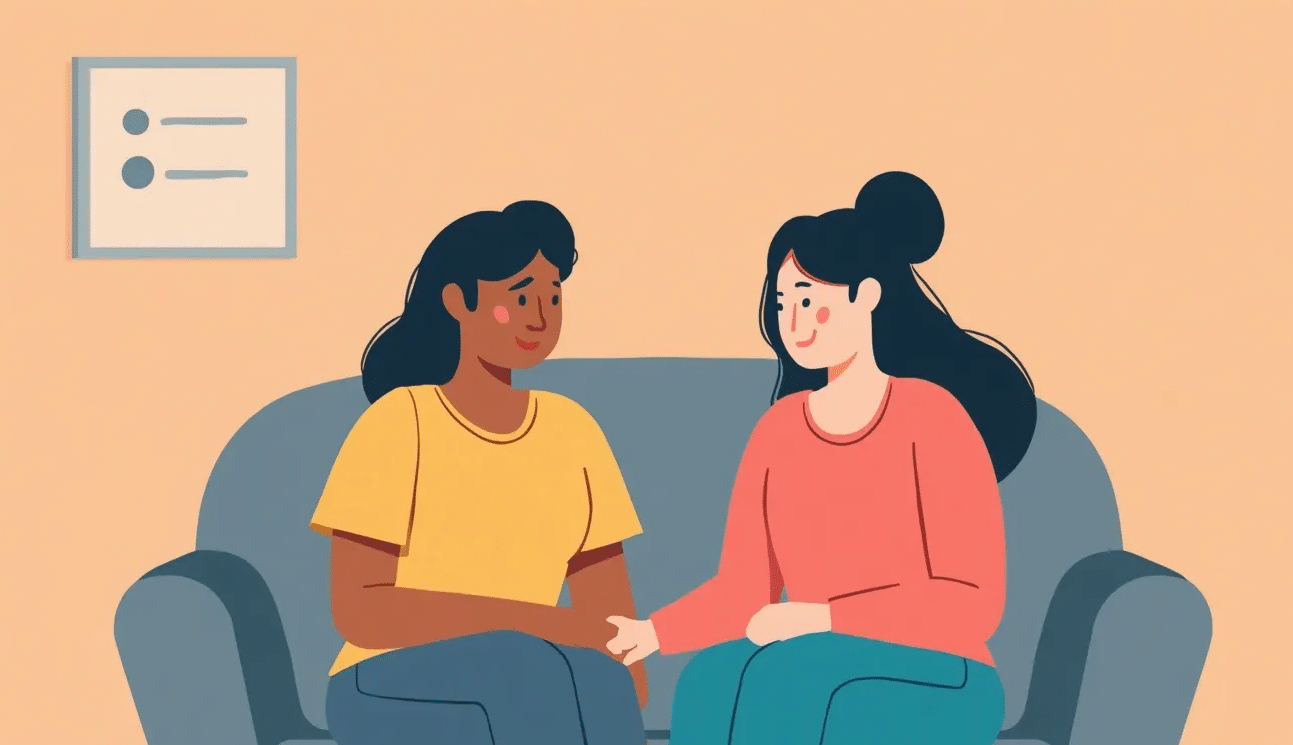
This article walks through top signs a relationship might need extra help, the difference between normal bumps and real trouble, and what actually happens the first time you sit down with a therapist.
What Is Couples Therapy?
In simple terms: Couples therapy, also called marriage and relationship counseling, is talk therapy for two people. A licensed therapist who actually studies relationships helps you see how you talk, how you fight, and how you connect (or don’t).
Couples therapy is when an experienced couples therapist sits down with two people and helps them figure out why the same problems keep coming back. Most sessions happen together. Sometimes the therapist meets each person alone too.
Saying “let’s just communicate better” is not the same as going to therapy. Big difference. Therapy gives you a neutral room where nobody’s yelling and someone trained can point out the pattern you two can’t see, kind of like a coach watching game film you can’t see from the field.
Say a couple’s been telling themselves “we’ll talk more” for three years straight. Same fight, every few weeks. A therapist doesn’t just cheer for more talking. They dig into why the talking keeps crashing.
Signs You and Your Partner May Benefit From Couple Counseling
If a problem keeps repeating for months with zero progress, or one of you feels ignored and on edge most days, that’s usually reason enough to look into couples therapy.
- Same argument, no ending. A fight about money or in-laws gets “solved” and then shows up again three weeks later, word for word.
- Talking turns into a fight before it even starts. Someone interrupts. Someone gets sarcastic. A simple “hey, can we talk” feels like stepping on a landmine.
- You feel far away from your own partner. You share a house, split the bills, handle the schedule together. But it feels like living with a roommate, not a partner.
- You bring something up and get shut down. One partner mentions a worry, the other gets defensive right away. Eventually the worried partner just stops mentioning things.
- Trust took a hit. Cheating is one path here, sure. But small lies and broken promises pile up the same way.
- You dodge the hard topics. Money. Family. The future. Every time it comes up, it quietly gets dropped because you already know how it ends.
- Affection dried up and nobody said why. Physical closeness drops off. Nobody brings it up because it feels awkward or scary.
- Little things set off big reactions. Dishes left in the sink shouldn’t cause a blowup. When they do, that’s resentment talking, not dishes.
- You quietly wonder if it’ll ever get better. Neither of you has said it out loud yet. But it’s there.
One of these showing up once in a while doesn’t mean the relationship’s doomed. It’s the sticking around, week after week, that makes it worth bringing to therapy.
Normal Relationship Problems vs. Patterns That Need Professional Help
Every relationship has some friction. Two different people, two different upbringings, and two different ways of loading a dishwasher can lead to disagreements. That’s normal.
Healthy conflict usually stays focused on the issue. You talk about what’s bothering you, explain how you feel, listen to each other, and eventually find a way forward, even if you don’t completely agree. You can move on without carrying the argument into every part of the relationship.
But repeated conflict can become a problem when the same arguments keep coming back, conversations turn into silence, or you feel like you have to watch every word. Patterns such as contempt, emotional withdrawal, or constant criticism can gradually create distance between partners. If avoiding your partner starts to feel like a relief, it may be a sign that the relationship needs more attention.
How Couples Therapy Can Help
A good therapist doesn’t hand out generic advice off a pamphlet. They work on the exact pattern keeping a specific couple stuck. That usually covers:
- Talking without every conversation turning into a fight
- Spotting patterns, like one partner going quiet while the other keeps pushing
- Handling conflict with less shutting down and less defensiveness
- Dealing with resentment before it colors everything
- Rebuilding trust at a pace that actually works for both people
- Understanding what each partner actually needs
- Learning tools that still work after therapy ends
No therapist can promise a happy ending. Nobody can guarantee two people stay together. What therapy actually gives is a real, structured space to look at what’s happening and decide together what comes next.
Do You Need Therapy Even If Your Relationship Isn’t in Crisis?
You don’t have to be circling the drain to benefit from therapy. A lot of couples show up just to catch friction before it turns into full-blown resentment.
Going early tends to make patterns way easier to shift. They haven’t had years to bake themselves in yet. Waiting until it’s unbearable usually means unpacking a bigger mess later.
Some couples go through therapy just to get ready for a new baby, a move, or a career change. No crisis. Just prep work. That’s a perfectly good reason to go.
When Therapy May Not Be the Right First Step
Regular couples therapy assumes both people feel safe enough to talk honestly in the room. That’s not true for every relationship.
If there’s physical violence, threats, or one partner controlling the other, sitting them down together first isn’t the move. That situation usually calls for individual support and a safety plan first, because joint sessions can actually raise the risk for the person being hurt.
This isn’t about labeling anyone’s relationship from a distance. A real therapist checks for safety concerns early on, and if those show up, a different kind of support gets recommended instead.
What to Expect From Your First Therapy Session
Session one usually isn’t about fixing anything yet. It’s about figuring out what’s actually going on.
- Discussing relationship concerns
Each person shares their side. Recent fights, ongoing frustrations, whatever’s changed. The therapist listens for the pattern instead of picking a winner.
- Identifying goals
The therapist asks what each of you actually wants out of this. Better communication? Rebuilding trust? Just feeling close again?
- Understanding the therapist’s role
They’re a guide, not a referee. Nobody’s keeping score. The job is helping both people see the relationship more clearly.
- Creating a plan for future sessions
Most therapists lay out a rough plan after that first meeting: how often to come in, what to tackle first, how they’ll check on progress. Couples in Ontario, including folks searching for counselling in Mississauga, can usually pick in-person or virtual sessions depending on what fits their week.
Conclusion
Spotting one or two of these signs doesn’t mean everything’s falling apart. It means there’s a pattern worth looking at before it hardens into something harder to move. Couples therapy hands both people a real way to look at what’s going on instead of replaying the same fight for the hundredth time.
If talking has gotten harder, trust took a hit, or connection feels thinner than it used to, reaching out to a professional couples therapist such as Centre of Healing Minds (CoHM.ca) is a fair next step. It’s not a last resort.
Frequently Asked Questions
What are the signs you need couples therapy?
Repeated fights that never get solved, hostile or shut-down talking, feeling far apart, broken trust, and resentment that keeps growing. These signs point to a pattern, not proof the relationship’s doomed.
When should a couple consider therapy?
When a problem repeats for months and nothing changes, when talking always ends in a fight or silence, or when someone feels disconnected most of the time. Big life changes count too, even without a crisis.
Can therapy help with communication problems?
Yes. It’s actually one of the top reasons couples show up. A therapist figures out why conversations keep crashing and teaches ways to talk about hard stuff without it blowing up.
Is therapy only for married couples?
Nope. Dating, being engaged, living together, married, doesn’t matter. Plenty of couples who aren’t married go just to work through one specific issue.
Can therapy save a struggling relationship?
It can help two people talk better, spot repeating patterns, and work through what’s unresolved. But no therapist can promise a specific outcome. It really comes down to both people showing up and doing the work.

