


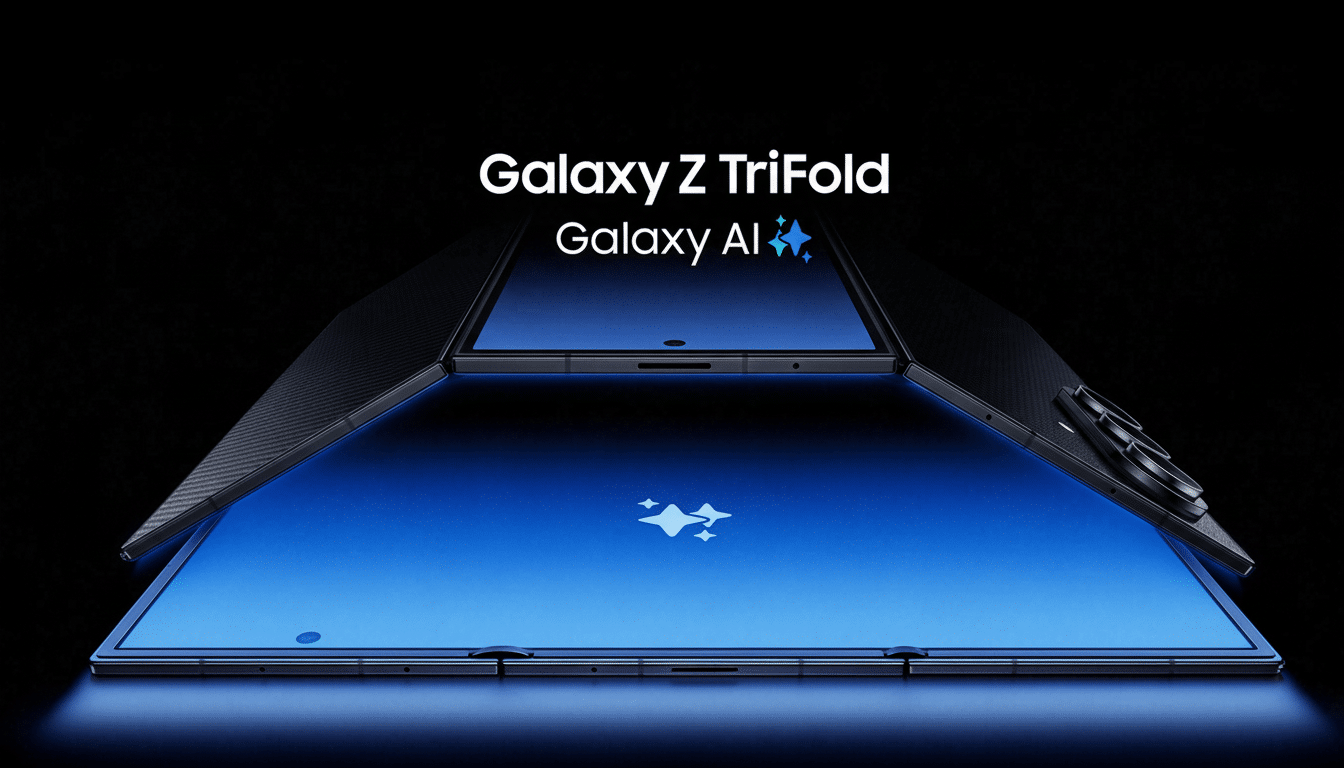
Samsung is attaching hard numbers to its most complicated foldable device yet. In a new behind-the-scenes video, the company explains that the Galaxy Z TriFold’s main display is rated for 200,000 folds, which it compares to 100 folds a day over five years. Here comes the claim, in addition to footage of how the phone is custom built and quality-checked — an interesting glimpse into how a tri-panel device is constructed for life’s bumps along the road.
What 200,000 folds actually amounts to in daily use
Samsung’s number is consistent with past generations of its foldables, though it falls short of the Galaxy Z Fold 7’s higher 500,000-fold rating. That’s a gap on paper, but context is important. And most people aren’t going to open and close a tablet-sized device hundreds of times a day. To put that into perspective, research from Asurion and other usage trackers shows smartphone users look at their phones anywhere between 60–100 times a day. If a TriFold owner unfolds it all the way to read, write, or occasionally watch video — as opposed to rushing through bites of content — 100 folds a day is an extremely modest upper bound for most.
- What 200,000 folds actually amounts to in daily use
- Engineering a three-stage fold mechanism for durability
- How it stacks up against other foldables on the market today
- Durability is more than just a number on a spec sheet
- Big-screen aspirations with heavy-duty hardware
- Price and the bottom line for Samsung’s Galaxy Z TriFold
It’s also important to note that cycle counts are based on controlled lab conditions. Real-world results can be influenced by temperature swings, particulate infiltration, and user behavior. Samsung notes the rating comes from internal testing, and that third-party verification has not yet been published.
Engineering a three-stage fold mechanism for durability
The TriFold’s durability target required a new assembly flow. Samsung details a duo of Armor Flex hinges that allow the three display pieces to work in harmony, advanced bonding for strict flatness requirements between the ultra-thin glass and protective layers, and a refined layer stack so it is thinner thanks to a controlled press process cutting down on internal stress at such scales. In multi-bend configurations, it is important to control the bend radius as well as a “neutral plane” of display layers — poor alignment can cause microcracks in glass or fatigue cycling in polymer layers during use.
The company also shows additional QC tests for consistent hinge torque and smoothness, as well as structural tests designed to mimic the folding action at different pressures. That’s because with two hinges and three panels, tolerances stack up; keeping everything aligned is literally an order of magnitude harder than a single-hinge book-style device.
How it stacks up against other foldables on the market today
Compared with the Z Fold 7’s 500,000 figure, the TriFold’s 200,000 folds really doesn’t sound so shocking. More moving parts. More potential points of stress in tighter packaging, and so on. Independent testing has long cast a complicated picture. Allstate Protection Plans, for instance, has demonstrated Samsung’s fold-style phones folding in stretch rigs more than 300,000 cycles before they died, and teardown experts like iFixit have regularly cautioned that dust ingress and misalignment can prove as significant as pure cycle numbers.
Hinge complexity is also commonly associated with failure modes, particularly at flex edges and around gear assemblies, industry watchers at DSCC have said. Viewed in that light, Samsung’s score appears to be not a retreat but rather the company’s promise for what it hopes will be a first-generation tri-fold architecture.
Durability is more than just a number on a spec sheet
Cycle ratings are only the beginning. Scratches, crumbs, and accidental drops are culprits in many of the failures of foldables. Samsung’s video shows an “auto-alarm” that notifies users if they start folding the device incorrectly, a simple intervention that could help prevent edge cases such as reverse pressure on a hinge or pressure to the center panel. For the long term, though, resistance to dust and grit, strong factory-applied screen protectors, and hinge sealing matter at least as much as the raw fold count.
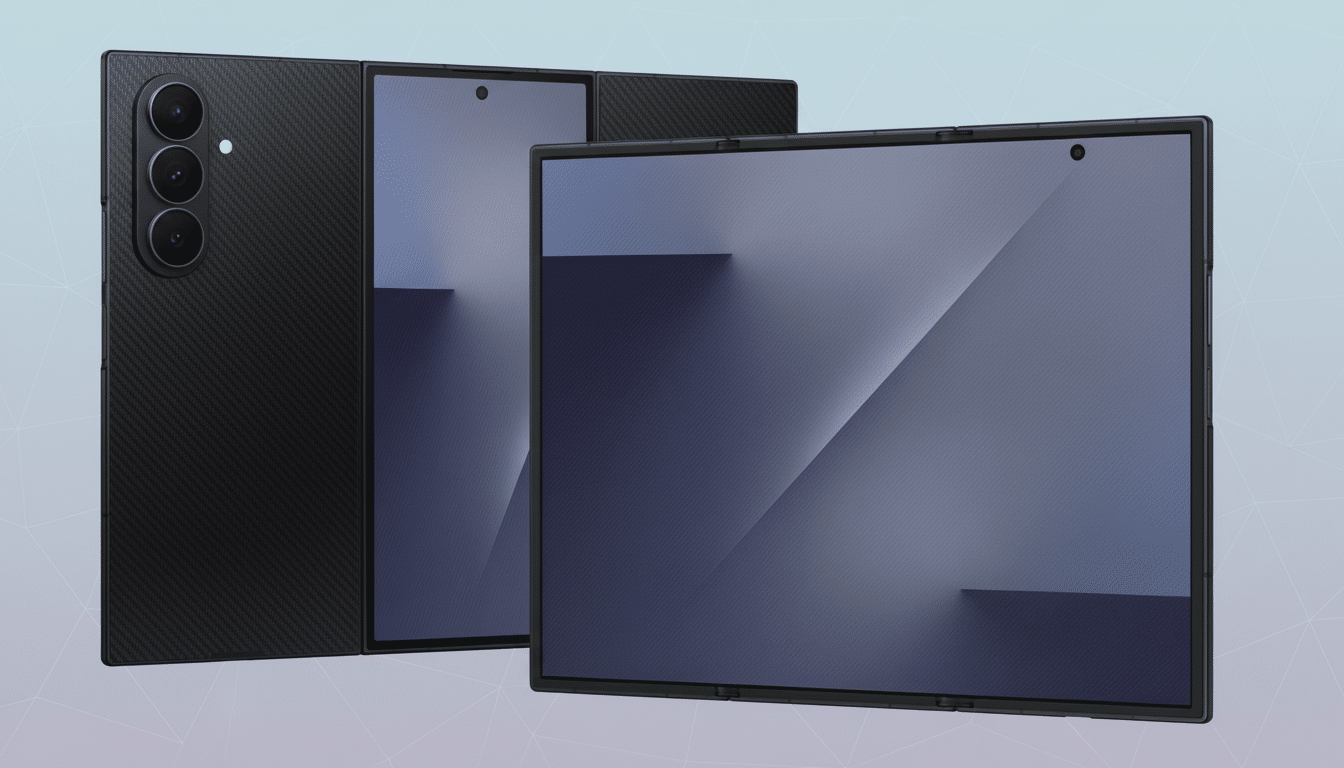
In the business world, the larger question is performance in workflow-heavy productivity use. If the TriFold spends extended periods in its open, 10-inch slate form factor — to which I regularly referred throughout several days of sustained abuse and testing in a wide variety of viewing conditions — the daily fold tally is lower; at that point, thermal behavior and battery endurance, and how they interact with display crease management, become as critical (or more) than pure cycle count.
Big-screen aspirations with heavy-duty hardware
Specs regarding the device that tell of its intent: a tablet-class 10-inch display that folds to fit in your pocket, a 3.9 mm thin profile when unfolded that elegantly dissipates into nothing, and a custom Snapdragon 8 Elite Gen 1 processor made for Galaxy.
- The 5,600 mAh battery is Samsung’s biggest yet in a foldable.
- Supports 45W wired and 15W wireless charging.
- Flagship-spec octa-core 3.09 GHz processor.
“If you’re working hard to update your out-of-office email… why not take things further with the Galaxy Z Fold3,” Samsung’s executive said.
A 200MP main camera promises to break the traditional “tablet camera” trade-offs, and software support delivers tri-window multitasking and standalone, easy-to-use Samsung DeX, along with up to four virtual workspaces in an effort to make use of all that extra screen real estate.
Price and the bottom line for Samsung’s Galaxy Z TriFold
Samsung is placing the TriFold at the very high end of its product range, indicating a launch price in Korea of 3,594,000 KRW — approximately $2,443. That places it squarely into early-adopter territory, where the demands for reliability will be unsparing. The 200,000-fold claim won’t win spec-sheet battles next to the Z Fold 7, but perhaps it’s the right promise for a new and more complex design. The next frontier is testing by independent labs and teardown specialists, to confirm the company’s confidence.
The bottom line is this: Samsung isn’t making the claim that the Z TriFold is indestructible, but it’s trying to make a case for it being tough and durable enough to be used daily at work. If the rest of the world looks like what they’ve seen in the lab, perhaps that tri-fold may finally be pulled from a place across the science-fiction gap to a plausible daily driver.
