


A flagship gaming monitor just got a hefty price cut. Samsung Odyssey Ark 2nd Gen curved gaming monitor (55-inch): now $1,299.99 at Samsung. Save 52% – This 55-inch, curved gaming monitor is a premium choice for those in the market for a serious high-end display and, let’s be honest with ourselves, it breaks that not-actually-a-hard rule of retailing by being an inch more than your typical street-price-on-supersale OLED TV, as well as undercutting the MSRP significantly while setting a new low across nearly every retailer who carries this monitor. Protocols looked good prior to the Olympics; now? This is the rare deal that can lead to a meaningful shift in the value equation for anyone piecing together a high-end battlestation or single-screen multitasking and gaming setup.
Why this 55-inch behemoth is not like the rest
Unlike regular ultra-wides, the Odyssey Ark is a straight-up wall of pixels: a 55-inch 4K Mini-LED panel that’s been bent to rock your eyeballs (more on this insane curve in just a bit) — and with its ultra-steep <3m curvature, it matches the field of view at which our eyes naturally focus while we work.
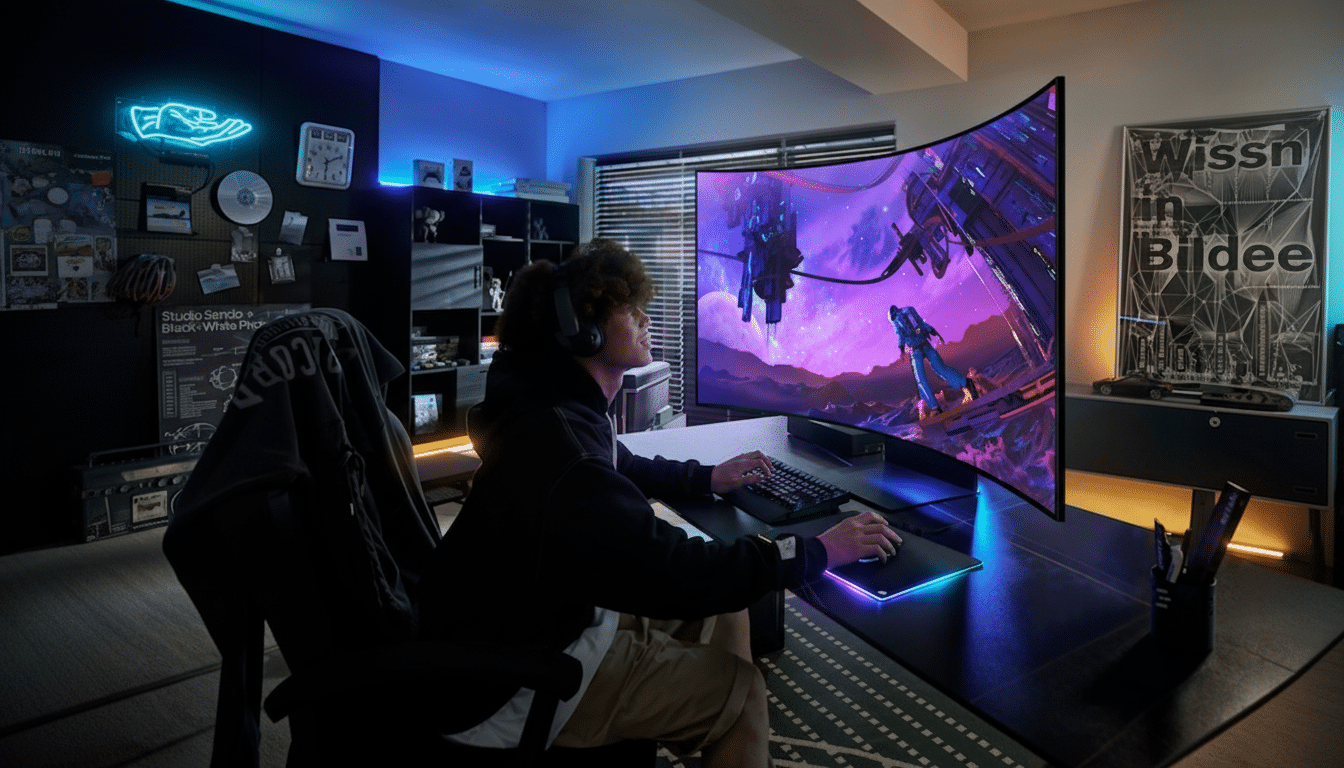
The 2nd Gen model adds a DisplayPort, in addition to HDMI, and Multi View (which is broader now — instead of two discrete sources on screen at once, you can have up to four — like perhaps a gaming PC, console, streaming stick, and work laptop all sharing the panel at once).
That flexibility is intended to turn the Ark into a one-stop command center. You’re going to be able to dock, stream, and game without hopping inputs or queues of secondary screens either, and the software for this monitor will have your sources tiled up inside of the same remote (Samsung’s Ark Dial) before you’re dealing with anything clunky such as window management.
High‑FPS gaming specs and performance considerations
At its core, it boasts unabashedly high-end hardware: native 4K UHD resolution, a 165Hz refresh rate, and a 1ms response time. FreeSync Premium Pro and variable refresh rate compatibility help eliminate screen tearing and stuttering when the frame rate drops, while the Mini-LED backlight enhances contrast in HDR scenes with greater control compared to regular LED arrays.
There is some nuance here for PC enthusiasts. For 4K gaming at triple-digit frame rates, you need more serious GPU horsepower — think along the lines of cards like the GeForce RTX 4080/4090 or Radeon RX 7900 XTX. Up-sampling tech like DLSS and FSR finally make it possible to hit the Ark’s 165Hz peak in current games, while FreeSync Premium Pro delivers low-latency HDR tone mapping for responsive visuals. Industry trackers such as Valve’s Steam Hardware Survey have continued to depict 1080p gaming as the most popular resolution, an indicator of how taxing true 4K high refresh can be — exactly why VRR is critical on a monitor this ambitious.
Immersion and productivity upgrades that elevate use
The Ark’s party piece is its Cockpit Mode, which flips the entire 55-inch panel up into a vertical position — and it does that with tilt, pivot, and height adjustments still intact. In practical terms, that gives you an ultratall view of a racing sim, flight game, or long web page, and you don’t lose much in the way of ergonomics.
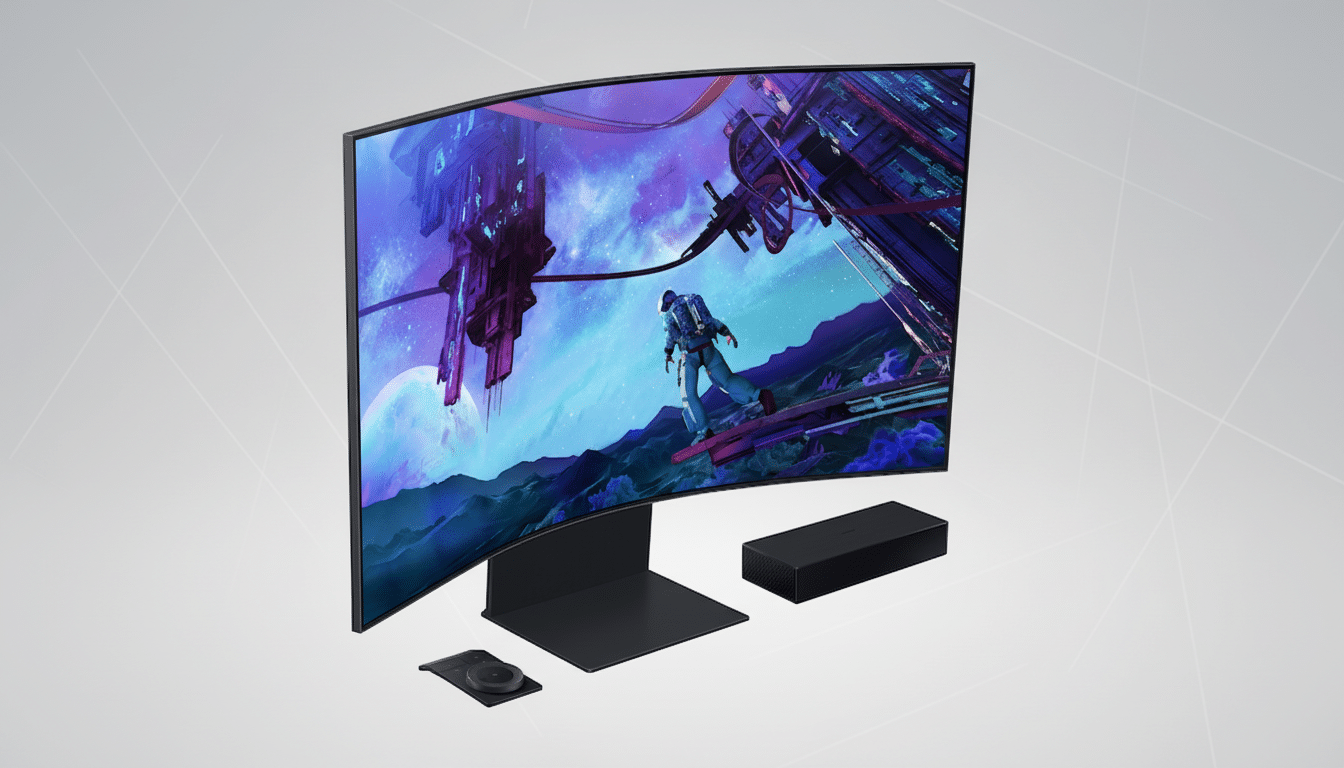
Then there’s the sound that is oddly high-end for a monitor: a built-in 60W 2.2.2 speaker array with four corner drivers and two central woofers, thrown in alongside Dolby Atmos processing.
It’s not going to replace a high-end AVR or anything, but for many desks it means you can dispense with separate speakers. Samsung’s Neural Quantum Processor Ultra takes care of AI upscaling and adaptive picture tuning, ensuring that lower-res sources and streams appear cleaner on a 55-inch display.
On the productivity front, a bigger Multi View trumps. With as many as four sources visible at once, you can keep a game feed, a live chat window, your NLE timeline, and a browser open right in front of you — no second monitor necessary. For creators and traders, the ability to tile inputs from several different machines onto a single screen is a significant workflow improvement.
Price context and real‑world fit for desks and setups
This line began at several thousand dollars and has typically been far above $2,000, which made it largely the province of early adopters. A 52% cut to $1,299.99 nudges the Ark into discussion alongside high-end 42–49-inch OLEDs and top-tier ultrawides. For those trying to weigh options, though, remember that the Ark packs some key differentiators: It’s an actually curved 1000R at 55 inches, it comes with rotation in Cockpit Mode, a solid speaker array, and true four-source Multi View all bundled together — something you simply can’t find elsewhere.
With a screen this size, practical notes matter. On a 55-inch screen, 4K resolution produces roughly 80 pixels per inch, which is sharp at an arm’s length but appreciates interface scaling in Windows and macOS. You’ll need a deep, solid desk or a sturdy wall mount, and if you game on consoles, HDMI 2.1 bandwidth means 4K@120Hz with VRR is supported. That DisplayPort on the 2nd Gen model is a great quality-of-life upgrade for PC rigs that favour DP for high-refresh 4K.
Bottom line on value, features, and real‑world appeal
If you’ve been hovering over an all-in-one, no-nonsense gaming and productivity screen, then this is easily the most attractive starting block yet for the Odyssey Ark 2nd Gen. At 52% off, it’s a Mini-LED, huge 55-inch, high-refresh-rate 4K funster that can slip inputs and perspectives in from multiple sources without breaking a sweat — finally at a price point where everyone who likes nice things isn’t staring into space like Matilda about to pull the headteacher’s lily trick.
