


Rosetta Stone has launched a New Year sale, bringing the price of its all-languages membership to $179.99 from an advertised $399 — saving you just over half off by joining this long-running language software platform.
The agreement grants access to 25 languages and is timed for that annual rush of learners who make new resolutions as January starts.
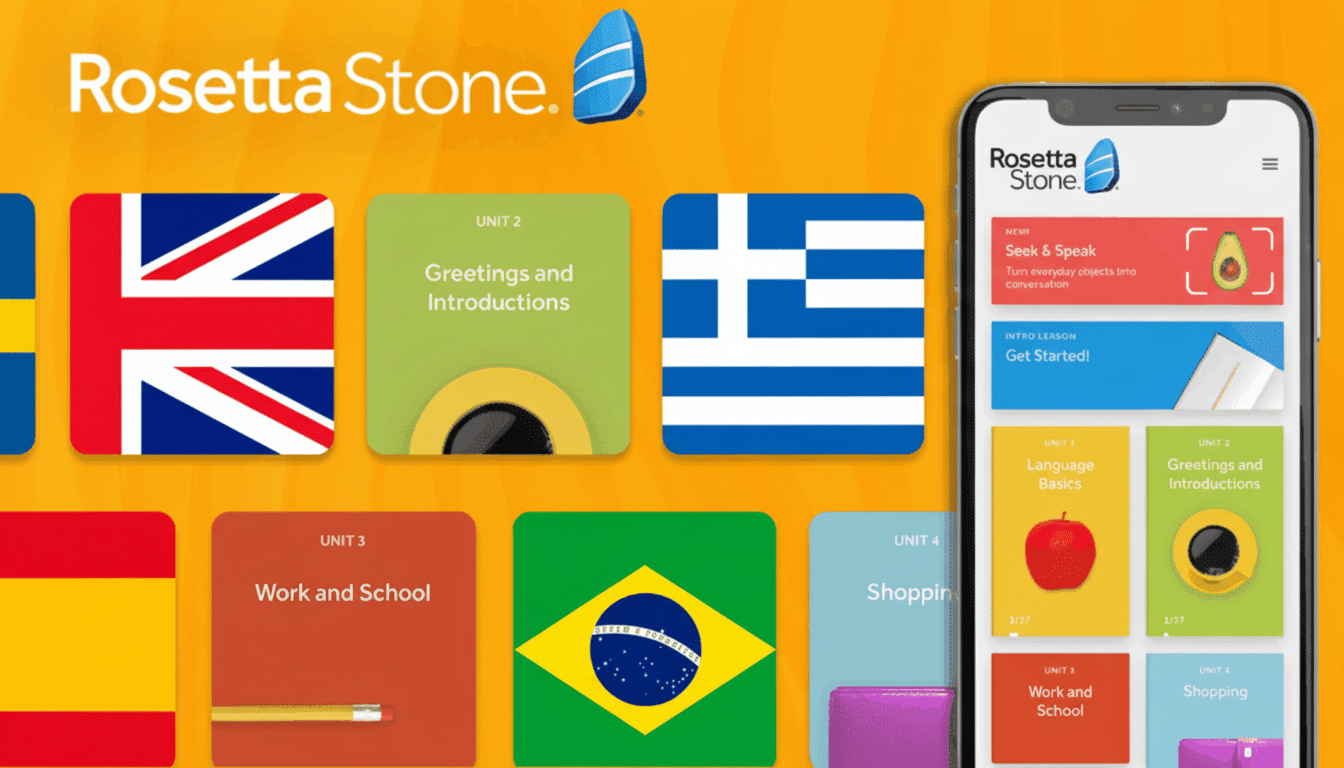
What the Rosetta Stone New Year Deal Includes
This deal provides access to the full library of Rosetta Stone titles — members can switch between all 25 languages, from Spanish (Latin America and Spain) to French, German, Italian, Japanese, Korean, and Chinese (Mandarin). You can change languages at any time, so you might focus on travel French in the spring and switch to workplace Spanish over the summer.
The membership functions across mobile and desktop, synchronizes progress, and doesn’t force students out of offline lessons. It also features Rosetta Stone’s TruAccent speech-recognition engine and its so-called high sampling rate — marketed by the company at up to 100 checks per second — which evaluates pronunciation to flag deviations of stress, pitch, and phonemes as you practice.
Why This New Year Rosetta Stone Discount Matters
There is always a surge of seasonal interest in language learning around early January, as evidenced by Google Trends data for searches like “learn Spanish” and “learn French.” At this pricing, it is less than the combined expense of many month-to-month plans that may reach up to a few hundred dollars in total over a year, particularly if you’re experimenting with more than one language on the platform.
There’s a career angle, too. Companies in healthcare, hospitality, government, and customer support cite bilingual skills as an asset among potential hires, and language abilities are called out by the Bureau of Labor Statistics as a boon to job prospects when employees engage with the public. If you’ve been considering a structured program, the combination of timing and price does increase the chances that you pull the trigger.
How Rosetta Stone teaches languages through immersion
Rosetta Stone’s method is immersion first. Rather than using English translations, the app matches words and phrases with images, real-life voices, and context. The aim of all this is to forge a direct line from mind to sense, an agenda in keeping with principles of communicative language teaching long advocated by groups like the American Council on the Teaching of Foreign Languages.

Lessons begin with basic essentials, from greetings and directions to ordering food, and advance into opinions, routines, and storytelling in past and future tenses. Reading, writing, listening, and speaking practice are interwoven so that skills reinforce each other. For pronunciation, TruAccent compares your voice with native speakers and nudges you on vowel length, consonant voicing, and intonation. The instant feedback loop is particularly useful for sounds that don’t exist in your first language, such as the Spanish rolled “r” or the French “u.”
How it compares with other language learning apps
The edge for Rosetta Stone is a cleaner, more immersive pathway with strong pronunciation coaching and expansive language coverage under one membership plan. Competitors carve out different niches: Babbel emphasizes grammar explanations and short cultural notes; Pimsleur focuses on audio-first, conversation-driven practice; Duolingo gamifies learning and piles on its easily digestible exercises with community competition. If your focus is speaking accuracy, and you like the flexibility to sample multiple languages within a single plan, then Rosetta Stone’s model is a good fit.
But the flip side of that is that Rosetta Stone’s grammatical scaffolding is also less direct. Learners who prefer explicit rules and elaborate drills can use a grammar guide or buddy up to an app for support. By combining this core course with podcasts, news clips, or even a small amount of live conversation practice, you can experience progress at an accelerated rate.
Tips for making the most of your membership
- Set a realistic daily target. Language teachers generally prefer consistency to cramming: short, frequent sessions do more to help retention. Most students will also obtain a good result with a daily 15–20-minute routine.
- Leverage speech tools early. Practice in a quiet room with TruAccent, and repeat problem sounds until your feedback is sustained. Recording yourself to compare with the native sound piques your awareness.
- Anchor lessons to your goals. Travelers can focus on phrasebooks and situational units (airports, dining). Professionals, for their part, can expand vocabulary for meetings, scheduling, and customer service.
- Track progress with recognized benchmarks. The ACTFL proficiency guidelines provide a useful ladder from Novice and beyond to Intermediate; mapping your progress toward those stages will keep your expectations rooted in reality.
Bottom line on Rosetta Stone’s New Year sale pricing
At over 50% off and free access to the same 25 languages in one plan, Rosetta Stone’s New Year deal makes for a strong on-ramp for anyone ready to forge a language habit of their own.
Its immersion format, coupled with specific pronunciation feedback, means it’s especially valuable to learners interested in speaking confidently — and the timing dovetails neatly with fresh-start momentum. Now is a good time to start if language learning is on your list of 2025 goals.
