


At CES, a robot vacuum just made a leap forward. The Saros Rover prototype from Roborock slaps a pair of articulated wheel-legs onto a disc-style cleaner, which allows it to lift-hop its way over gaps, pivot around corners, and—most importantly—raise itself up stairs while continuing to vacuum. It’s not a pie-in-the-sky concept, either: the demo unit confidently ran on a test setup that suggests Bluetooth 5’s so-called short-range streaming could be coming to living rooms very soon; further evidence that the single-floor constraint will finally be behind us.
The Importance of Legs for Home Robots and Cleaners
For two decades, robot vacuums have encountered the same obstacle—literally. Wheels do well on flat floors but stumble over thresholds, cords, high-pile rugs, and most especially stairs. Domestic robots continue to be the most popular service-robot category by unit volume, according to the International Federation of Robotics, but many still clean one level at a time. It makes sense to add legs to the vacuum itself if you can somehow add coverage without requiring another set of hardware, lifting, or human intervention.
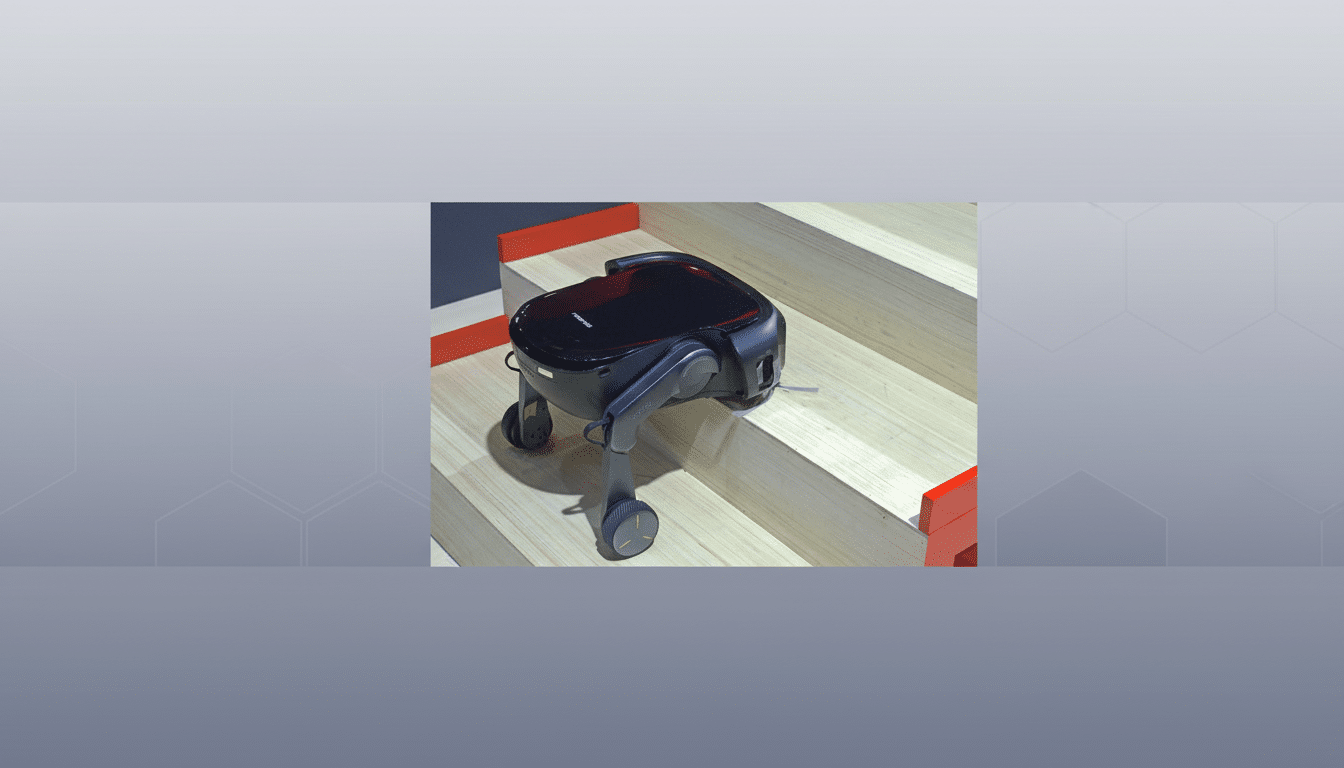
How the Saros Moving and Cleaning Rover Works
Independently anchored wheels on the Saros Rover can lift and bend, elevating the chassis to clear cable spaghetti, door saddles, and thick carpets. In the CES demo, the bot ascended a single step, pivoted in place, and cleaned the tread for more tire bites to catch before heading on its way. On a steep incline, it stopped halfway to demonstrate its steadiness there, and ended with a little hop at the bottom—less about function than showmanship, but also an indication of how nimble this platform is.
Roborock says the Rover uses motion sensors and onboard AI to develop a 3D understanding of its environment, so it can manage both straight stairs and curved and sloped steps. The company also says it can safely dive, employing a motion that simulates a swimmer’s backstroke. Pricing and launch date are yet to be announced.
What Makes It Different from Other Climbers
Climbing is not exactly new to the genre, but execution has been lacking. At IFA, Eufy’s Marswalker (pictured at the top of this page) and a concept from Dreame both showed off going up stairs by running a separate rover platform; positioned even on high ground, the vacuums were still unable to clean while moving between steps. Roborock’s strategy leaves the legs on the vacuum, so it can physically vacuum each stair as it ascends—a critical difference for actual utility.
It is also an extension of Roborock’s bolder experiments. Roborock added an arm to grab clutter to the Saros Z70 last CES. That personalized model, however, was rendered only for certain objects and surfaces. Mobility, on the other hand, addresses a common pain point. If the Rover is capable of reliably handling mixed stair types, it fills the biggest remaining coverage gap in robotic floor care.
You’ll Be Able to Buy Some of These Robots Sooner
It might be stealing the headlines, but Roborock also previewed some near-term models. Saros 20 and Saros 20 Sonic are both rated at a claimed 35,000Pa of suction—eye-popping on the specs list if true for this class. The Sonic model adds a vibrating mop pad and a retractable LDS tower that can duck under sofas, while the standard Saros 20 gets the company’s Starsight navigation with faster processing and improved object detection, as well as dual spinning mop pads.
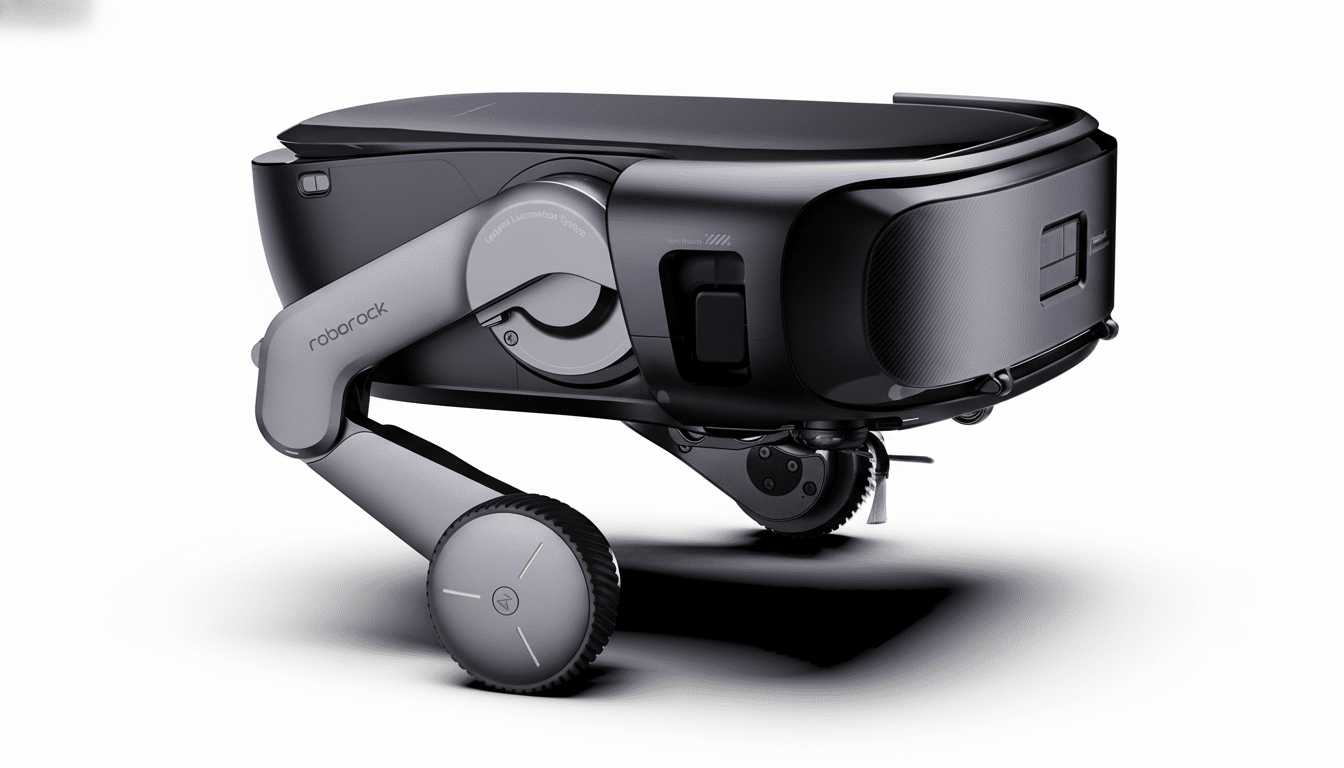
Both have an improved AdaptiLift Chassis that can raise or lower the vacuum automatically. In feathery high-pile carpeting, the bot can rise to allow airflow underneath in a way that may increase debris pickup without sucking it down. Roborock also unveiled the Qrevo Curv 2 Flow at $849, a midrange cleaner with a spinning roller mop that refreshes itself, and teased the X1 LiDAR robot mower for more complex lawns bordered with slopes and tighter edge trims.
Big Promises, Real-World Testing Still Needed
Legs introduce trade-offs. Actuated joints and lifts require more power than wheels alone, so battery life and recharge cycles will be closely watched. Safety when traversing slippery stairs of wood and noise from the leg mechanisms are also concerns, as is the long-term reliability of joints that bend and sensors. Plus, there’s service: more moving parts generally equal more wear points and more expensive maintenance.
And look for standards and safety certification, too. Home robotics generally follows appliance safety standards provided by organizations like UL and the IEC, and stairs introduce new mechanisms of failure that manufacturers must guard against. However, until independent testing verifies consistent climbing and controlled descent across different step shapes and finishes, this cautious optimism is all we have.
What This Means for Robot Vacuums at Home
If the Saros Rover lives up to its promise, it transforms the category from room-by-room helpers into whole-home cleaners. A foot-traffic-hydroplaning-legged design that smooths its way around cords, rugs, thresholds, and stairs could more than double cleaning time on paper without having to rely on add-ons. In a market dominated by incremental improvements in suction and slightly smarter maps, a robot that actually conquers stairs is the most significant leap forward we’ve seen in years.
The path forward is obvious: the next generation of home robots will feature powerful-suction vacuuming, intelligent mopping, and high-mobility capabilities that can travel to where we really live—up, down, and across every surface.
The future of robot vacuums may very well have legs, and it’s beginning to climb.
