


Rivian is leaning hard into an AI-first autonomy stack, together with releasing an end-to-end “Large Driving Model” that’s trained on learnings from plotting out the fleet and taking in more of the driving task without hand-coded rules. The company’s wager: a data-driven system that rapidly ramps from hands-free driver assistance to eyes-off, enabled by a custom autonomy computer and lidar planned for future vehicles.
From Rules to End-to-End Learning in Driver Assistance
And moving from these traditional, rules-based driver-assist stacks are transformer-style neural networks that take the data from cameras and radar inputs and map directly to driving actions. This end-to-end style is consistent with trends in AI at large, where big models work well by training on huge real-world datasets, rather than human-authored heuristics. Company executives say the shift only began to pay off after fleet data started pouring in at scale, enabling model improvement to pick up speed and reliance on fragile, handcrafted logic to decline.
- From Rules to End-to-End Learning in Driver Assistance
- Universal Hands-Free Starts the Climb for Rivian
- The Road to Point-to-Point and Eyes-Off Autonomy
- Custom Compute and Sensor Strategy for Safety and Scale
- Data Is the Differentiator in Autonomy Development
- What to Watch Next in Rivian’s Autonomy Roadmap
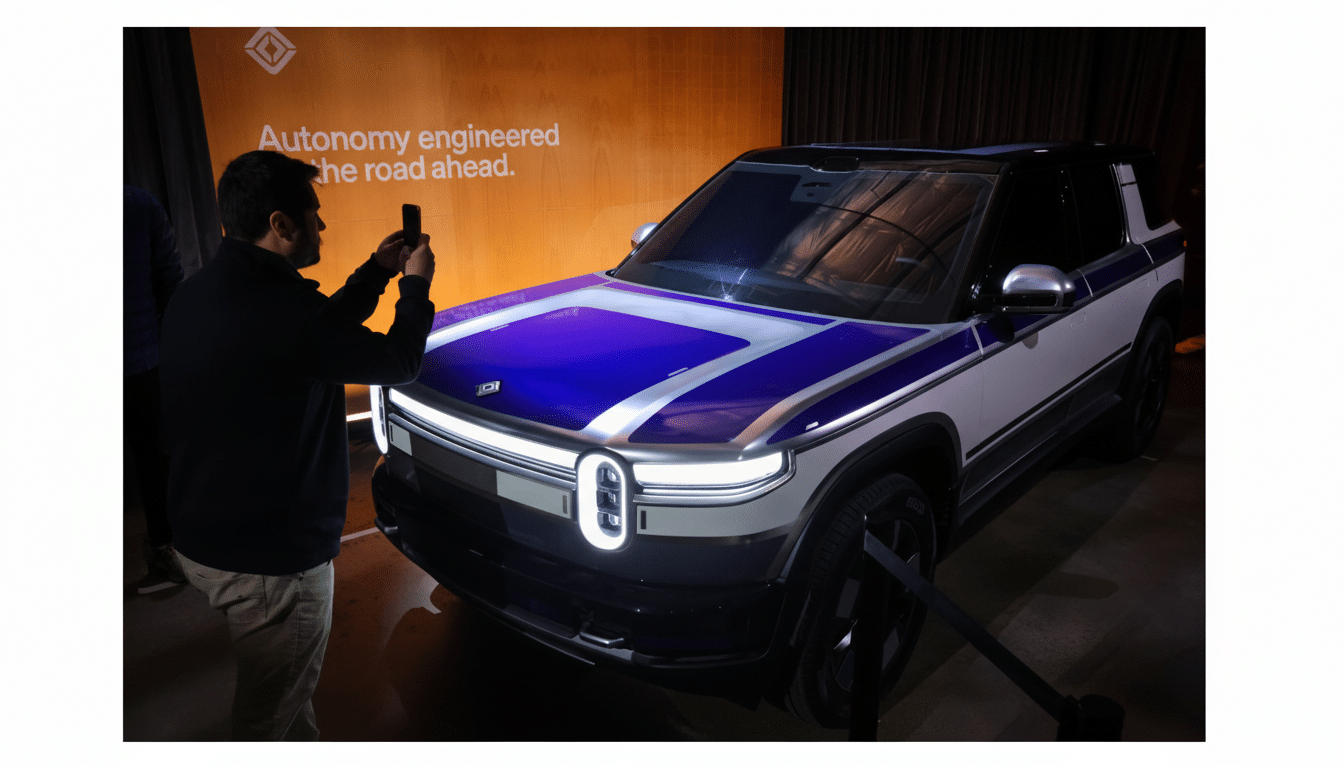
The R1 vehicles that we operate today run Nvidia Orin for in-car inference, a popular automotive platform that provides hundreds of TOPS of compute to perform vision, perception, and planning at the edge. Rivian is betting on continuous learning cycles, gathering buckets of diverse corner cases from the fleet, training them centrally and pushing refined models over the air. It’s the same flywheel driving anticipated top autonomy players, but in Rivian’s case that has taken the shape of keeping the architecture fully end-to-end, while simply fashioning traditional checks around it for safety and compliance.
Universal Hands-Free Starts the Climb for Rivian
This first milestone is called Universal Hands-Free, which allows the driver to take their hands off the wheel on approximately 3.5 million miles of lane-marked highways throughout the U.S. and Canada. Unlike legacy systems confined to HD-map corridors, this capability is a generalization to any eligible road with visible lane lines, increasing coverage in the world while maintaining driver supervision. In practice, that puts it at the SAE Level 2, kind of a “supervised” system like those from other automakers.
Early demos demonstrate real progress alongside the inevitable rough edges. The model negotiates stops, turns and speed bumps without any explicit rules to do so, but still experiences occasional disengagements in challenging and rapidly changing driving environments. Safety specialists usually hope to see continual improvements in miles per intervention, reduction of conflict rates and impressive performance beyond ‘happy path’ before graduation on the autonomy ladder. The Rivian approach implies improvement in those metrics as the fleet accumulates more varied miles.
The Road to Point-to-Point and Eyes-Off Autonomy
Coming down the line, too: single-step supervised driving point-to-point through city streets, rural roads and highways without changing modes. That will involve sturdier long-horizon planning, more accurate predictions of other roadgoers and a model that can handle things like construction, obstructions and ad hoc traffic control. Rivian’s from-the-ground-up theory works very well for this, but it will depend on the amount of data provided and whether or not the company can generate synthetic edge cases and maintain safe constraints around the neural policy.
Eyes-off will be introduced in limited circumstances, enabled by a new in-house autonomy computer and the inclusion of lidar. This is a move away from cameras-only philosophies. Lidar offers a greater redundancy in geometric diversity that numerous engineers in the industry regard as indispensable for eyes-off safety cases and certification. It also introduces power, cost and thermal considerations — trade-offs that Rivian seems willing to tolerate to fast-track confidence, redundancy and regulatory acceptance.
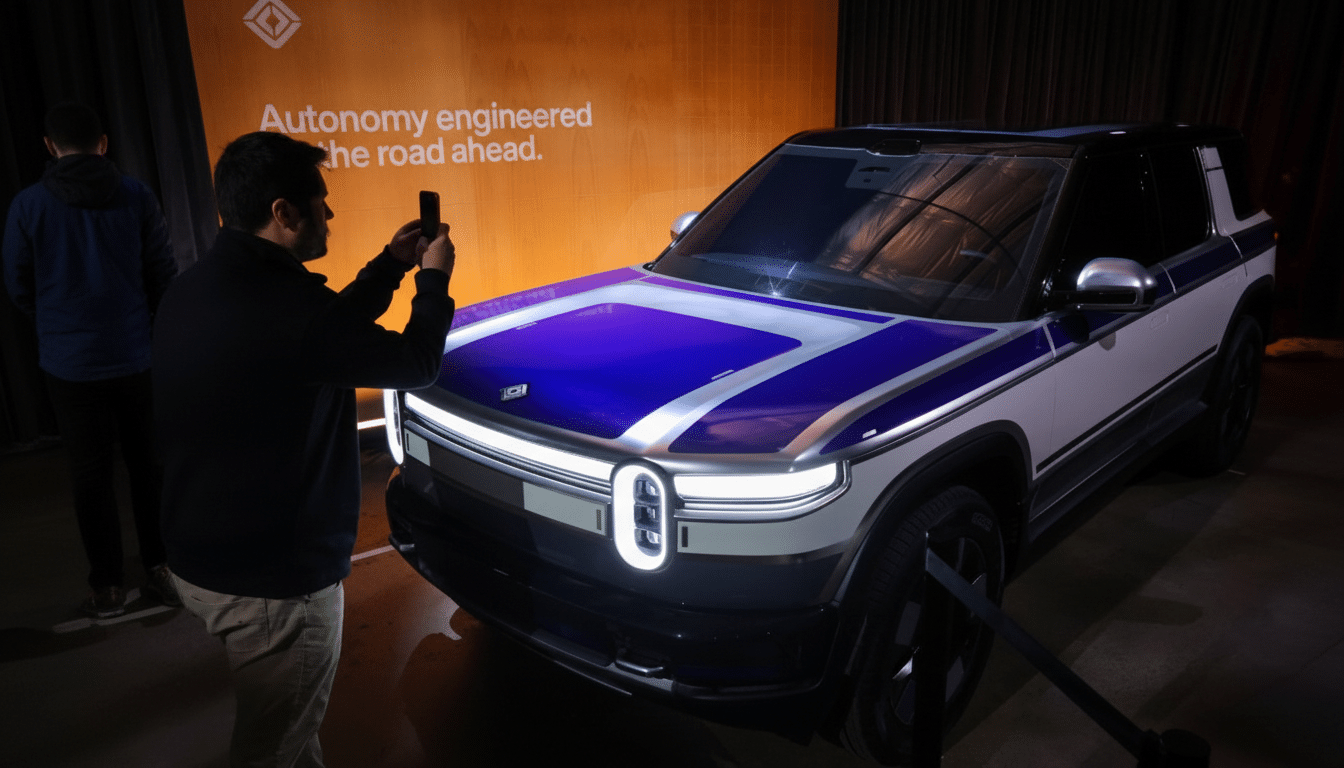
Custom Compute and Sensor Strategy for Safety and Scale
Rivian’s planned autonomy computer seeks to offer more deterministic safety envelopes around an otherwise end-to-end neural core. Look for dedicated safety islands, multiple compute paths, and higher-bandwidth sensor fusion to support this safe fallback behavior. Orin defines the lower bound of what’s possible today, whereas custom silicon can specialize for latency, memory bandwidth, and model size – all things that count when running large transformer policies on embedded hardware at automotive temperatures.
The decision to incorporate lidar — as opposed to some competitors — tracks with the direction flagged in third-party evaluations from bodies such as Euro NCAP and by ruleset aspirations cited by UNECE when they refer to eyes-off features. At the same time, supervised hands-free is still a driver-monitoring challenge: robust attention control, clear HMI hints and smooth handover under complex scenarios. Rivian’s human factors work here will be just as critical as any leap in the neural network.
Data Is the Differentiator in Autonomy Development
Advances in autonomy have become a data operations race. The victors operate high-throughput pipelines for mining, labeling, simulation and offline evaluation of events — closing the loop frequently with over-the-air pushes. Rivian’s fleet — from high-end adventure vehicles to a forthcoming mass-market model — provides it the diversity required to teach rare behaviors. It’s going to be active learning that is key: rerouting the most informative clips back into training, not only the least subtle mistakes.
Regulators, and safety organizations such as NHTSA, are shifting to clear safety cases rather than marketing terms. For eyes-off approval, Rivian must show data in well-characterized operational design domains, backup strategies and understandable safety metrics. Competitively, it will be pitted against systems such as the limited eyes-off ODD of Mercedes Drive Pilot; the expanding hands-free coverage seen in GM’s suite; and Tesla’s rapid pace of iteration through a supervised stack.
What to Watch Next in Rivian’s Autonomy Roadmap
The near-term questions are pragmatic. Can Universal Hands-Free achieve the wide coverage and low disengagement nuisance of rule-based vehicles? How will the point-to-point phase attenuate handoffs over different road categories? How fast can Rivian transition to its own computer and lidar systems — while keeping early buyers happy? And can the company keep a pace of fast, responsible releases as it scales this up to millions of real-world miles every day?
The strategy is clear and aggressive: end-to-end learning for adaptability, safety scaffolding for assurance and lidar-backed compute for eyes-off confidence. And if everything goes right on that data engine, and Rivian can hold the line on safety? Its AI-driven autonomy might transition from a slick demo to a widespread tech — and a distinguishing feature in the next phase of EVs.
