


Samsung’s long-rumored Wide Galaxy Z Fold just took a tangible step from speculation to reality, as newly discovered One UI 9 system assets reveal official animations that showcase a notably broader book-style foldable. While not a full product unveiling, these graphics are the clearest company-sourced confirmation yet that a wider Fold variant is in active development.
What the New Animations Reveal About a Wider Z Fold
The UI animations, found within early One UI 9 builds, depict a foldable with a shorter, wider profile than Samsung’s current Z Fold generation. The cover screen silhouette appears broader and more phone-like, addressing one of the most common critiques of past Folds—the narrow outer display that can feel cramped for typing and app navigation.
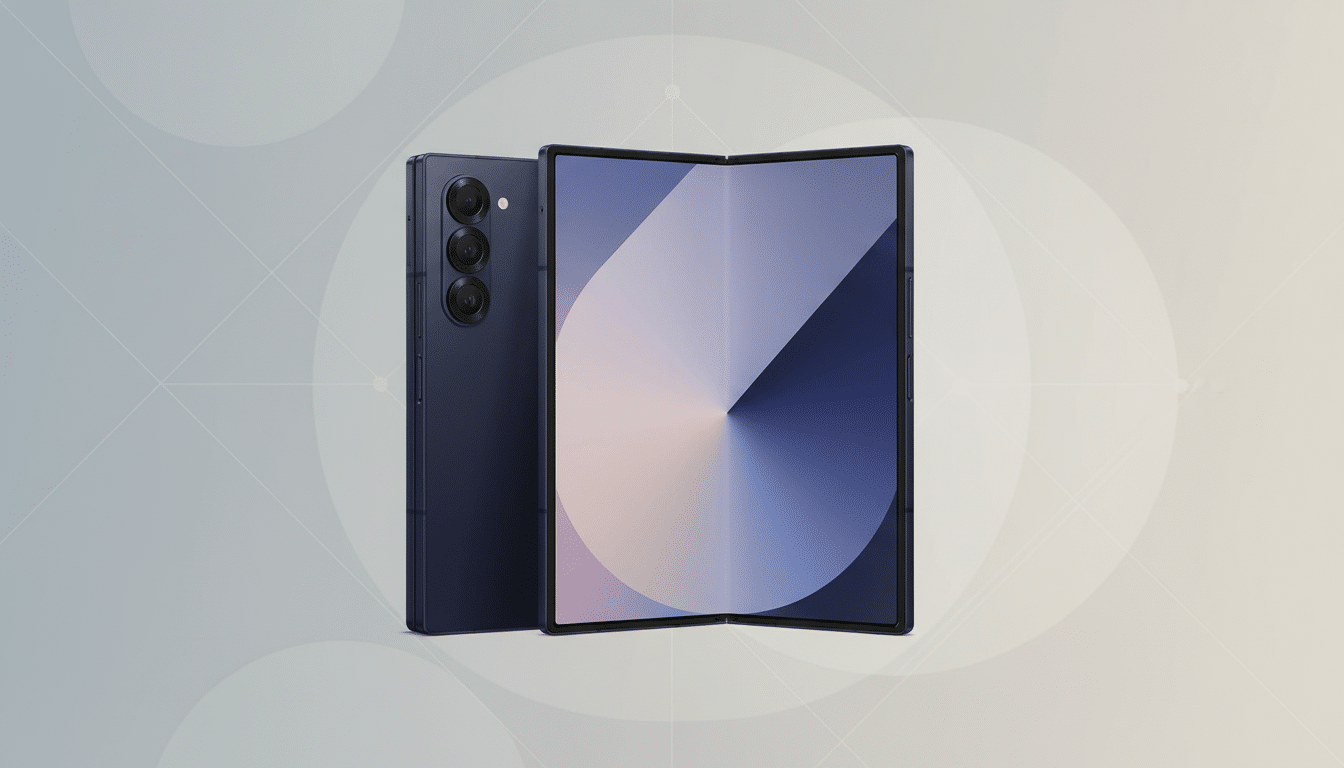
Both light- and dark-themed versions of the animation are present, a strong sign that Samsung is preparing polished system experiences specifically for this form factor. As is typical for onboarding and setup art, camera details are abstracted, so you will not see a defined rear island or sensor layout here. Even so, the proportions suggest an inner display closer to a square than the tall rectangle of the standard Fold line.
Metadata linked to the assets references the codename H8 and model number SM-F971U. Samsung’s book-style Fold models have historically used the F9xx series (for instance, the latest mainstream Fold sits in the F94x range), making F971 an intriguing identifier that points to a new branch rather than a simple yearly refresh.
Why a Wider Fold Matters for Everyday Usability
A wider outer screen changes the day-to-day experience. It improves thumb reach, reduces accidental touches near the edge gutter, and makes split keyboards less essential. It also benefits app compatibility; more Android apps are designed to look right on 19:9 to 20:9 windows than the pencil-thin canvases used by narrower Folds.
Competitors have already validated the approach. Google’s Pixel Fold favors a wide, passport-like silhouette, making the front display feel like a normal phone. OnePlus and Honor have also leaned wider while pursuing ultra-thin frames. Market watchers at Counterpoint Research and IDC note that user satisfaction on foldables correlates strongly with cover screen usability, especially because many owners spend a significant portion of time on the outer display for quick tasks before opening the tablet-sized canvas.
From a software perspective, a broader aspect ratio simplifies windowing and side-by-side app layouts on the inner screen. It gets closer to the golden mean where two typical smartphone app views can run concurrently without aggressive scaling. Samsung’s inclusion of device-specific animations in One UI 9 suggests optimization work is underway to make that multitasking feel native rather than adapted.
Clues in the Model Number and Software Hints
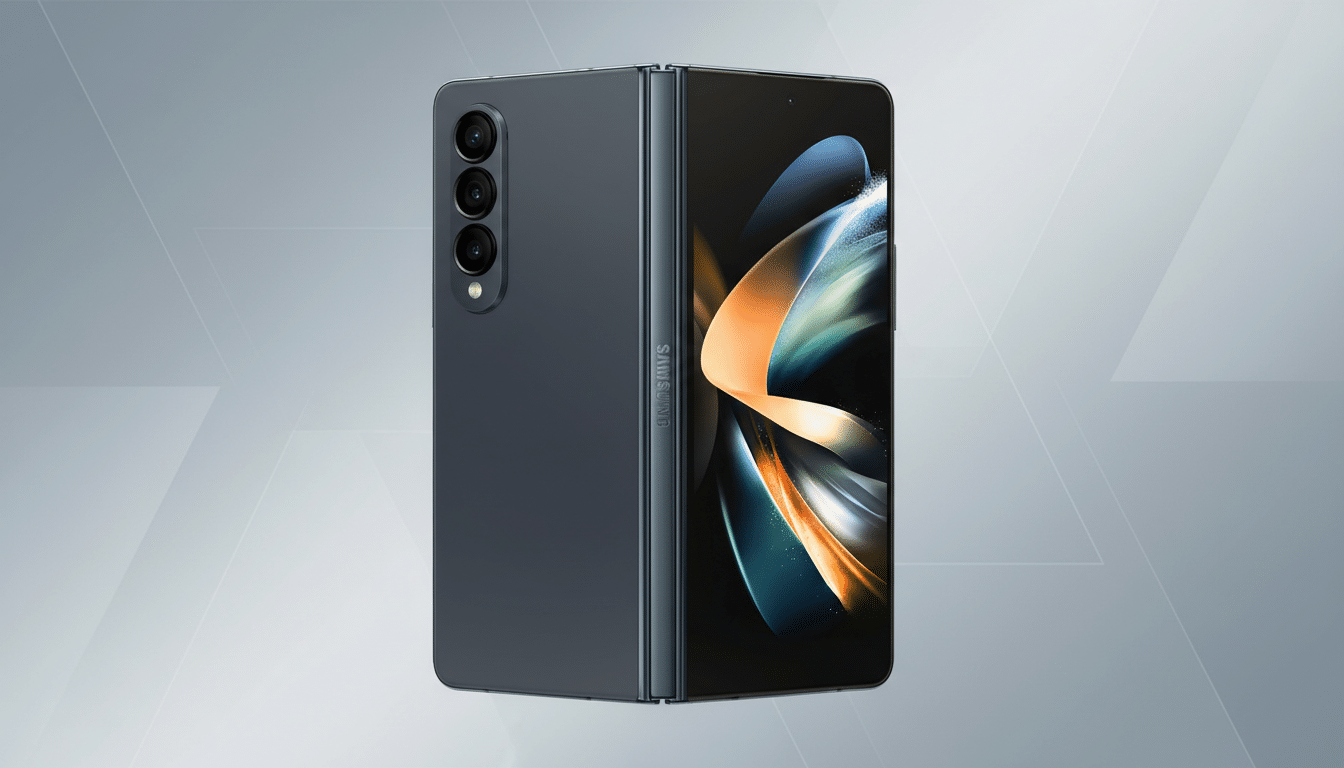
The SM-F971U label is more than trivia. Samsung’s numbering typically increments for each generation, but a jump to a new sequence often marks a parallel line. That supports the idea of a “Wide” Fold existing alongside the mainstream Z Fold, not replacing it. The “U” suffix traditionally denotes a US-oriented variant, implying broad market intent rather than a limited regional experiment.
Historically, Samsung’s firmware has quietly telegraphed hardware months ahead of launch. Device icons, animations, and setup strings for prior foldables appeared in pre-release One UI builds well before retail units shipped. Seeing finished-looking assets now aligns with a common pattern in which software teams lock visual elements as hardware nears engineering validation.
How It Fits the Foldable Market and Samsung’s Strategy
The broader foldable market continues to expand, driven by thinner designs, improved hinges, and longer-lasting ultra-thin glass. Industry trackers such as DSCC and IDC have reported steady double-digit growth for foldable shipments in recent years, with book-style models capturing a rising share as prices inch down and durability improves. A wider Galaxy Fold would give Samsung a direct answer to rivals targeting front screen usability and could help defend share in markets where domestic brands have leaned into wide designs.
Another strategic angle is software differentiation. Samsung’s App Continuity, taskbar, and multi-window features are mature, but a different canvas invites new UI patterns. Expect refinements to app pairing, drag-and-drop, and continuity behaviors that take advantage of both the wide cover and squarer inner screen—areas where Samsung’s partnerships with major app developers and its DeX know-how can pay dividends.
What We Still Do Not Know About the Wider Galaxy Fold
The animations stop short of confirming camera hardware, materials, or hinge mechanics. Questions remain about weight targets, battery capacity, crease visibility, and ingress protection—particularly dust resistance, which continues to challenge moving parts. It is also unclear whether the Wide Fold will share silicon, charging specs, and camera sensors with the next mainstream Z Fold or chart its own path.
Even with those unknowns, official system art is a meaningful milestone. It signals that the wider Fold is not just a concept but a product Samsung expects users to see, touch, and set up. For foldable fans who have waited for a broader outer display without leaving Samsung’s ecosystem, this is the strongest hint yet that their ideal form factor is finally on deck.
