


Nvidia is preparing to make its largest investment to date in OpenAI, with CEO Jensen Huang signaling the chipmaker will join the startup’s next financing round and deepen a partnership that sits at the center of the AI boom. Huang framed the move as a vote of confidence in OpenAI’s trajectory and dismissed recent speculation that the relationship had cooled.
The prospective investment would strengthen a strategic loop: OpenAI’s appetite for compute drives demand for Nvidia’s most advanced accelerators, while Nvidia’s roadmap depends on high-profile AI leaders pushing the frontier of model training and deployment. The company’s leadership emphasized that the size of the stake has not been finalized but indicated it will be meaningful by Nvidia’s own historical standards.
Huang Signals Confidence in OpenAI Despite Rumors
Reports from Bloomberg indicate Huang told reporters Nvidia will participate in OpenAI’s next round because it remains an attractive bet. That directly counters earlier coverage from The Wall Street Journal suggesting the deal was “on ice.” Nvidia executives have acknowledged that a definitive agreement hasn’t been signed, but Huang rejected suggestions of discontent with OpenAI’s strategy or execution.
The reassurance matters because Nvidia is not a passive supplier. Over the past two years it has become the indispensable arms merchant of the AI era, with analysts estimating it controls more than 80% of the market for AI accelerators used to train and run large models. Its data center business has surged to tens of billions of dollars per quarter on triple-digit year-over-year growth, according to recent filings.
For OpenAI, keeping tight alignment with Nvidia secures access to cutting-edge silicon as demand outpaces supply. The company has trained frontier systems on clusters comprising tens of thousands of Nvidia GPUs, and the next generation of models will stretch those numbers further. Bloomberg, the Journal, and industry researchers have all highlighted the intensifying race to lock in long-term compute capacity.
What a Record Nvidia Investment Could Look Like
Nvidia’s largest-ever investment does not necessarily mean a simple equity check. Recent big-tech–AI deals have blended equity with multi-year supply commitments: Microsoft’s multibillion-dollar partnership with OpenAI, and Amazon and Google’s investments in Anthropic, paired capital with access to cloud and specialized chips. Nvidia could mirror that template with a minority stake, preferred access arrangements, and long-term reservations for its Blackwell-generation parts.
The company has used similar playbooks before, supporting AI infrastructure providers and model startups through its NVentures arm and strategic agreements. One practical outcome is predictable: capital aligned with supply helps smooth delivery of accelerators, networking, and software support, mitigating the risk that OpenAI’s training schedules slip due to hardware bottlenecks.
Huang also distanced the prospective deal from headline-grabbing figures floated in media reports. While some coverage has cited numbers around massive, multi-year infrastructure agendas, Nvidia’s message is that any investment will be sized to strategic value and operational realities, not a symbolic round number.
Why OpenAI Matters to Nvidia’s Roadmap and Strategy
OpenAI’s workloads are a showcase for Nvidia’s full stack: cutting-edge accelerators like H100, H200, and the incoming B200; high-speed interconnects; and a mature software ecosystem in CUDA, TensorRT, and NeMo. The scale of OpenAI’s training runs forces the hardware and software to evolve in lockstep, informing optimizations that later benefit thousands of enterprise customers.
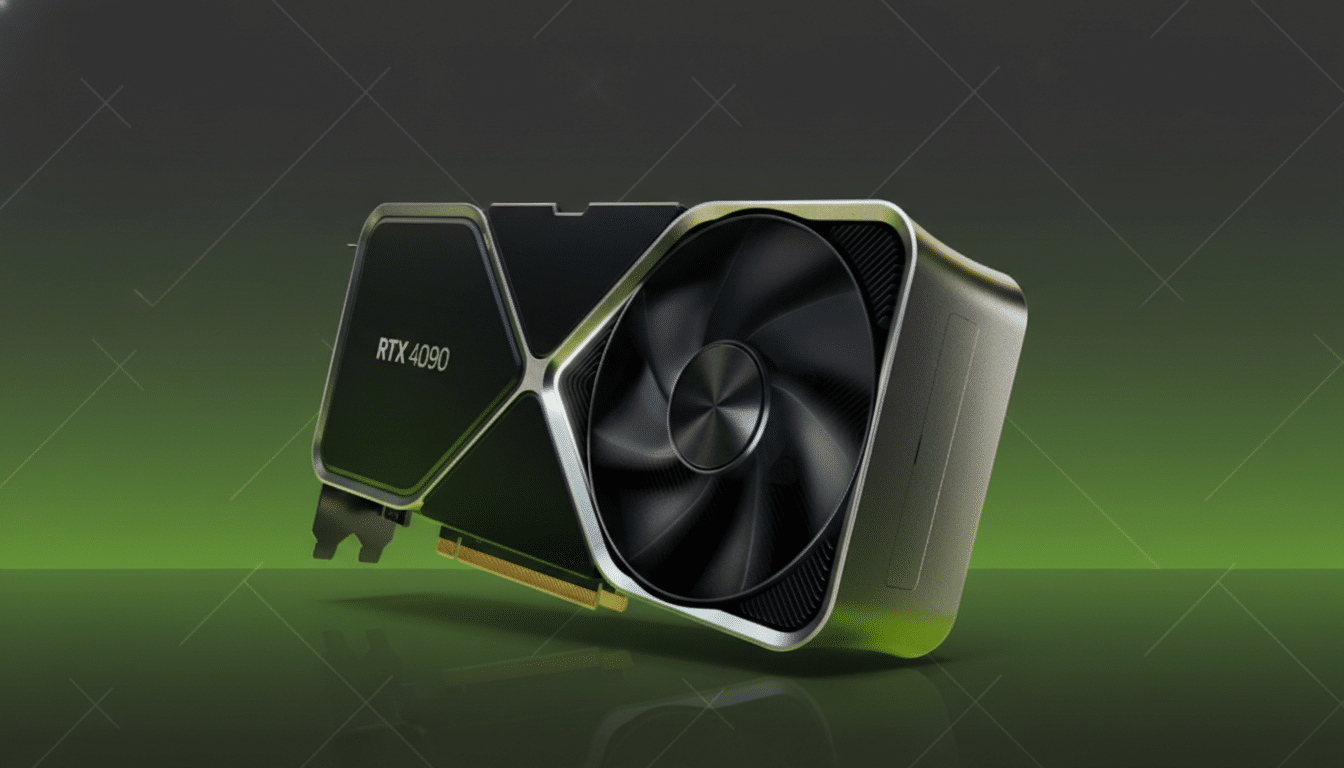
Nvidia’s next leap, the Blackwell architecture, targets higher efficiency for both training and inference. That matters as AI economics shift: training costs dominate headlines, but the long tail is inference, which will power everything from chatbots to multimodal agents. If OpenAI standardizes deployments on Blackwell, it creates a powerful reference for enterprises weighing alternatives from AMD or custom silicon.
Energy and infrastructure are another lens. The International Energy Agency has warned that data center electricity consumption could roughly double within a few years, and AI is a major driver. Nvidia’s pitch is that newer architectures will deliver better performance per watt, but only close collaboration with top model developers can wring out those gains at cluster scale.
Competitive and Regulatory Backdrop for Nvidia-OpenAI
Competition is intensifying. Google trains Gemini on in-house TPUs and is pushing aggressive inference optimizations. Anthropic is backed by Amazon and Google and is scaling rapidly. Meanwhile, AMD’s MI300 series has won marquee customers and is credible on both performance and availability. Nvidia’s alignment with OpenAI would fortify its beachhead at the very top of the model pyramid.
Regulators are also watching. U.S. agencies have signaled heightened scrutiny of AI tie-ups and the degree of influence dominant suppliers can exert over fast-growing platforms. Any Nvidia stake in OpenAI will likely be structured to avoid control, preserve independence, and withstand antitrust review, similar to how cloud providers have designed their minority investments in AI labs.
What to Watch Next in Nvidia and OpenAI Partnership
Key signals will include the size and terms of OpenAI’s next funding round, commitments around long-term hardware supply, and whether Blackwell becomes the default platform for OpenAI’s forthcoming models. Also watch for expanded collaboration on software—compilers, inference runtimes, and memory optimization—which often unlocks step-change efficiency without new silicon.
If Nvidia follows through with a record-sized commitment, it will underscore a simple truth about the AI economy: control of compute is the currency that decides who moves fastest. For now, Nvidia and OpenAI appear intent on moving in the same direction—and at maximum speed.
