


Nvidia said its new AI-compute business model remains in place after a report that the chipmaker paused some revenue-sharing arrangements with AI cloud providers, leaving the scope of the reported change unclear.
The Wall Street Journal report, republished by Livemint, said Nvidia had stepped back from some deals in the preceding week, citing people familiar with the matter. Nvidia did not confirm a pause or identify affected agreements. The company said its broader model for expanding computing access remains in place and is evolving amid strong demand.

The reporting describes a pullback from particular deal structures, while Nvidia has said the underlying initiative continues. Without further detail from the company, it is unclear whether the reported change affects the AI Compute Partnership generally, only proposed revenue-sharing contracts, or a limited group of providers.
How the proposed arrangements were meant to work
Nvidia introduced the compute-access model in July, according to the Journal’s reporting. Sharon AI and Firmus Technologies were identified as the first cloud providers involved. The initiative was intended to help AI cloud businesses add capacity while allowing Nvidia to participate in revenue generated when that capacity is rented to customers.
People familiar with the discussions told the Journal that proposed terms would have given Nvidia 50% of cloud-provider revenue above an agreed base hourly GPU rate. Under the reported structure, Nvidia would provide financing or capacity commitments tied to cloud-rental revenue and share in income above the agreed threshold.
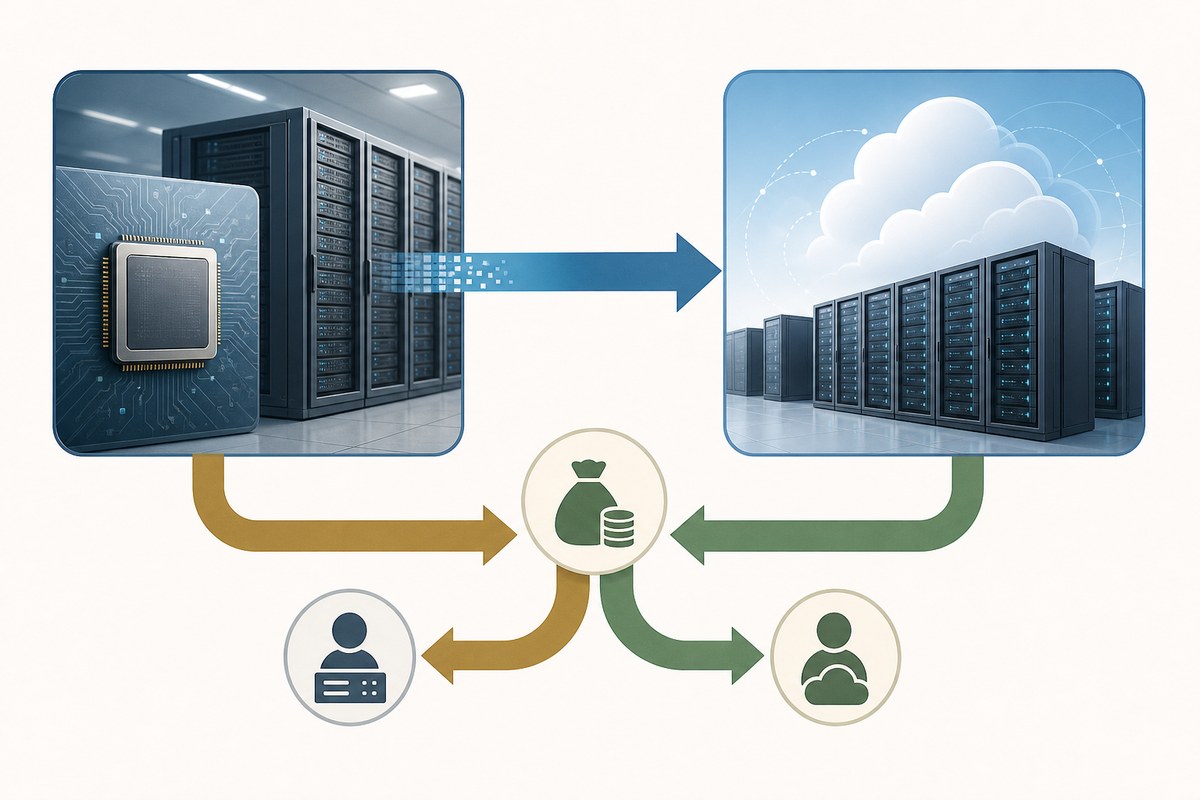
Nvidia Chief Financial Officer Colette Kress described the model on the company’s second-quarter earnings call. As reported by Benzinga, Kress characterized the arrangement as creating two revenue streams: hardware sales and a share of cloud-rental revenue.
The available account does not establish that every cloud commitment or Nvidia customer relationship uses this structure. Nor does it show that Nvidia’s disclosed financial commitments are all connected to revenue-sharing agreements. Nvidia’s balance-sheet disclosures cover a broader set of arrangements than the reported partnership terms.
Filings show Nvidia’s cloud commitments
Nvidia’s quarterly filing with the Securities and Exchange Commission, filed Aug. 26 for the quarter ended July 26, disclosed $36 billion in commitments as of July 26. The company said those commitments were typically six years in duration and decline as third parties use the associated capacity.
The filing does not identify the counterparties or say that the $36 billion is governed by the proposed revenue-share formula. It also does not confirm that any portion was paused. The figure is broader than the reported partnership and should not be treated as its value or as an expense estimate.
The $36 billion commitment figure is roughly 37% of Nvidia’s $96.221 billion revenue in the July quarter. That comparison is not a forecast, an expense estimate or a measure of deal value; commitments and quarterly revenue are different financial categories. Nvidia reported $46.743 billion in revenue in the comparable prior-year quarter.
Antitrust concerns are reported, not a confirmed rationale
The Journal report said some Nvidia employees had voiced concerns that the arrangement could attract antitrust scrutiny and raise sensitivities about Nvidia’s influence over how cloud providers run their businesses. People familiar with the matter also said Nvidia sought in some cases to restrict providers to approved customers and preferred spreading capacity across several smaller AI companies rather than dedicating it to a single large customer.
Those claims are attributed accounts of internal discussions, not findings by a regulator. The report did not identify an antitrust investigation, and it said the precise reason Nvidia stepped back from some agreements could not be determined. Nvidia has not said that competition concerns drove any changes.
The reporting does not specify whether the customer-selection provisions were included in signed contracts, proposed arrangements or both. Nvidia has not detailed whether it will revise, narrow or move the reported provisions into another initiative.

