


Meta Platforms has reportedly reached a sweeping settlement with dozens of states and U.S. territories over allegations that Facebook and Instagram were designed in ways that harmed young users, cutting short a federal trial in Oakland, California, and resolving a related Tennessee trial. The agreement would remove one of the largest coordinated government actions against the company, but it would not end the wider legal campaign targeting Meta and other social-media companies.
The dollar value and product obligations should not yet be treated as final. An Associated Press report published by ABC News put the payment at up to $18 billion and said Meta would make operational changes, including new youth-safety guardrails. WTOP News, citing details described by District of Columbia Attorney General Brian Schwalb, reported a different structure: at least $12.1 billion, potentially rising to $17.1 billion. Neither a settlement agreement nor a multistate official announcement is available in the public accounts cited here, leaving the precise payment and enforceable terms unresolved.
What the settlement resolves — and what it does not
The reported deal ends the Oakland proceeding during its second week, rather than after the six-week trial that had been anticipated, according to the AP account. California, Colorado, Kentucky and New Jersey were plaintiffs in that case, part of a group of states that sued Meta three years earlier over design features they alleged could harm children and teenagers.
The settlement also resolves a Tennessee trial involving Meta. Tennessee Attorney General Jonathan Skrmetti said the accord included unprecedented child protections and money for the state’s Children’s Digital Protection Fund, according to the AP report. Those statements describe the state’s view of the outcome; the reporting available does not supply the underlying agreement language that would define compliance standards, deadlines or enforcement procedures.
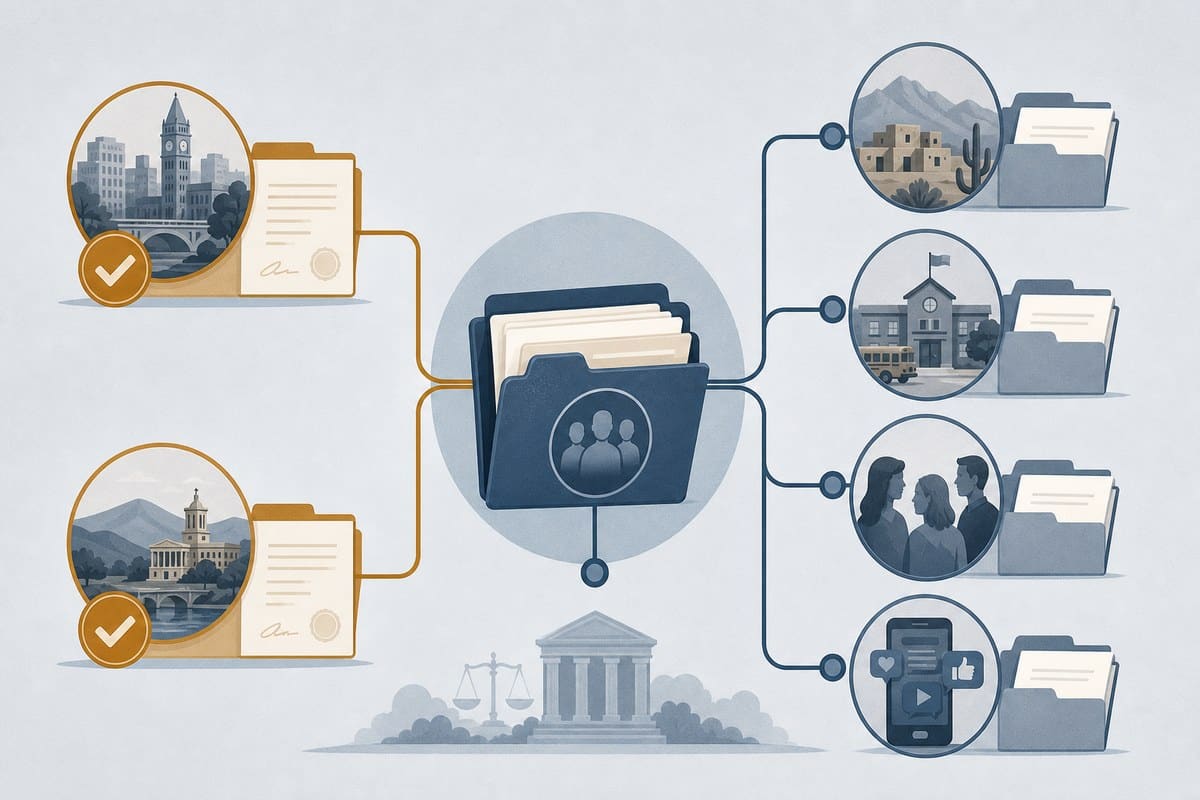
Its reach is substantial but bounded. New Mexico did not join because it had already prevailed in a separate case against Meta, while Florida did not participate in the agreement, the AP reported. A New Mexico jury found for the state in March, and a judge later ordered an additional $567 million and outlined safety measures in the case’s second phase, according to the same report. That separate result means Meta’s obligations and financial exposure cannot be understood solely through the multistate settlement.
Hundreds of school districts and thousands of individual plaintiffs also have claims against major social-media companies that remain pending or otherwise unresolved. Those cases involve not only Meta but, in various proceedings, companies behind TikTok, Snapchat and YouTube. Meta and YouTube have appealed a separate Los Angeles jury verdict in the case involving a plaintiff identified as KGM, the AP reported.
Reported terms vary across accounts
The discrepancy between the two reported payment figures is material. The AP’s “up to $18 billion” description identifies a higher ceiling, while WTOP described a $12.1 billion minimum and a potential $17.1 billion maximum for more than 50 states and territories. WTOP said part of the potential additional payment was tied to whether other major platforms adopt comparable protections. Without the settlement text, it is not possible to determine whether the figures use different participant pools, contingent payments, categories of relief or other definitions.
WTOP also described operational provisions that, if reflected in the final enforceable deal, would reach central elements of young users’ daily experience on Meta’s platforms: a combined two-hour daily limit for children on Facebook and Instagram, overnight feed restrictions, notification limits, stronger age verification, expanded parental controls and review by an independent auditor. The reported combined limit is notable because it would treat Facebook and Instagram usage together rather than as wholly separate services. Still, the public reporting does not establish how the limit would be calculated, which ages it would cover, how exceptions would work or what penalties would follow a breach.
That distinction is important for assessing the settlement’s commercial and legal consequences. A large headline payment can be quantified once terms are public; product rules depend on the definitions, technical implementation and monitoring obligations that accompany them. The available accounts support reporting that changes are contemplated, but not a definitive account of the final safeguards.
A fast-moving procedural shift
The timing of the Oakland case illustrates how quickly the litigation changed. An earlier Associated Press version published by the NMSU Round Up described the Oakland trial as due to begin Tuesday. The earlier article appears to predate the settlement update; later AP and WTOP coverage reported that the trial had already entered its second week before the deal halted it.
For Meta, ending the coordinated state trials removes the immediate burden of litigating allegations about the design of its two largest social platforms before a federal court in California and a separate Tennessee proceeding. But the company still faces a fragmented docket: New Mexico’s completed case, school-district and individual suits, and litigation involving other technology companies. The reported settlement therefore narrows a major front in the youth-harm disputes rather than providing a final resolution of them.
The next consequential documents will be the settlement itself and any court orders approving or administering it. They would establish whether the reported payment ranges can be reconciled, identify participating jurisdictions and specify which safety commitments bind Meta—and which claims remain for courts and juries to decide.

