


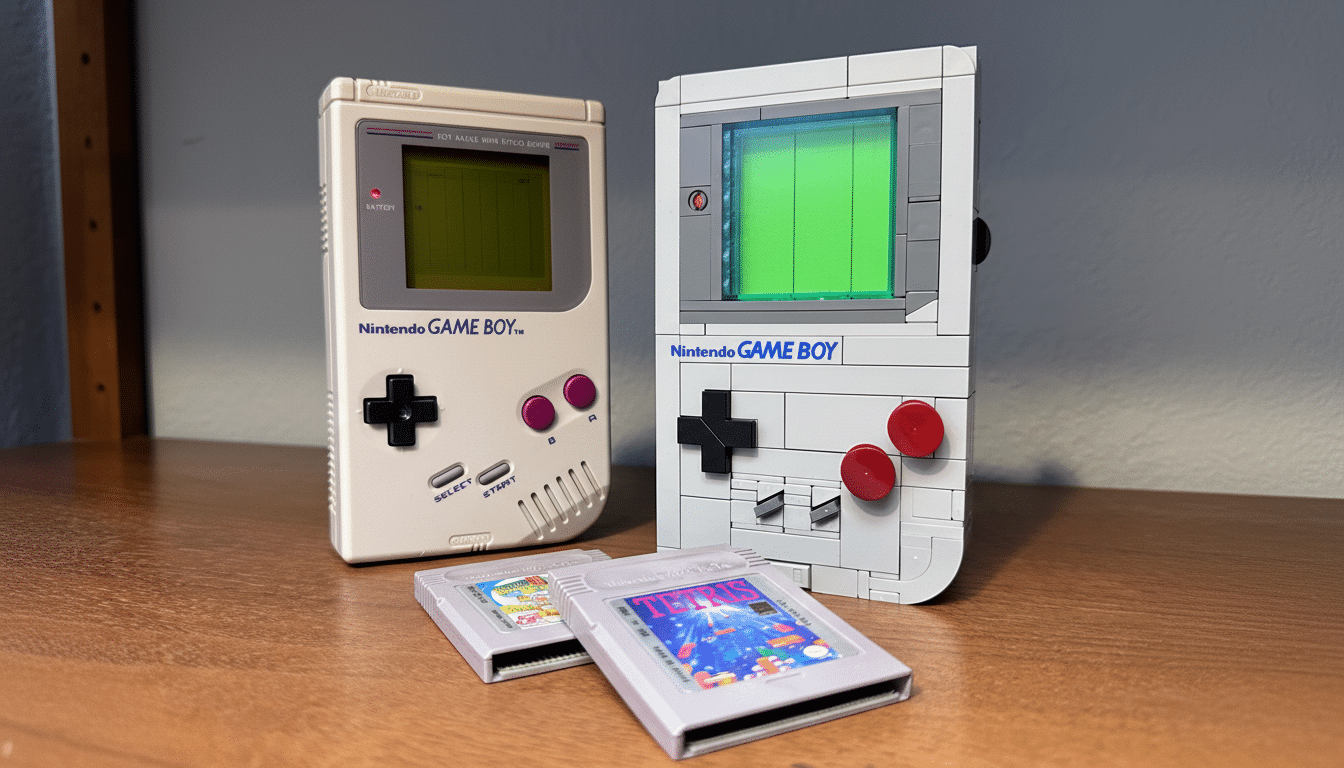
A fan engineer has transformed LEGO’s new Game Boy model into the handheld that this year-old toy didn’t make but really should have: a playable console with a slot to insert actual original Game Boy cartridges, combining elements of toy design, electrical engineering and retro game preservation.
The creator, who goes by Natalie the Nerd, recorded a fully working build that supports original carts with no emulation as well — marketing gimmick alert; elitist focus on real-cart play right up front, clearly beside. The project was picked up by the gaming press and soon became a topic of discussion in modding groups.
How the LEGO Game Boy hardware mod actually works
As a showpiece, straight out of the box LEGO’s Game Boy set is not electronic. She designed a custom interior chassis that fits snugly within the brick’s shell, 3D-printed brackets to line up the components and even came up with a purpose-built circuit board to connect a real cartridge with the display and controls. Underneath the smile-worthy studded buttons are low-profile clicky switches, which have been meticulously placed so that pressing each button corresponds to the original A, B, Start, and Select inputs.
Power delivery and signal integrity are the hard stuff. Running at common timings, a cartridge bus also tends to be very sensitive to balance and timing on the wires themselves. The mod’s PCB combines power regulation, clock distribution, and cartridge routing to minimize signal paths. Wrapping up the handheld setup, there are a pair of tiny speakers and an LCD driver that allow for portable play, while keeping everything looking very LEGO.
Using authentic cartridges without any emulation
Most DIY “LEGO handhelds” you will find on the internet are simply emulation shells that play ROMs on a microcomputer. This build is different. And by speaking directly to the cartridge, inputs and display pipeline, it keeps the idiosyncrasies that purists care about — button feel, startup behavior and minimal input lag. That counts in a timing-dependent game like Tetris or Super Mario Land, in which just a few milliseconds can make all the difference.
Vintage hardware guys love telling you that something is right but not comfortable. FPGA handhelds like the Analogue Pocket seek cycle-accurate emulation; original console restorations pursue the objective by way of recapped boards and modern video output. Natalie’s ethos falls right in line: build around the experience of a real cartridge, not a software simulation of it.
Why this LEGO Game Boy mod remains so popular today
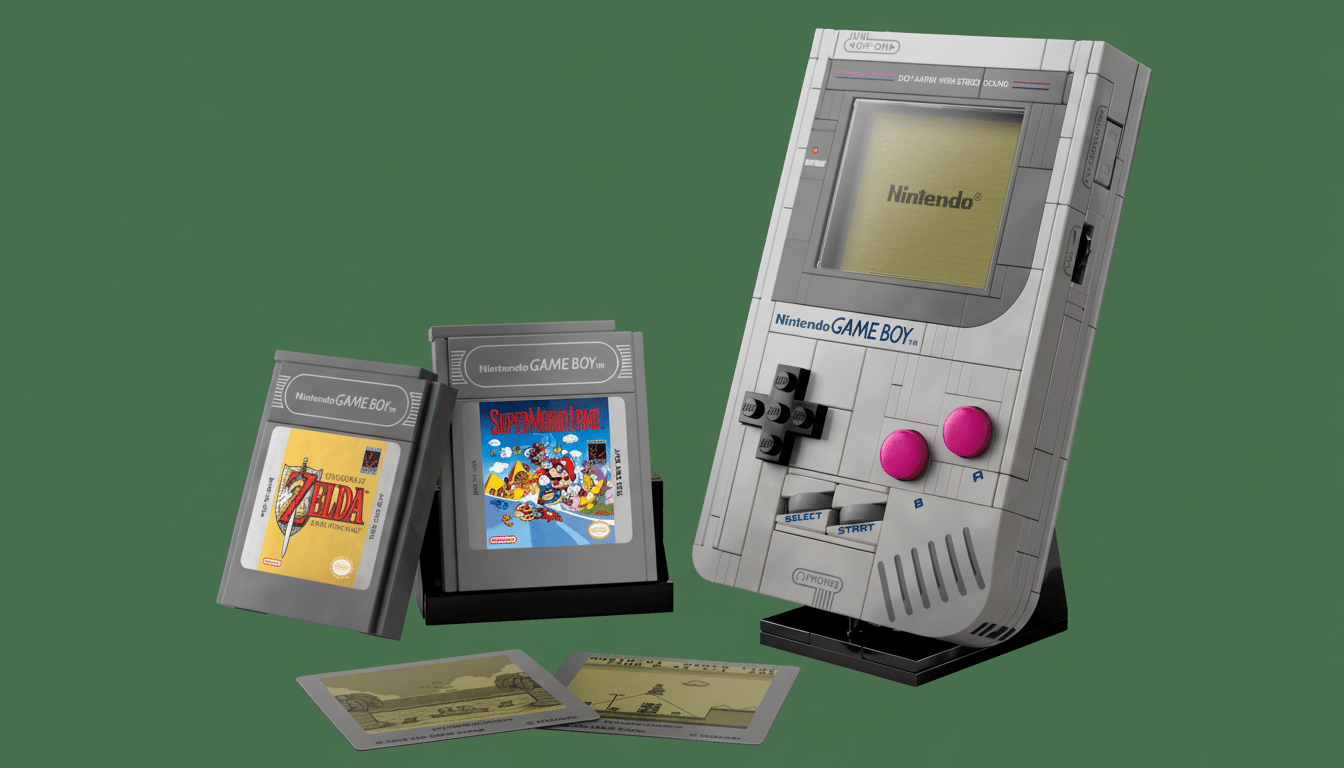
The Game Boy is one of Nintendo’s most lasting platforms. The system and the Game Boy Color family sold more than 118 million variants in total, according to historical sales data from Nintendo worldwide. Its library numbers over a thousand titles worldwide and lots of players still have the physical carts that are still going strong three decades later. A LEGO model that can hold those cartridges transforms the shelf display into a living archive.
This mod is also a part of a larger trend of crossover partnerships between Nintendo and LEGO. The brick-built NES, complete with a crankable TV, thrilled fans with mechanical invention and also interactive Super Mario sets that combined play and tech. And transforming the LEGO Game Boy into something you can actually play with is a natural next step, although it involves significantly more technical skill than a quick weekend build.
Challenge And What It Takes To Replicate
By no means should you consider this a plug-and-play tweak. A cartridge-capable portable in a LEGO shell requires some fine-pitch soldering, PCB design or assembly, and accurate 3D printing. If the buttons aren’t even, if there’s buzzing coming from the power lines, or if you don’t have a display that’s properly isolated, it could make your system unusable. “As we need to refine our design, Natalie would like to also share build documentation for advanced makers who want to try their own.”
For anyone tempted, there is of course the question of parts availability as well as safety and legality. You’ll need real cartridges or your own dumps; distributing ROMs is a different conversation altogether. You should find special connectors, a screen with a fitting driver and batteries with good protection circuits. As with all hardware mods, though, when bricks and soldering iron meet there’s no warranty.
Retro hardware on the wider scale of preservation
This project is representative of a turn in retro culture, from simple reminiscence to utilizing what we have. The advocacy organizations that are concerned about game history point out that hardware from the original publisher and discs or chips that came with it is the best way to keep games accessible for time immemorial as software licensing agreements and digital storefronts evolve. A LEGO-centric platform that honors the original cartridge loop — pop it in, turn power on, play — is an unexpected but very welcome addition to that toolkit.
It also speaks to how the hobby is being transformed by the increasing accessibility of fabrication tools. Cheap 3D printers, PCB services, and open documentation have allowed individuals to solve problems previously only known to small manufacturers. The result is both playful and accurate: a brick-built homage that, when you slot in a cartridge and hear the chime, acts just like the real thing.
Whether you’re in pursuit of a personal engineering challenge or simply hoping to experience playing some games on a little public-library nostalgia, this mod proves the LEGO Game Boy can be more than just something to look at.
In the right hands, it’s a handheld tribute to those classics — studs, sprites, and all.
