


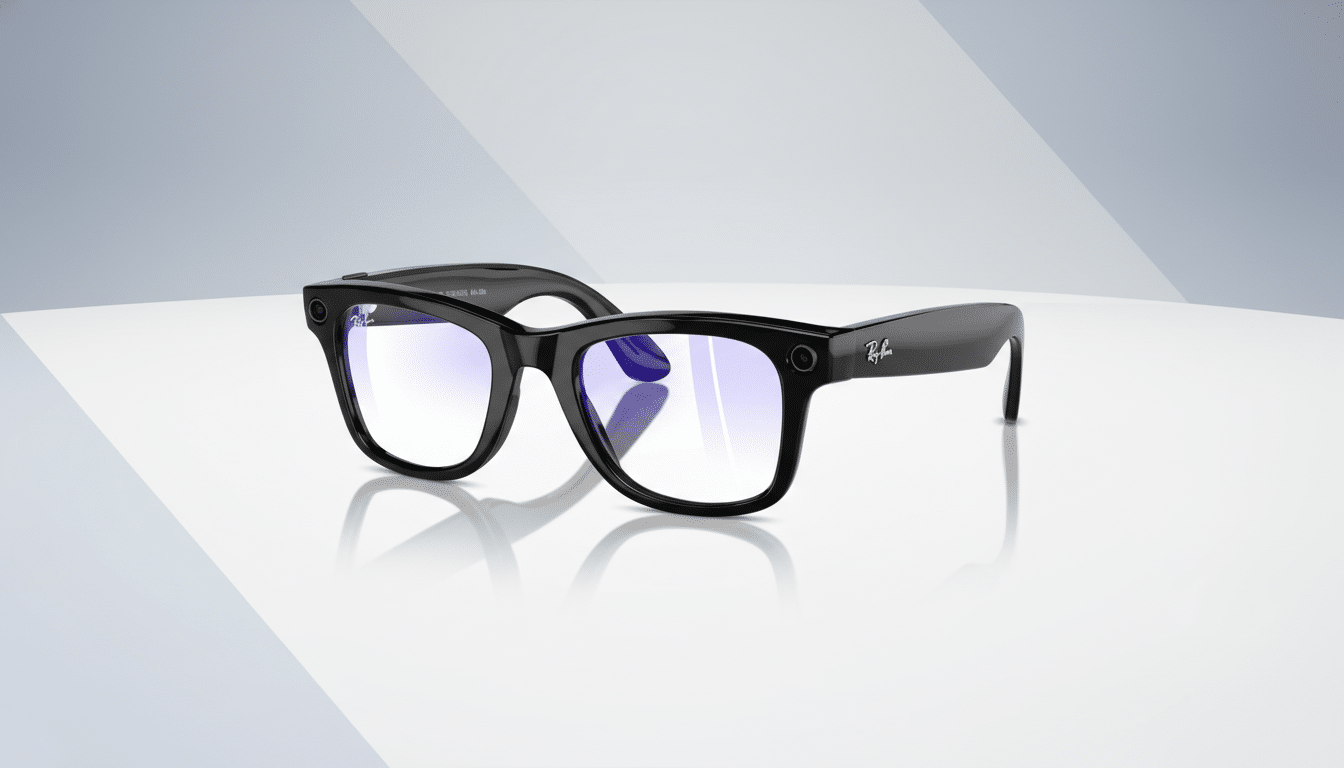
Meta is preparing to bring facial recognition to its Ray-Ban smart glasses, according to reporting that cites internal plans and documents. The capability, said to be codenamed “Name Tag,” would identify people the wearer is looking at and surface information via Meta’s AI assistant.
The New York Times reports that multiple people familiar with the project described ongoing work and internal debate about how to launch the feature amid acknowledged safety and privacy risks. One idea reportedly considered was a limited debut at a conference serving blind attendees, before any broader release, though that plan did not move forward.
- What Name Tag Could Do on Ray-Ban Smart Glasses
- Privacy and Legal Landmines for Wearable Face Recognition
- Accessibility Promises and Abuse Risks for Smart Glasses
- Why Accuracy and Strong Guardrails Matter for Name Tag
- A Different Path From Past Wearables on Bystander ID
- What to Watch Next as Meta Weighs Facial Recognition Rollout
What Name Tag Could Do on Ray-Ban Smart Glasses
In its simplest form, Name Tag would recognize a face through the glasses’ cameras and ask Meta’s assistant to retrieve a name and basic details. The outstanding question is sourcing: would the feature be restricted to people you already know—say, contacts from Facebook or Instagram—or expand to anyone who opts in and contributes a reference image? The answer determines whether the tool feels like a helpful memory aid or a system that can identify strangers in public.
The glasses, built with EssilorLuxottica, already support hands-free capture and on-device AI queries. With facial recognition, they could add context at a glance: meeting recall at conferences, instant friend recognition at events, or name prompts for low-vision users. But the same capability can be misused for profiling, surveillance, or harassment.
Privacy and Legal Landmines for Wearable Face Recognition
Privacy advocates have long warned that wearable face recognition normalizes the identification of people without their knowledge. The American Civil Liberties Union has cautioned that such systems are ripe for abuse, particularly when used in public spaces where consent is murky and bystanders cannot reasonably opt out.
Meta itself previously shut down its photo-tagging face recognition system, citing the need to balance innovation with legal and privacy concerns. The company later paid $650 million to settle a class action in Illinois brought under that state’s biometric privacy law, which requires informed written consent and gives individuals a direct right to sue. Europe’s emerging AI rules place strict limits on remote biometric identification and could expose violators to severe penalties, while the US Federal Trade Commission has signaled that misuse of biometric data may constitute an unfair practice.
The Times also described an internal memo suggesting that a “dynamic political environment” might make the timing for a rollout more favorable, implying that external scrutiny could ebb and flow. That framing underscores the stakes: the controversy here is less about whether the technology works and more about when, where, and for whom it should be allowed.
Accessibility Promises and Abuse Risks for Smart Glasses
For people who are blind or have low vision, reliable face recognition can be transformative. Identifying family members, colleagues, or a caregiver in a crowd is a clear, humane use case. Advocates often stress that success depends on consent-based whitelists, strict data minimization, and transparent controls.
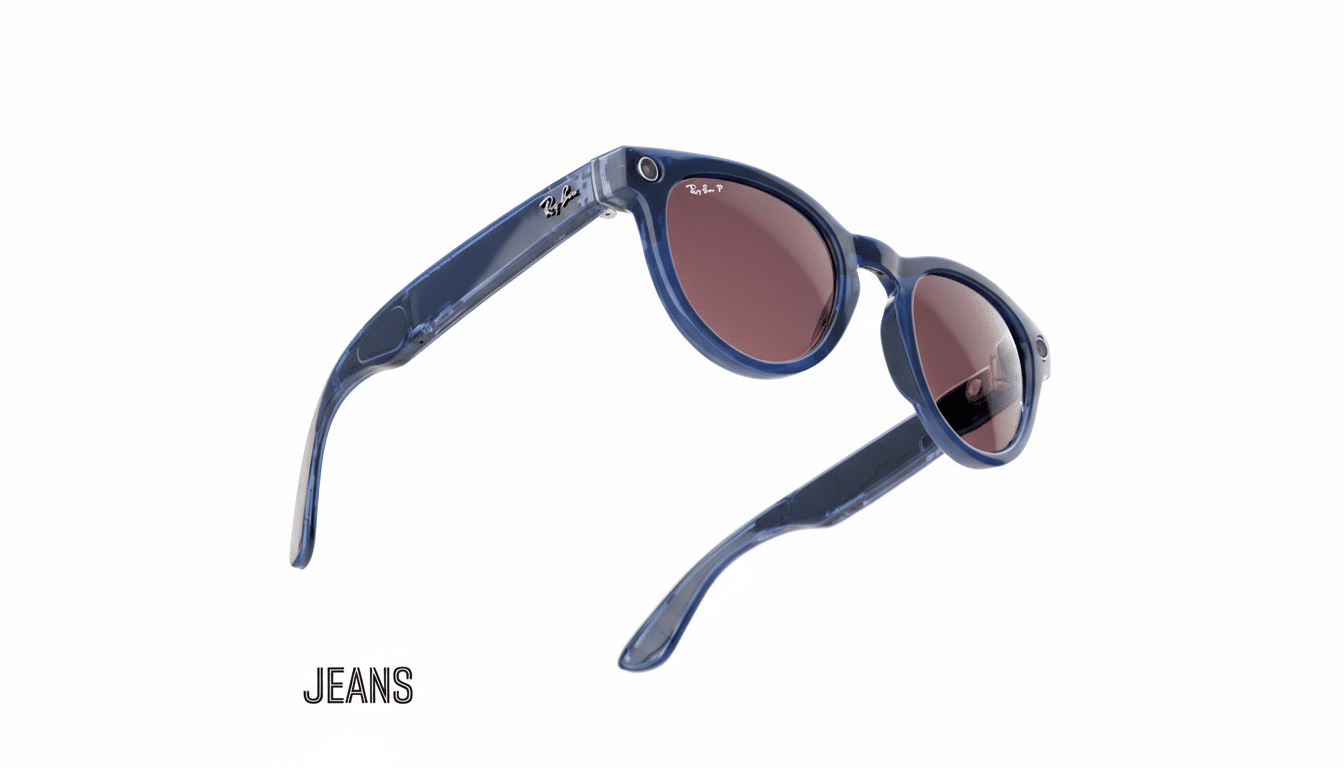
Yet edge cases quickly become mainstream risks. Two Harvard students recently demonstrated how Ray-Ban smart glasses could be paired with livestreaming and AI to match faces against public data, surfacing names and even home addresses. They declined to release the tool, but the proof-of-concept showed how easily a discreet wearable can become a doxing device.
Why Accuracy and Strong Guardrails Matter for Name Tag
Technical performance will shape both utility and harm. NIST’s Face Recognition Vendor Tests show that leading algorithms can achieve sub-1% error rates on high-quality images, but accuracy drops in the wild—off-angle shots, motion blur, low light—exactly the conditions common to glasses. NIST has also documented demographic disparities, with some systems producing significantly higher false matches for women and people with darker skin.
If Meta moves ahead, the design choices will tell the story. On-device processing with opt-in face templates and encrypted storage limits exposure. A hard boundary—recognizing only people who explicitly consent and are in your contacts—reduces bystander risk. Strong indicators that recognition is active, easy session-level shutdown, audit logs, and automatic deletion of face embeddings can further tighten controls. Geofencing sensitive locations and disabling recognition during livestreams would address common abuse scenarios.
A Different Path From Past Wearables on Bystander ID
Previous consumer wearables hesitated or retreated from recognizing bystanders. Google Glass never shipped official face recognition and faced public backlash. Snap has steered clear of bystander ID on Spectacles. Even platforms that rely on biometrics, like Apple’s Face ID, restrict use to the device owner, not people in the environment. If Meta introduces Name Tag, it would mark one of the first mainstream attempts to normalize this capability in everyday eyewear.
What to Watch Next as Meta Weighs Facial Recognition Rollout
Key details will determine reception: Who can be identified, and under what consent model? Are faceprints processed on-device and deleted by default? What controls do bystanders have to opt out? Will the feature be region-locked to comply with biometric laws, and how will Meta respond to municipal bans? Clear, user-centered answers could unlock legitimate use cases; ambiguity will invite regulatory scrutiny and public pushback.
The hardware is capable, the AI is ready, and the market is curious. Whether facial recognition belongs in everyday glasses now depends less on the algorithm and more on the guardrails wrapped around it.
