


I walked past walls lined with giant televisions and concept cars to come across the most interesting thing on the floor: the pocketable MagSafe game controller called Ohsnap Mcon. It clips onto your phone like a case, pops open to expose actual joysticks and buttons, and transforms the thing you already have in your pocket into a respectable handheld gaming console. In a year that has been overstuffed with spectacle, it’s this unassuming accessory I can’t get off my mind.
A MagSafe-first approach to modern mobile controllers
With most of the other mobile controllers, you are either squeezing a phone into rails or attaching via port without accounting for charging.
- A MagSafe-first approach to modern mobile controllers
- Designed for how we game today across phones and cloud
- Design details that matter for everyday mobile gaming
- Where it beats traditional Bluetooth pads and phone clips
- Price and value in perspective for this compact controller
- Caveats to watch around magnets, cases, and docked play
- Why it’s my sleeper pick of CES for mobile gaming
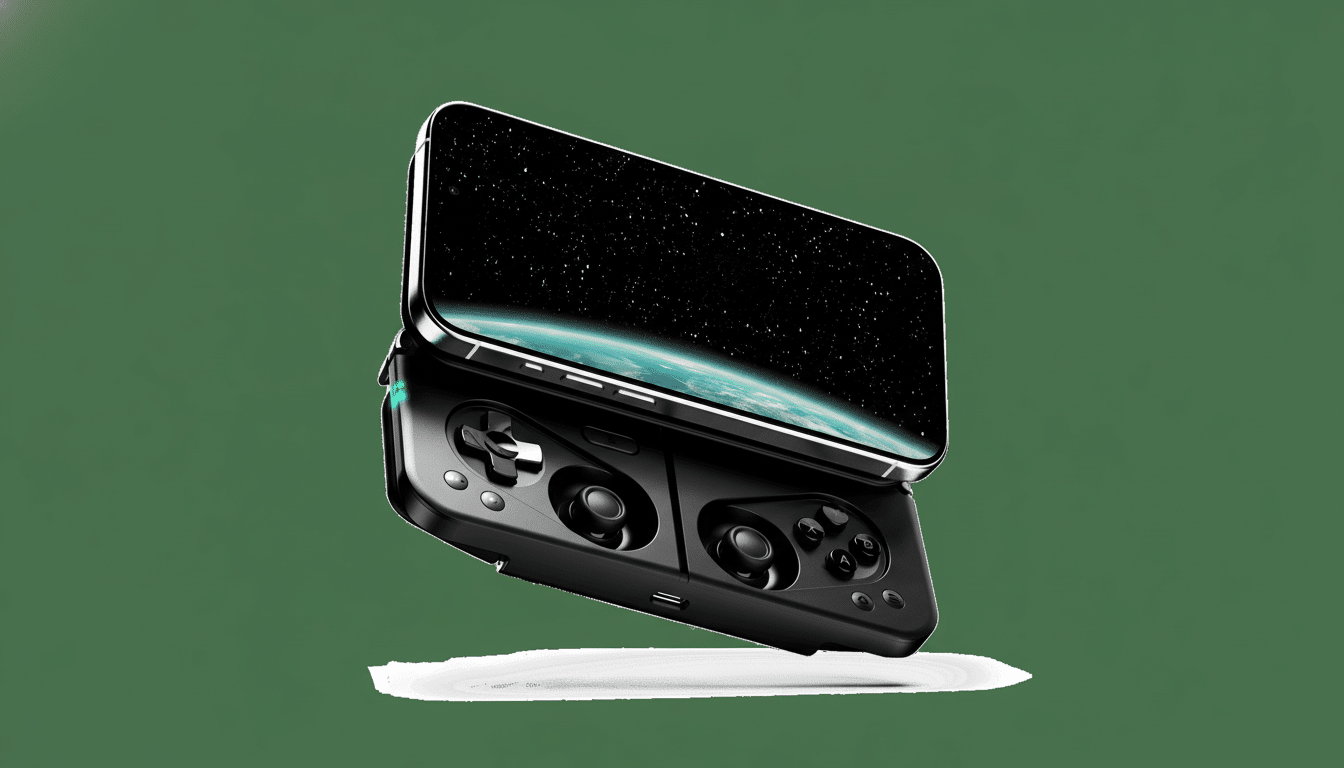
The Mcon leans on magnets. You plop your iPhone or Qi2-enabled Android onto a flat pad, then flick the housing outward to reveal a full control desk: twin sticks, directional pad, face buttons and shoulders — while your phone remains front and center. When it’s time to play, it can be easily pulled out of your pocket and deployed in seconds thanks to a unique sliding chassis that remains protected until you’re ready.
Alignment is also magnetic, so fit isn’t determined by phone dimensions or case cutouts — or the various vagaries of port placement. That’s a quiet masterstroke. Here’s the pain of anyone who has owned both the Lightning and USB-C versions of popular controllers: buying accessories twice.
Designed for how we game today across phones and cloud
Mobile gaming has moved on from being just a time waster to the main platform. The category already makes up nearly half of global games revenue, according to analysts at Newzoo, and cloud services such as Xbox Cloud Gaming and GeForce Now are speeding their migration. Meanwhile, the Wireless Power Consortium’s (WPC) Qi2 standard is beginning to make its way across Android and borrows much of its design from Apple’s MagSafe alignment. The Mcon is a perfect fit for these trends that have developed.
Use cases multiply even faster than those fulfilling the streaming console’s intended purpose: cloud-stream an RPG on your way to work; run a competitive shooter with real sticks, or fire up bona fide retro emulators. If you prefer couch play, $70 buys you an optional desktop dock that mirrors your phone to a monitor or TV, so that you can kick back rather than squat inches away from a wee display. It is a console-adjacent experience without another box under the TV.
Design details that matter for everyday mobile gaming
What makes the Mcon more than just a novelty are the thoughtful touches. Ergonomic grips that extend from either side ensure comfort while gaming for long periods. Toss it off the controller face and a built-in kickstand lets the phone stand on its own, particularly useful for streaming or strategy games. Most importantly, the design doesn’t block the USB-C (iPhone and iPad) or Lightning port (other devices), so you can still charge or plug in a wired headset while playing.
I like that the back of the phone is mostly exposed for airflow, a sticking point when it comes to constantly overheating rail controllers. It’s a marginal benefit that pays dividends if your session goes longer and your device would throttle.
Where it beats traditional Bluetooth pads and phone clips
There are already lots of Bluetooth pads on the market, but they rely on awkward phone clips or tabletop stands. The Mcon’s magnet-first design makes for instant alignment, an always-right center of gravity and no clamps. And though the industry argues about controller latency, testing from various gaming reviewers has demonstrated that Bluetooth can add tens of milliseconds compared with a cable. While the Mcon has several practical applications that make it more than simply a run at lab numbers (you snap, you play, you forget), some of its utility comes from reducing friction: you do your thing in front of a meter, play and perhaps even shoot music or something else downstream when out and forget mucking with settings.
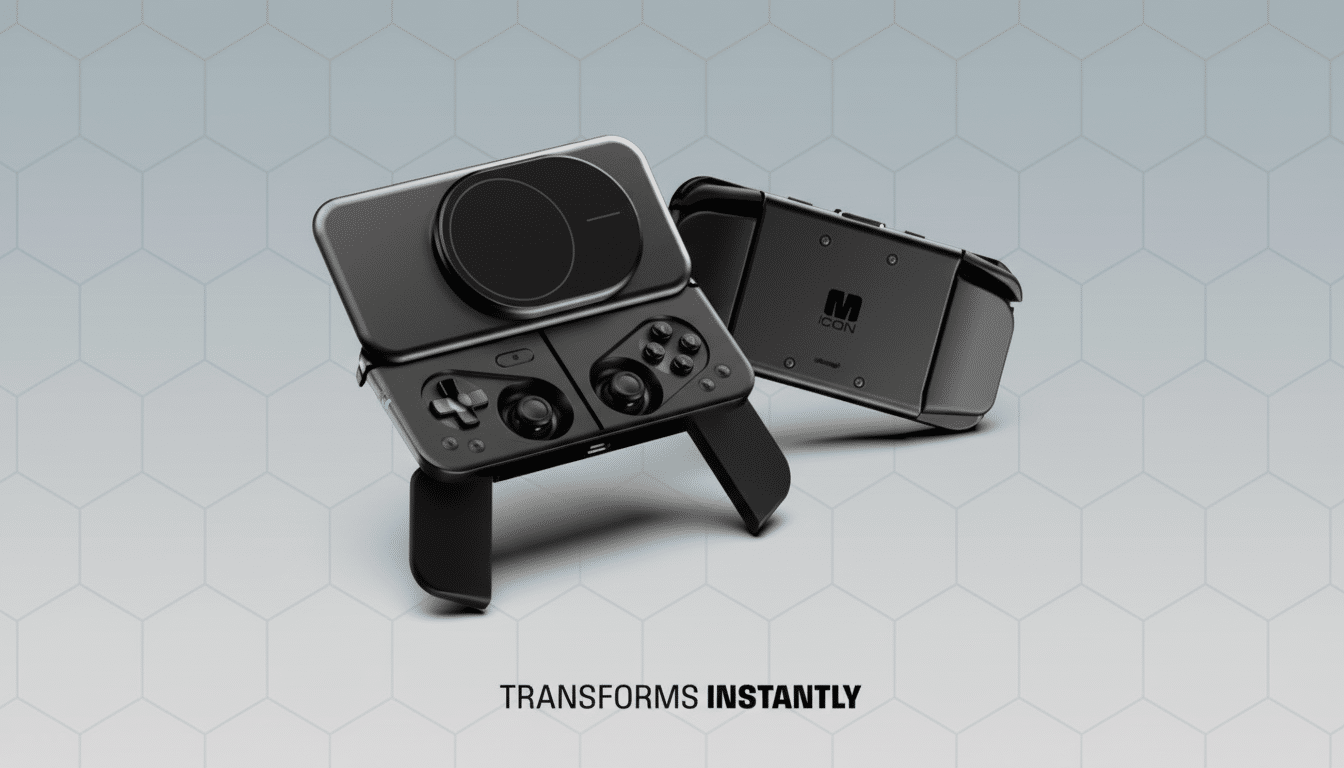
When compared with rail-style heavyweights like Backbone and Razer Kishi, the Mcon ekes ahead in terms of adjustability. And it’s anchored to no particular port; unfolding the controller to its full extent won’t require buying a new one when your next phone hits store shelves. That alone could save buyers from churn as devices change.
Price and value in perspective for this compact controller
The Mcon’s $150 price point roots it in high-end soil, but it packs in capabilities that some competitors are selling à la carte: an adjustable slider mechanism, expand-to-fit handles, a built-in kickstand and a fit-for-all modular ecosystem to which the $70 dock gives access.
Given what a dedicated handheld costs, it’s simple economics—you already have the compute and display; this is but an accessory to turn them on.
It’s more portable than most handhelds as well. The flat design easily slides into a pocket or sleeve, with no sticks to get caught on anything when it’s time to pack up and move, not to mention faster setup than launching an app and re-pairing a controller in chaotic wireless settings where one of four system updates is needed.
Caveats to watch around magnets, cases, and docked play
Case compatibility and magnet strength are important, just as with any magnet-mount accessory. It’ll be best with actual MagSafe or Qi2 magnets in your rings, not the little tinfoil-thin adhesive rings. And while the docked version shows promise, serious players are going to need to know about input lag, TV scaling and whether the controller firmware will be updated to support new game frameworks moving forward.
None of those reservations diminish the central achievement: this is mobile gaming in its most straightforward form. No rails, no clips, no tutorial-fueled friction—just hardware that disappears out of the way.
Why it’s my sleeper pick of CES for mobile gaming
For moonshots and prototypes, CES is notorious. The Ohsnap Mcon is the reverse, a fully realized concept sitting right under your nose. It leverages the MagSafe and Qi2 magnet ecosystem, respects ergonomics, and accepts that the phones we carry every day have finally caught up with dedicated handhelds in terms of power and content. If the best tech is tech you use every day, this smart little controller is this year’s silent winner of the show.
