


FX’s new limited series Love Story builds its world of Kennedy-era fascination by weaving real celebrities into the drama as fully formed characters. These portrayals aren’t throwaway cameos; they shape Carolyn Bessette and John F. Kennedy Jr.’s choices, amplify tensions between fame and privacy, and reconstruct the glamour of nineties New York with unusual specificity.
What makes the approach work is its accuracy to fashion and film culture of the period. From Calvin Klein’s minimalist power to the supermodel-industrial complex, the series folds in recognizable figures to clarify who held influence, who sought it, and how celebrity functioned as currency.
- Madonna, the pop icon, reframed in media and memory
- Annette Bening and fashion’s quietly potent soft power
- Daryl Hannah emerges as the story’s emotional counterpoint
- Calvin and Kelly Klein, steadfast gatekeepers of cool culture
- Kate Moss and Cindy Crawford, when fashion met mass media
- Michael Bergin’s breakthrough and the tangle of complications
- Mark Wahlberg and the Calvin Klein campaign that curdled
- Mickey Rourke and Demi Moore as sharp status signals
- Frank Sinatra, a lingering whisper from Old Hollywood
- Why these cameos matter to Love Story’s larger themes
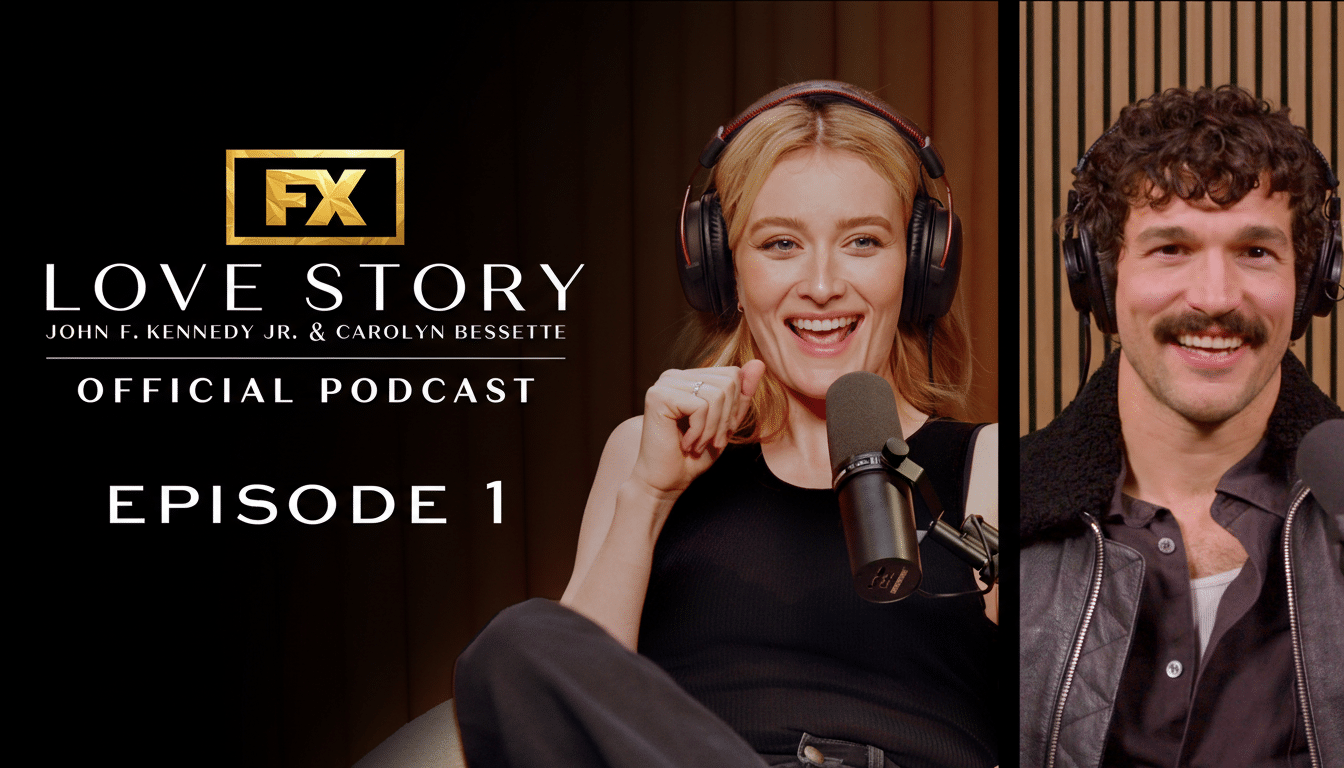
Madonna, the pop icon, reframed in media and memory
Madonna’s presence looms as both tabloid memory and narrative device. The series nods to her well-documented proximity to Kennedy and the era’s gossip mill, but uses those references to spotlight a deeper theme: the way male locker-room banter reduces powerful women to rumor. It’s a smart recalibration, reminding viewers that celebrity narratives were often written by everyone except the women at their center. Media scholars, including experts at the Shorenstein Center, have long traced how entertainment and politics blurred in this era; the show leans into that without turning salacious.
Annette Bening and fashion’s quietly potent soft power
Annette Bening appears not as a trophy cameo but as a pivot point for Carolyn’s rise. A fitting scene with Calvin Klein doubles as a masterclass in soft power: Bening’s gentle skepticism about a look opens the door for Bessette to guide a bolder, gender-bending choice. In story terms, it’s Carolyn’s proof-of-concept. In industry terms, it tracks with how publicists and stylists could transform red-carpet moments into brand architecture, a dynamic WWD has chronicled for decades.
Daryl Hannah emerges as the story’s emotional counterpoint
Daryl Hannah is portrayed with warmth and complexity, an on-and-off partner whose earthiness challenges the Camelot mystique. Her presence surfaces generational tensions and the Kennedy family’s protective instincts. Narratively, Hannah underscores how those orbiting the couple absorbed the collateral of fame, often at personal cost.
Calvin and Kelly Klein, steadfast gatekeepers of cool culture
Calvin Klein himself, along with then-wife Kelly Klein, function as gatekeepers who recognize Carolyn’s eye and ambition. The show captures the brand’s real-world gravitational pull on culture—minimalism as status, scandal as accelerant—while illustrating the mentorship pipeline that moved Bessette from sales floor to PR. Fashion historians and trade reporters have repeatedly noted how Klein’s campaigns rewired mainstream aesthetics; the series translates that history into intimate office politics.
Kate Moss and Cindy Crawford, when fashion met mass media
Kate Moss is cast as Carolyn’s inspired bet—the elusive new face with a guarded aura that the camera can’t resist. It’s a credible nod to how breakthrough casting can reset a label’s identity. Cindy Crawford, meanwhile, bridges fashion and politics via George magazine; she famously fronted the debut issue in George Washington styling, a cover documented by outlets like The New York Times and Vanity Fair. Together, Moss and Crawford embody two vectors of the era: raw cool and media-savvy spectacle.

Michael Bergin’s breakthrough and the tangle of complications
Model Michael Bergin enters as Carolyn’s on-and-off confidant whose career accelerates with her guidance. The series shows her leveraging access to lift him into Klein’s orbit, a believable depiction given her PR role. Outside the show, Bergin’s own accounts—published in a memoir and covered by People—claimed their relationship overlapped with her marriage, a controversy the drama translates into a portrait of ambition, intimacy, and blurred lines.
Mark Wahlberg and the Calvin Klein campaign that curdled
Mark Wahlberg, in his Marky Mark era, is portrayed as the combustible face of an underwear juggernaut whose bravado turns toxic. The show depicts a clash with Madonna’s entourage and a homophobic slur, prompting a brand reckoning. While dramatized, it mirrors real debates about that campaign’s messaging and who it alienated—themes advocacy groups like GLAAD have flagged in examining pop culture’s impact on LGBTQ audiences. It’s also an incisive reminder that not all attention is good attention for luxury houses.
Mickey Rourke and Demi Moore as sharp status signals
Mickey Rourke surfaces early as a nightlife name-drop, telegraphing the circles Carolyn’s colleagues move within. Demi Moore appears via a backstage mishap that doubles as a workplace stress test. These beats aren’t filler; they’re altitude readings that tell you exactly how high the stakes are in Carolyn’s day-to-day, and how quickly a misstep can ripple across a brand’s client list.
Frank Sinatra, a lingering whisper from Old Hollywood
A late reference to Frank Sinatra arrives as a smoky postcard from an earlier celebrity ecosystem—glittering, intimate, and impossible to corroborate. For a story obsessed with what endures and what burns away, it’s a resonant touch. Archivists and biographers have long noted how personal letters and private recollections complicate the myths we build around icons; the series gives that idea a poignant on-screen echo.
Why these cameos matter to Love Story’s larger themes
By casting celebrities as narrative levers, not ornaments, Love Story maps the power circuits of its era. It shows how a publicist can redirect a red carpet, how a model can shift a brand’s center of gravity, and how a pop star’s shadow can unsettle a would-be dynasty. That attention to ecosystem—backed by details recognizable to fashion trades, entertainment reporters, and media historians—turns nostalgia into texture, and texture into story.
