


Dubai is one of the world’s most popular hubs for U.S. expats — offering zero personal income tax, year-round sunshine, lifestyle luxury, and global career opportunities. But while the UAE does not tax individual salaries, the United States still taxes its citizens on worldwide income, no matter where they live. That’s where expat-focused tax professionals come in.
For Americans living abroad, navigating U.S. tax law can feel overwhelming — especially when foreign accounts, business ownership, self-employment income or crypto assets are involved. Working with a US expat tax specialist based in Dubai can help taxpayers avoid IRS penalties, keep compliant year after year and gain peace of mind.
- Why U.S. Tax Specialists in Dubai Are in Demand
- Understanding U.S. Tax Rules for Americans in Dubai
- How a Dubai-Based Expat Tax Specialist Helps
- 1. U.S. Tax Preparation from the UAE Perspective
- 2. Year-Round Support
- 3. Business and Freelancer Tax Strategy
- 4. Late Filing, Back Taxes and IRS Cleanup
- Why Not Just Use a Local UAE Accountant?
- What to Expect When Working With a U.S. Expat Tax Specialist
- The Bottom Line
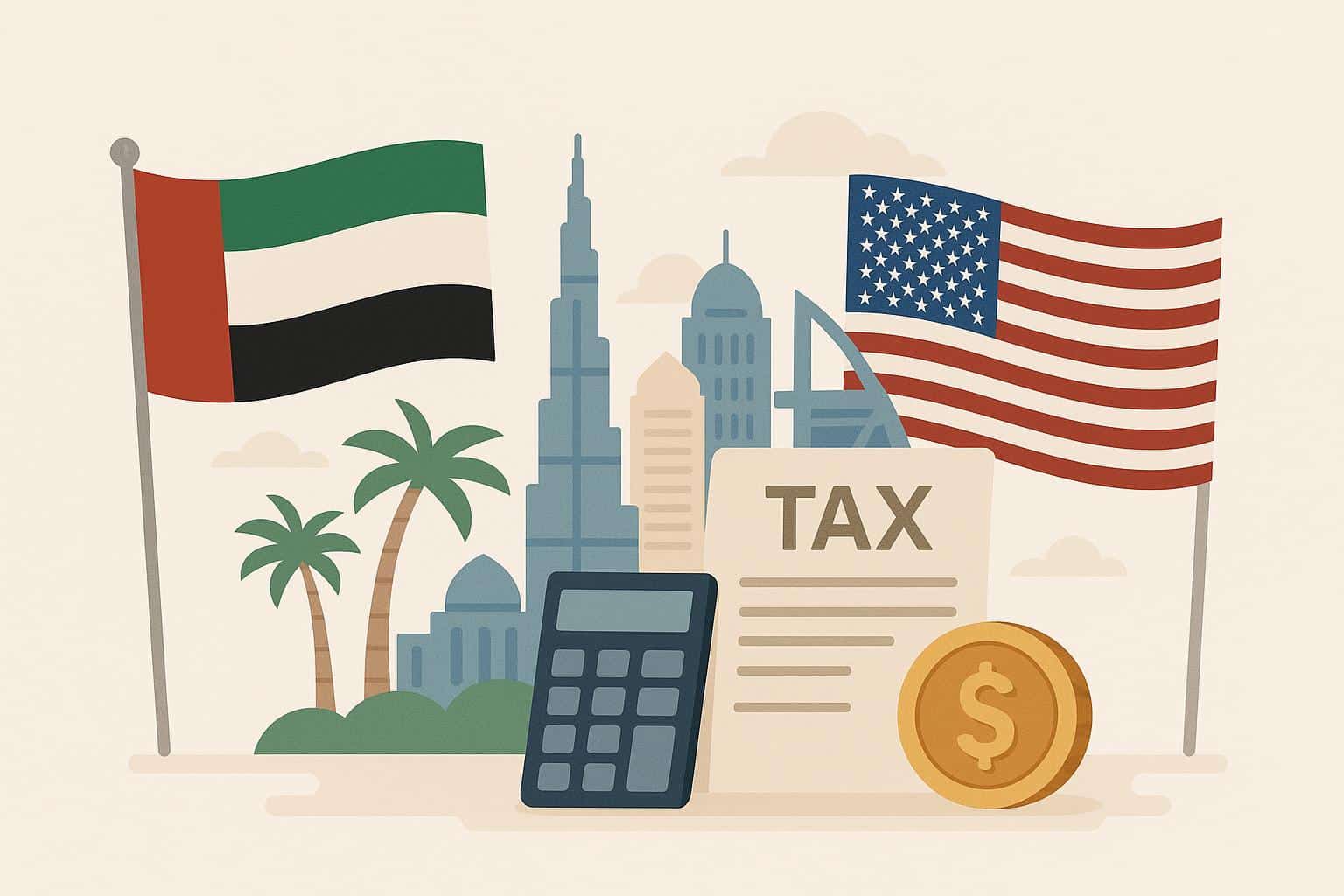
Why U.S. Tax Specialists in Dubai Are in Demand
Even though Dubai is tax-friendly, U.S. expats still face multiple IRS obligations, including:
- Filing a U.S. tax return every year, even with $0 UAE tax
- Reporting foreign bank accounts (FBAR – FinCEN Form 114)
- Declaring crypto earnings, stock investments or rental income
- Filing Form 8938 for foreign asset reporting (when required)
- Filing Form 8858 or 5471 when owning foreign companies
- Maintaining compliance to avoid IRS penalties
For newcomers to the UAE, many arrive assuming there is no need to file U.S. taxes, and this misunderstanding can lead to penalties, frozen U.S. refunds or delayed passport renewals.
Understanding U.S. Tax Rules for Americans in Dubai
The United States is one of the only countries on earth that uses citizenship-based taxation. This means that:
| Living in the UAE | U.S. Tax Obligation |
|---|---|
| Earning a salary in Dubai | Still must file a U.S. tax return |
| Have a UAE bank or savings account | May require FBAR filing |
| Investing in UAE property or crypto | Must be reported to IRS |
| Owning a Dubai-registered LLC / free zone company | Requires extra IRS reporting |
Even expats who pay no tax locally may still owe U.S. tax — unless they qualify for tax relief tools like:
- Foreign Earned Income Exclusion (FEIE) – Form 2555
- Foreign Tax Credit (FTC) – Form 1116
- Foreign Housing Exclusion
A tax specialist helps determine which relief option keeps your tax bill the lowest.
How a Dubai-Based Expat Tax Specialist Helps
1. U.S. Tax Preparation from the UAE Perspective
Unlike domestic U.S. accountants, expat tax specialists understand:
- UAE employment contracts
- End-of-service gratuity
- DIFC/ADGM business structures
- Local banks and Islamic finance products
- UAE crypto exchanges and offshore banking
This expertise matters — because misunderstandings in foreign reporting can result in $10,000+ per-form penalties.
2. Year-Round Support
Dubai-based specialists operate on Gulf Standard Time and work directly with expats throughout the year — ideal for Americans who want:
- In-person consultations
- WhatsApp- or Zoom-based filing support
- Immediate tax guidance before major decisions (buying property, starting a company, moving)
3. Business and Freelancer Tax Strategy
Many Americans in the UAE are:
- Freelancers / digital nomads
- Consultants
- Free-zone business owners
- Entrepreneurs with foreign entities
Specialists can help:
- Structure UAE companies tax-efficiently
- Avoid IRS treatment of foreign companies as “controlled foreign corporations”
- File mandatory forms like Form 8858 and Form 5471
4. Late Filing, Back Taxes and IRS Cleanup
A Dubai expat tax firm often helps with:
- IRS amnesty programs (Streamlined Filing)
- Late FBAR submissions
- Fixing past years of unfiled tax returns
- Preventing possible passport-related IRS enforcement
Why Not Just Use a Local UAE Accountant?
Most UAE accountants:
- Do not handle U.S. taxes
- Cannot file U.S. federal returns
- Are unfamiliar with American foreign asset rules
Only IRS-enrolled agents (EA), CPAs or U.S. tax attorneys are authorized to represent you to the IRS.
Expats benefit from working with firms that specialize in American expat tax only, rather than domestic bookkeeping.
What to Expect When Working With a U.S. Expat Tax Specialist
A standard process usually includes:
1️⃣ Initial call – tax profile review
2️⃣ Document checklist – bank statements, salary records, crypto exchanges, etc.
3️⃣ Filing strategy – FEIE vs. Foreign Tax Credit planning
4️⃣ Draft return review
5️⃣ IRS filing submission
6️⃣ Year-round support for questions
Many expats prefer firms that offer:
- Fixed transparent pricing
- Remote or in-person meetings
- Fast turnaround during tax season
- Support for multiple-year filings at once
The Bottom Line
Dubai may be tax-free, but the IRS isn’t. U.S. citizens and green-card holders living in the UAE must continue filing U.S. tax returns and reporting foreign accounts every year. A qualified U.S. expat tax specialist based in Dubai can help Americans avoid penalties, lower their tax bill legally and stay compliant — without stress.
