


Apple fans have a point. Use it day-to-day and the iPhone Air feels more finished than the Galaxy S25 Edge. Both are chasing the super-thin ideal, but only one brings slimness into a coherent product rather than a spec-sheet trick.
It’s not about raw checkbox numbers. It’s about ergonomics, balance, sustained performance, and the type of consistency that gets you to stop thinking about your phone — in the best way.
- Why the iPhone Air Wins for One-Hand Comfort and Grip
- Performance and Efficiency Right Where It’s Needed
- The Quality of Cameras Over Quantity of Cameras
- Battery Life and Thermals in a Slim Form Factor
- Display and Touch Feel You Immediately Notice
- Software Polish, Ecosystem Strength, and Everyday AI
- Value Over Time, Not Just at Checkout or Launch Day
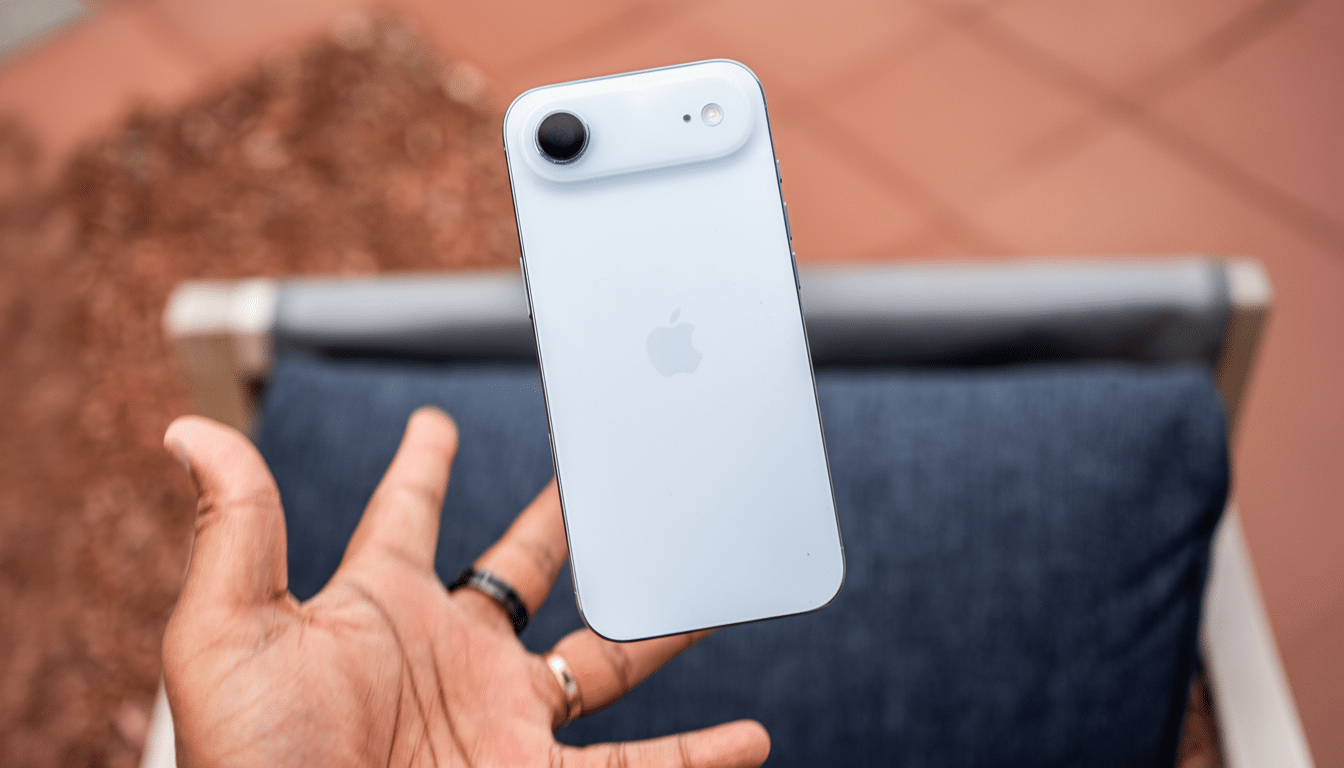
Why the iPhone Air Wins for One-Hand Comfort and Grip
Apple’s take on thin hardware is purposeful. Its rounded titanium frame, quiet curves, and low center of mass (that is, it’s less top-heavy) help make the iPhone Air easier to grip. The buttons on the surface are easy to find without looking, with a crisp, low-profile click, and the camera housing integrates into the back rather than yanking the phone off balance.
That’s in stark contrast to the Galaxy S25 Edge, which is sleek but also flatter and more angular. That minimal design looks awesome in a render but can feel sharper and more slippery in the hand. The distinction becomes apparent during extended one-handed sessions, in which the Air demands significantly less of your grip and nerves.
Performance and Efficiency Right Where It’s Needed
Apple’s newest A‑series silicon and Apple-designed GPU are optimized for performance per watt, and that’s more important to a device in an ultrathin chassis with limited thermal headroom than ever. Independent testing over the years from places like AnandTech has established that Apple’s mobile CPUs and GPUs deliver better performance for less power, which results in fewer slowdowns whenever heat ratchets up.
There’s no doubt that Samsung’s custom Snapdragon for Galaxy chips are really quick, but thinner Android phones have been known to throttle faster under sustained load. This behavior is regularly laid bare by tests at Notebookcheck. In real terms, this means the iPhone Air remains responsive after long navigation sessions, or 4K editing barrages, or hours-long gaming in a manner the S25 Edge struggles to keep pace with over time.
The Quality of Cameras Over Quantity of Cameras
The Galaxy S25 Edge combines both a high‑res main sensor and an ultrawide onboard, and that sounds attractive on paper. But today’s mobile photography is as much about dependable image processing, color science, and shot-to-shot consistency as it is about lens count. Consistency is often cited as one of the major contributors to general camera satisfaction by testing labs such as DXOMARK.
Apple’s single‑camera decision on the iPhone Air sounds conservative but shifts focus to one outstanding module and the computational pipeline behind it. The Air’s knack for rendering consistent exposure and skin tones in mixed lighting and fast-moving scenes carries a value greater than a rear-mounted, seldom-used extra lens. Fewer choices, fewer misses.
Battery Life and Thermals in a Slim Form Factor
Battery life is generally the first thing to suffer from a thin design, but efficiency can help deliver real endurance. And in the past, cross‑platform battery tests by reviewers like Tom’s Guide have revealed that iPhones simply match or best rivals with smaller cells because hardware, software, and silicon all dance to the same tune.
Charging speeds of the S25 Edge are fine, but frequent top‑ups become a trailing habit as wheezing workloads give way to the phone getting overly warm.
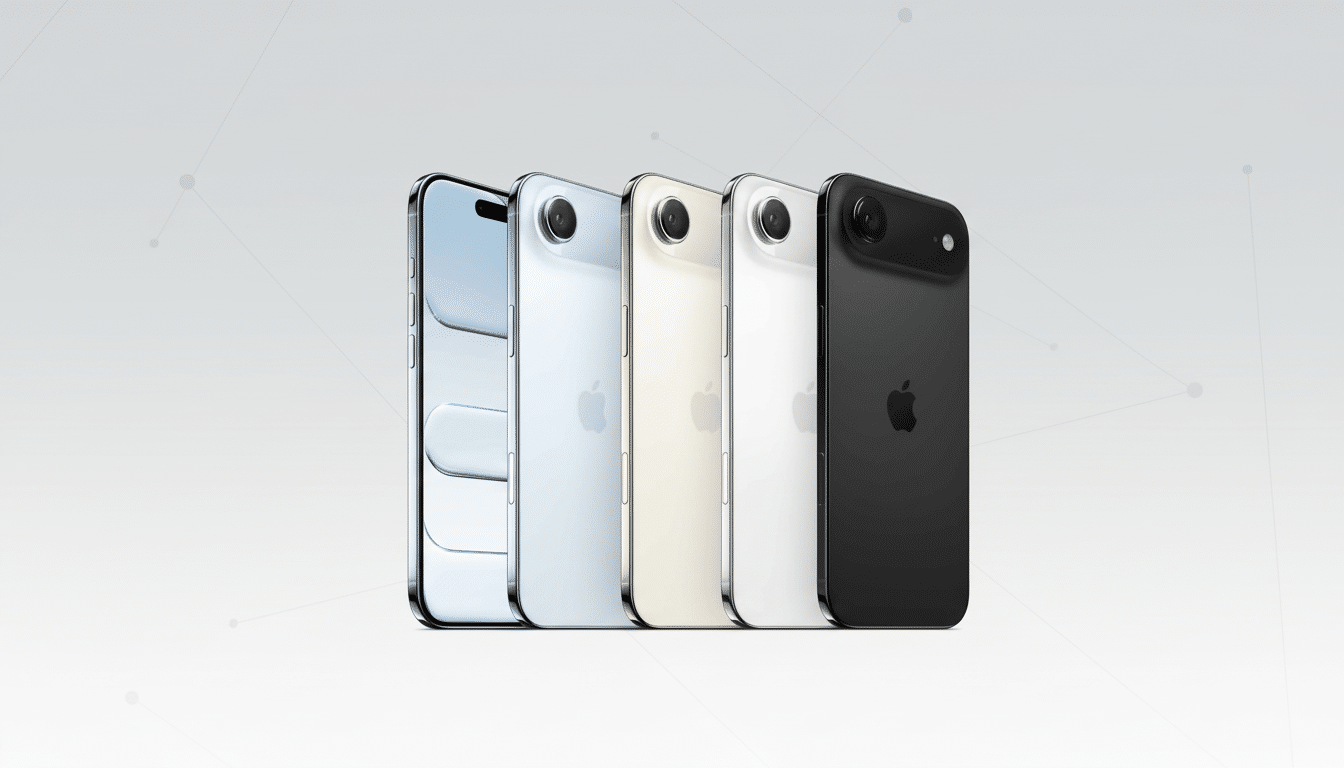
The iPhone Air’s consistent draw and more constrained thermal management make its battery feel bigger than it is, at least if your day marries some camera use with a lot of messaging, maps, and streaming rather than constant gaming.
Display and Touch Feel You Immediately Notice
They both serve up bright, sharp OLED panels, but Apple’s out‑of‑box calibration and touch response is uncannily consistent from unit to unit.
According to display evaluation firms like DisplayMate, the accuracy of iPhone color and tracking of grayscale is consistently rated among the best. Combine that with the precision haptics in the Taptic Engine, and everyday interactions — typing, swiping, unlocking — feel crisper and more thought-out on the Air.
Let’s make one thing clear: Samsung’s panel tech is top tier, and the S25 Edge looks stunning on its own. But little things like haptic texture and consistent gesture response give the iPhone Air an air of perceived polish, especially as the miles pile up.
Software Polish, Ecosystem Strength, and Everyday AI
iOS on the iPhone Air is intentionally simple: fewer toggles, fewer surprises, quicker muscle memory. App developers continue to make iOS a first‑class citizen with features such as pro‑grade video capture and creator tools, and Apple’s continuity between devices — AirDrop, Messages, Watch integration — is still mostly frictionless. That cohesion lowers the cognitive burden of being a phone owner.
On AI, Samsung’s Galaxy AI suite is wide and cool but ends up feeling like a stack of demos. Apple Intelligence seems to trend smaller in scope but deeper in integration, with more on‑device processing and privacy by design, as Apple has repeatedly said in its developer documentation. The upshot on the Air is help that folds into Notes, Photos, and Messages rather than living in an entirely different app.
Value Over Time, Not Just at Checkout or Launch Day
On paper, raw specs may favor the S25 Edge, but true value compounds over years. Resale trackers like SellCell continue to show iPhones losing value at a slower rate than Android flagships, which softens the financial blow of upgrading. Analysts at Counterpoint Research have also pointed out Apple’s overwhelming share in the premium segment, evidence that the recipe works with long‑term buyers.
There are trade-offs. The iPhone Air’s stripped‑back camera array and eSIM‑only position won’t be right for everyone. But the fundamentals — ergonomics, speed, stamina, camera durability, touch feel, and long-term value — all land in Apple’s favor. If thin is in, the Air is a phone that puts thin in context.
