


Key Takeaways
Infrared sensors have come a long way since their origins in motion detection technology of the 19th century. Now, they are vital parts of smart homes and industrial automation, driving both efficiency and safety.
Today’s infrared sensors boast various types, including pyroelectric and thermopile detectors, which enhance precision and flexibility in diverse applications from security systems to healthcare oversight.
- Key Takeaways
- The Evolution of Infrared Sensory Technology
- Key Applications of Infrared Sensors in Motion Detection
- The Science Behind Infrared Motion Detection
- Maximizing Efficiency with Infrared Sensor Systems
- FAQ
- What factors influence the performance of infrared sensors?
- Can infrared sensors be used outdoors?
- How often should infrared sensors be calibrated?
- Are there any emerging technologies that could enhance infrared sensors?
- How do infrared sensors contribute to energy savings in buildings?
- What industries are increasingly adopting infrared sensor technology?
- Can infrared sensors detect movement through walls?
- How do infrared sensors compare with other motion detection technologies?
By integrating infrared sensors with smart home technology, users can now manage lighting, thermostats, and security systems directly from their smartphones. This not only boosts energy efficiency but also simplifies user convenience.
In the realm of healthcare, infrared sensors play a pivotal role in tracking patient movements and ensuring that equipment remains functional, fundamentally improving patient safety and the quality of care provided.
As for pyroelectric sensors, their quick response times make them ideal for scenarios demanding immediate action, while thermopile sensors shine in non-contact temperature measurements.
A solid grasp of spectral sensitivity is crucial; it informs how effectively sensors react to different infrared light wavelengths in various environments.
To achieve peak performance in real-world applications, both proper installation and regular calibration of infrared sensor systems are necessary.
The Evolution of Infrared Sensory Technology
How Historical Innovations Shape Today’s Solutions
The story of infrared sensors began in the early 19th century when scientists started to delve into the realm of invisible light wavelengths. However, it took until the mid-1900s for practical applications to take shape, especially with the emergence of pyroelectric technology. In those early days, motion detectors were quite basic, rigidly requiring a direct line of sight, and they lacked the responsiveness that modern systems now readily offer.
Those early breakthroughs opened the door to the sophisticated infrared sensors that are intrinsic to modern technology today. Alarm systems, smart lighting, and automated doors—these all depend on advanced infrared tech that has transformed antiquated concepts into efficient, performing solutions.
One notable evolution involves the transition from single type detectors to an array of options, such as pyroelectric and thermopile detectors. This diversification is a response to the growing demand for precision and adaptability, with applications spanning from home security to complex industrial automation. As technology has progressed, system features have also advanced, including sophisticated algorithms that enhance detection performance and minimize false alarms.
Emerging Trends in Infrared Motion Detection
Smart home technology is a burgeoning field, allowing clients to manipulate lighting, thermostats, and security systems via their smartphones, ultimately creating a cohesive and efficient ecosystem. The Internet of Things (IoT) significantly contributes to this integration by connecting various devices for a seamless user experience.
Additionally, sustainability is gaining traction. Manufacturers are focusing on energy-efficient designs that reduce power consumption without compromising detection capabilities. These advancements appeal to both cost-conscious and environmentally aware consumers and businesses.
Remarkably, within healthcare, infrared sensors are making impressive strides. From tracking patient movements to ensuring critical equipment operates smoothly, their versatility across multiple settings enhances effectiveness.
“The integration of infrared technology in diverse fields showcases its adaptability and relevance across various industries.”
Key Applications of Infrared Sensors in Motion Detection
From Smart Homes to Industrial Automation
Infrared sensors have emerged as key players in transforming standard environments into intelligent settings. The advent of smart homes necessitates these sensors to be increasingly sophisticated and reliable. Take a look at security systems that utilize infrared motion sensors. They deliver superior detection performance and work seamlessly in day or night lighting conditions. Users enjoy real-time alerts and straightforward monitoring—granting peace of mind.
In industrial contexts, this technology is increasing process efficiency and enhancing worker safety. For example, on assembly lines, infrared sensors can pick up on motion and ensure machines only operate when human presence is detected nearby. This innovation not only boosts safety measures but conserves energy by powering down machines during inactivity. Professionals often report benefiting from the following outcomes when integrating such systems:
- Heightened accuracy in monitoring workflows
- Lower labor costs due to automation
- Improved safety with real-time alerts
Life-Saving Uses in Healthcare Environments
In the healthcare arena, infrared sensors are playing life-critical roles. Systems designed to monitor patients utilize infrared technology to keep tabs on movements, which is crucial for identifying potential falls or emergencies swiftly. This ability to expedite response times significantly enhances the quality of patient care.
Moreover, in laboratory settings, infrared sensors are essential for ensuring that critical instruments, like incubators and freezers, function properly by providing temperature monitoring and motion tracking. As a result, staff receive timely alerts when equipment requires attention or if patients stray outside designated safe zones.
“The role of infrared sensors in healthcare underscores their life-saving potential and critical importance.”
The Science Behind Infrared Motion Detection
Understanding Pyroelectric vs. Thermopile Detectors
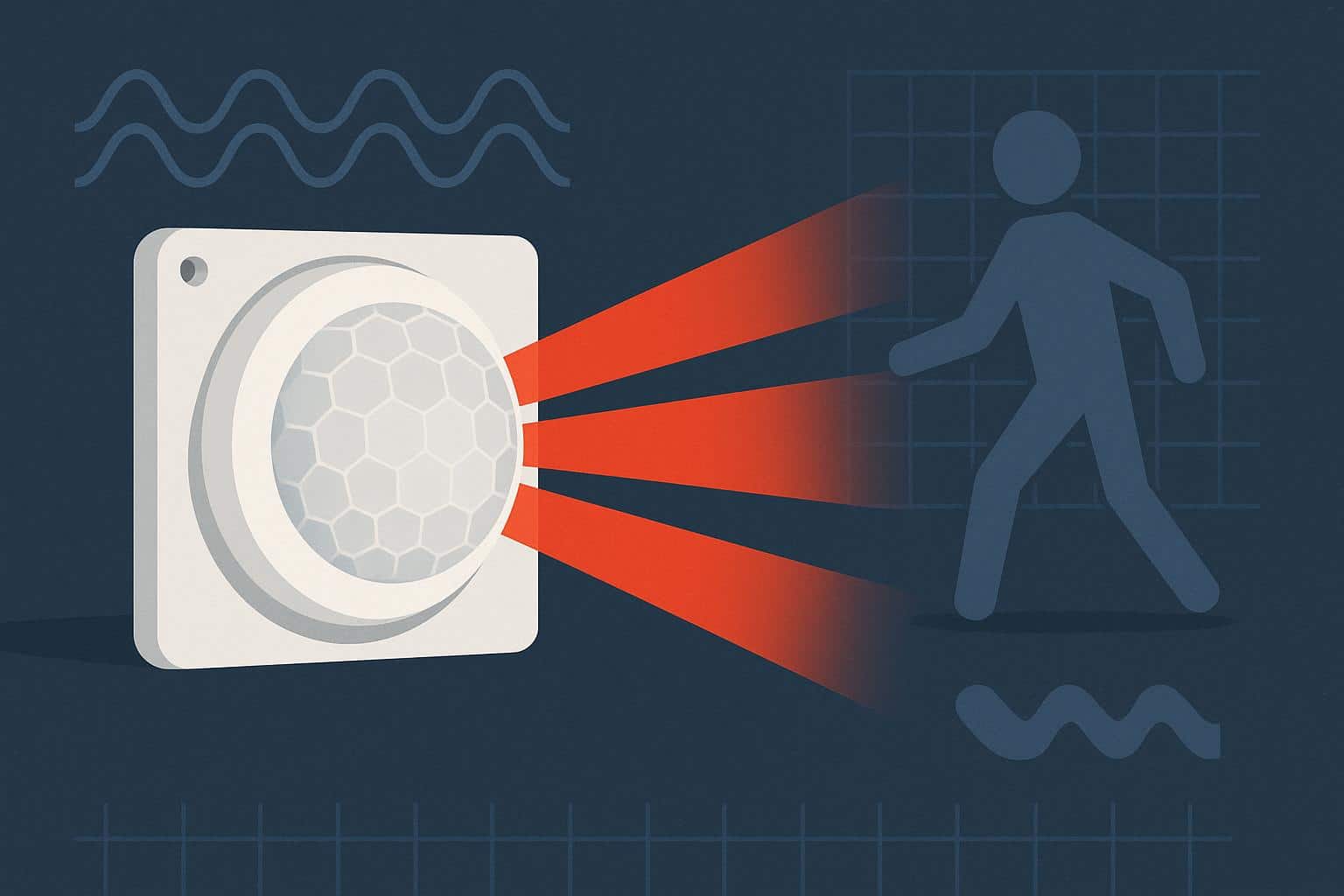
Professionals often draw a line between two main types of infrared detectors: pyroelectric and thermopile detectors. Each serves distinct purposes in motion detection. Pyroelectric sensors excel in detecting shifts in infrared radiation emitted by moving objects, making them particularly effective for rapid response needs, such as in security systems. They can perceive even minimal movements, ensuring coverage with negligible blind spots.
Conversely, thermopile sensors gauge the absolute temperature of objects in their view. They are more frequently chosen for scenarios requiring a wider temperature range. This feature aligns thermopile detectors with non-contact temperature assessments, which have gained relevance in public health initiatives. Therefore, the choice of detector hinges on comprehending the specific requirements and desired outcomes of the application.
- Utilize pyroelectric sensors for quick motion detection tasks.
- Opt for thermopile sensors when measuring temperature.
- Combine both types for versatile solutions in complex applications.
The Role of Spectral Sensitivity in Performance
Another important aspect in the realm of infrared motion detection is spectral sensitivity. This term describes how effectively a sensor can react to various infrared light wavelengths. In actual use, this characteristic substantially influences a sensor’s performance across different settings. Many infrared sensors are engineered for optimal operation within specific spectral bands, allowing businesses to deploy them even in conditions where older sensors may underperform.
Clients typically evaluate the spectral sensitivity curve, which illustrates a sensor’s responsiveness across the infrared spectrum. This detailed analysis equips them to make informed decisions about the most suitable sensors for their needs. Effective performance hinges on a thorough understanding of these characteristics, which can greatly influence accuracy and reliability.
“Spectral sensitivity can be the difference between detecting motion and missing it entirely.”
Maximizing Efficiency with Infrared Sensor Systems
Best Practices for Installation and Calibration
To achieve optimal performance, proper installation and calibration of infrared sensor systems are vital. Even top-of-the-line technology might not reach its potential without the correct setup. Experts typically recommend several practices to ensure efficiency:
- Evaluate the installation environment for potential obstructions.
- Determine appropriate mounting heights based on sensor types.
- Adjust sensitivity settings to align with the intended purpose.
Experts further advocate for calibration as an ongoing process rather than a one-off event. Routines for regular checks are instrumental in maintaining sensor functionality and responsiveness over time. From environmental shifts to evolving operational requirements, consistent maintenance of these systems plays a crucial role.
Integrating Infrared Sensors with IoT Technologies
The fusion of infrared sensors with IoT technology is revolutionizing their use and functionality. This collaboration allows systems to interact seamlessly, generating valuable insights backed by data analytics. When infrared sensors connect with IoT platforms, businesses gain the power to observe patterns and automate responses dynamically.
In smart buildings, for example, infrared sensors collaborating with temperature control systems can enhance energy efficiency. Automated adjustments of lighting and heating systems based on real-time data create a comfortable and energy-conserving environment.
- Boost user experience and convenience.
- Enhance response times through automation.
- Generate actionable insights to inform decision-making.
As society continues to progress toward smarter solutions, the ongoing development of infrared sensors will significantly influence future technological landscapes. Professionals anticipate the emergence of innovative applications driven by this integration and the advancement of sensor technology.
FAQ
What factors influence the performance of infrared sensors?
The efficiency of infrared sensors is subject to various key factors, including their spectral sensitivity, environmental conditions, and installation methods. Proper calibration, as noted by professionals, is also fundamental to ensuring peak sensor operation.
Can infrared sensors be used outdoors?
Absolutely, infrared sensors are frequently utilized in outdoor settings, especially for security purposes. However, it’s crucial to evaluate environmental challenges like precipitation or temperature changes to guarantee optimal operation.
How often should infrared sensors be calibrated?
Experts advocate for periodic calibration of infrared sensors, with frequency depending on application specifics and environmental influences. Regular maintenance checks are essential for preserving sensitivity and accuracy over time, adjusting for any surrounding changes.
Are there any emerging technologies that could enhance infrared sensors?
Research into advanced materials, including nanotechnology, holds promise for improving infrared sensors’ sensitivity and efficiency. These new technologies may pave the way for even more responsive systems and expanded applications.
How do infrared sensors contribute to energy savings in buildings?
By detecting occupancy, infrared sensors can greatly reduce energy consumption by automatically adjusting lighting or HVAC systems accordingly. This type of automated response is particularly effective when incorporated into smart home or building management setups.
What industries are increasingly adopting infrared sensor technology?
Besides the usual security applications, industries like healthcare, automotive, and manufacturing are progressively embracing infrared sensor technology. They deploy sensors for patient monitoring, automation, and safety enhancements, showcasing the technology’s versatility.
Can infrared sensors detect movement through walls?
Typically, infrared sensors do not have the capability to detect movement through solid barriers like walls, as their functioning relies on perceiving infrared radiation changes from visible objects. Proper configuration and placement are essential for ensuring comprehensive coverage in intended areas.
How do infrared sensors compare with other motion detection technologies?
Infrared sensors provide advantages such as high sensitivity and non-contact operation when stacked against other technologies like ultrasonic or microwave sensors. Each type brings distinct benefits; therefore, the right choice depends on the specific application requirements and environmental contexts.

