


India is poised to register and verify every mobile phone in circulation, establishing a vast database that will help the government curb counterfeit handsets and ease surveillance concerns. Led by India’s Department of Telecommunications (DoT), the initiative is intended to crack down on theft, IMEI cloning, and online fraud, but what’s also been ignited is a new round of debates about the proportionality, transparency, and data protections involved.
Under the expansion, retailers that buy or trade used phones must check each device against a central IMEI database before they can go through with a transaction. Manufacturers have also been ordered, meanwhile, to pre-install the government’s Sanchar Saathi app on new handsets and to push it to existing devices through software updates.
According to government data, Sanchar Saathi has blocked more than 4.2 million devices and traced 2.6 million since it was first launched. With the development of a dedicated app earlier this year, officials say they have recovered more than 700,000 phones — including 50,000 in just the past month alone — a scale few countries can match.
Why a Universal Device Ledger Is Being Implemented Now
The Indian smartphone base — more than 700 million devices, according to the industry group GSMA Intelligence — provides fraudsters with a huge attack surface. According to police reports and industry advisories, IMEI duplication and device cloning are common tools used in a wide variety of crimes whether identity theft or payment scams. DoT’s Central Equipment Identity Register (CEIR), which is available on the Sanchar Saathi portal, was designed to block IMEI numbers that have been reported as lost or stolen from receiving network service and also facilitate traceability of these phones.
Advocates of universal device checking say it increases the chances of intercepting black-market supply chains, particularly where stolen devices are laundered through the second-hand trade. The rationale: if every IMEI has to remove its name from the registry, criminals lose the ability to resell stolen phones and get back in the game.
How the Smartphone Verification Process Will Transpire
Recommerce and trade-in platforms will need to plug into a government API and verify each IMEI against its central database before shipping inventory. A “fail” signal — like an owner-reported-lost status — could be used to deny resale and, potentially, issue law enforcement alerts. Most of the world’s top smartphone manufacturers, except Apple, were part of the working group that formulated the plan, Deputy telecom minister Pemmasani Chandra Sekhar said.
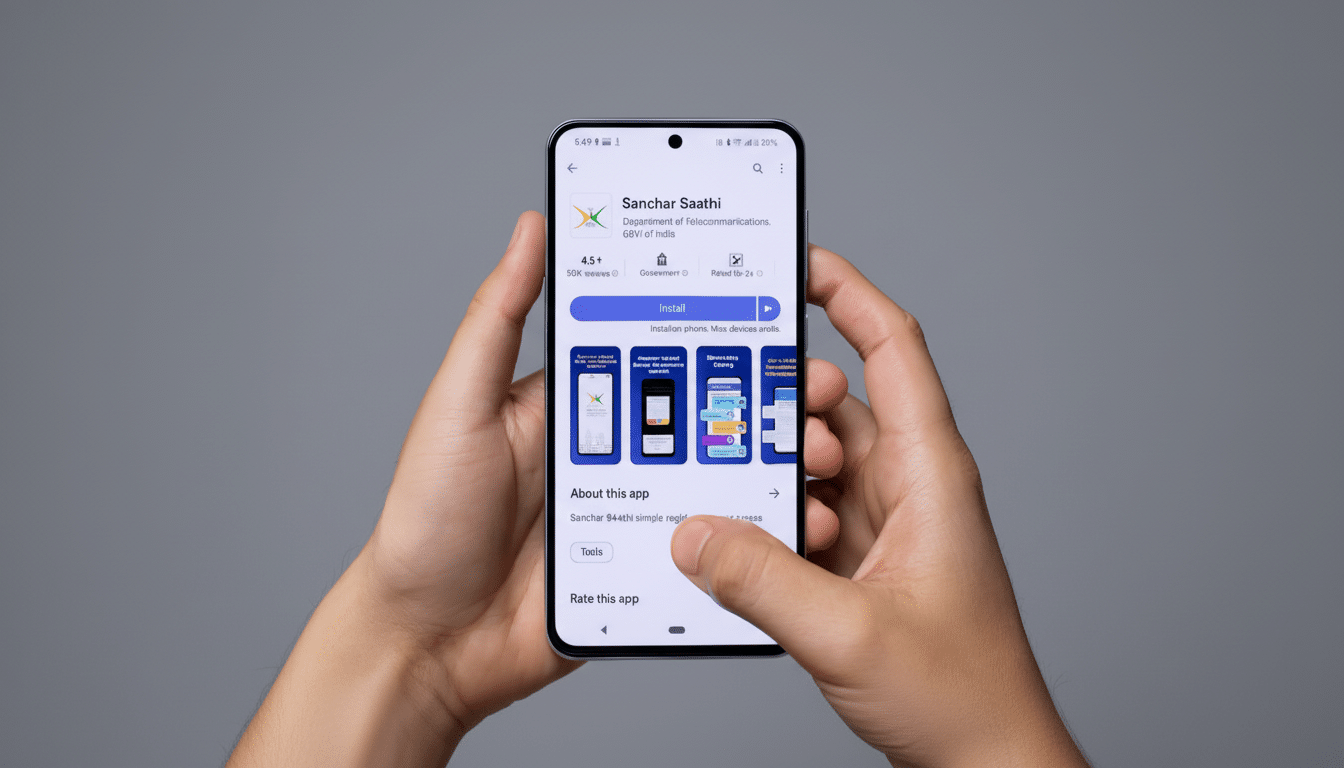
When it comes to the consumer side, the Sanchar Saathi app aims to simplify reporting and status checks for both a lost device case and when a device is recovered by turning loss-and-recovery squarely into a workflow process activity.
The portion of the mandate that requires preinstallation of the app and forcing it down upon existing users through updates is controversial because it grows the state’s default software footprint on personal devices.
Recommerce Boom Meets New Regulation in India
India is now the world’s third-largest market for secondhand smartphones after the U.S. and China, Counterpoint Research says, as high new-phone prices and a preference for longer replacement cycles drive consumers to used models.
But as much as 85% of the market remains unorganized, with sales conducted by small shops and informal brokers versus digital platforms.
The new verification requirement will at first most affect the formal recommerce players — those sites that sell phones, and are fairly well organized themselves (companies like Cashify, Amazon Renewed, and official trade-in programs) — because these businesses are visible, API-ready for automation, and already built for compliance. That leaves a big informal sector operating largely beyond the pale, fueling questions of enforcement fairness, and whether the policy will simply drive more activity underground if compliance proves onerous.
Privacy and Security Trade-offs in the New System
Digital rights bodies, including the Internet Freedom Foundation, caution the default preinstallation can lead to normalization of state software on private phones without commensurate checks and balances. The Digital Personal Data Protection Act of 2023 imposes broad requirements for purpose limitation and data minimization, but thus far, the government has given no indication as to how retention periods, audit protocols, or independent oversight will be connected to the expansion of the registry and app rollout.
Experts at New Delhi’s Esya Centre have warned that bringing device verification and user reporting under one government-controlled stack would be detrimental to private-sector innovation and place enormous volumes of data in a high-value target. Civil society researchers have raised similar concerns, arguing that backend changes and data flows might be hidden under language in terms and permissions most users will never read, making genuine consent impossible.
There are technical risks, too. A broad API surface area may be abused in case of a leak of credentials from a third-party source, and false positives in the database could deny service to legitimate end users attempting to access their devices. Powerful appeal and redress mechanisms — quick, transparent, standardized — will be necessary to prevent the kind of problems that could arise from collateral damage on a national scale.
Global Context and What to Watch as India Expands CEIR
India isn’t the only country to develop a national device registry. The PTA in Pakistan operates DIRBS to prevent noncompliant phones from connecting, and there are many such markets that use GSMA’s IMEI database or operator-level blacklists. But the requirement of a mandated app, API checks for the secondhand market, and a base of hundreds of millions of devices make India’s approach unusually encompassing.
Signals to watch for:
- the last Technical Specification for recommerce APIs;
- clear rules around data storage, access logs, and independent audits;
- alignment with the DPDP Act;
- an ombudsman-style redress process that allows resolution of disputes quickly.
If it were deployed with sufficient safeguards, the system could significantly reduce theft and cloning. If implemented in an opaque and unaccountable way, it could well turn out to be a powerful but murky layer of device-level surveillance.
For now, consumers will likely notice OS updates that come with Sanchar Saathi preloaded and more retailers asking to see proof of the registered IMEI before taking smartphone trade-ins. Less important for the success of the plan will be app installs, and more whether governance can keep up with technology.
