


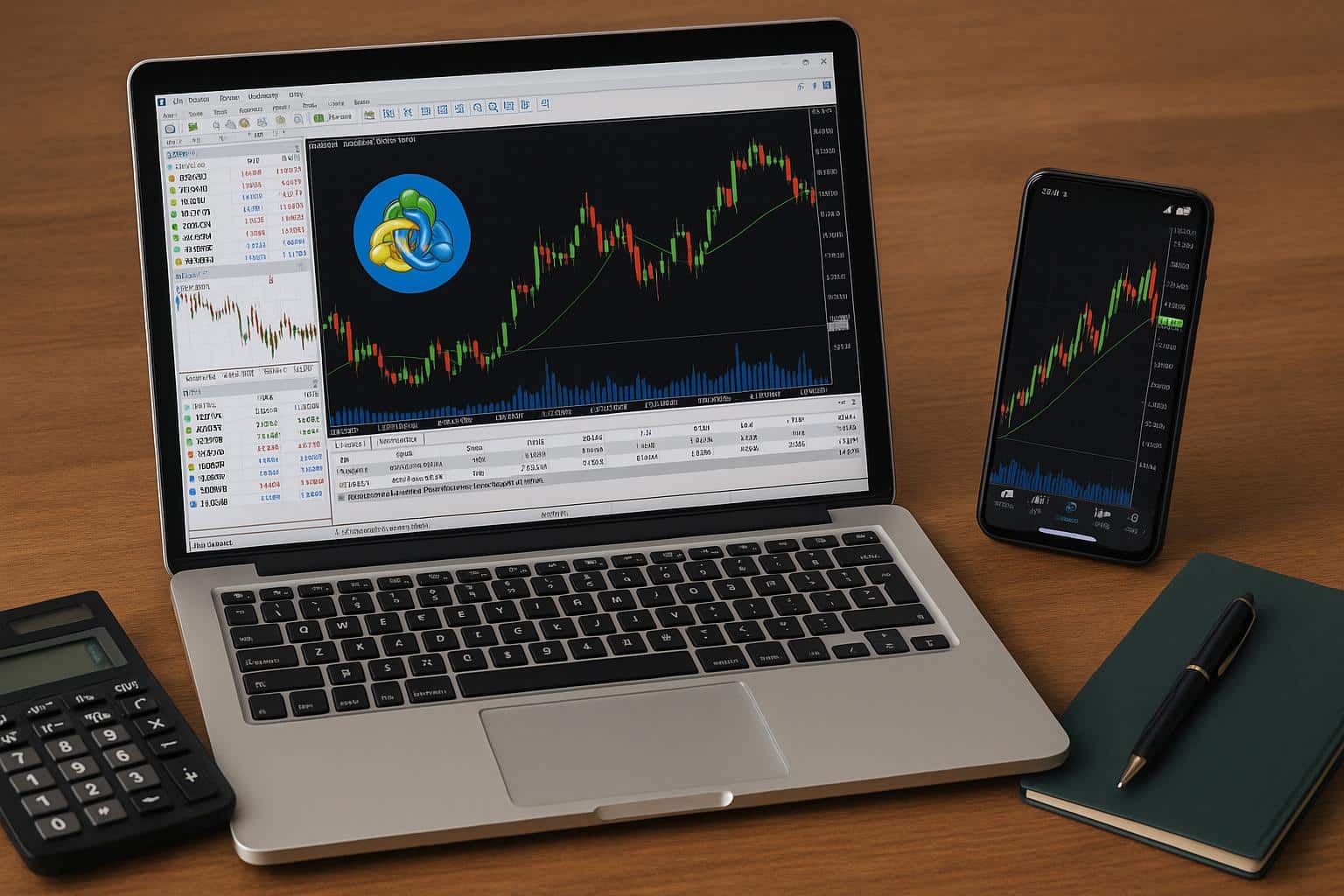
MetaTrader 5, commonly known as MT5, is a multi-asset trading platform designed for forex and CFD trading. But why do so many beginners choose MT5 as their starting point? The answer lies in its balance of usability and functionality. how to trade mt5 for beginners provides advanced tools while remaining accessible to traders with limited experience.
The platform allows traders to analyze price movements, place orders, manage risk, and monitor multiple markets from a single interface. With built-in indicators, multiple chart types, and flexible order execution, MT5 offers a structured environment ideal for learning how financial markets operate.
- How Does Forex and CFD Trading Work on MT5?
- How Do Beginners Set Up an MT5 Trading Account?
- What Types of Orders Can Beginners Use on MT5?
- How Can Beginners Read and Interpret MT5 Charts?
- Which Indicators Are Most Useful for Beginners on MT5?
- What Trading Strategies Are Suitable for Beginners on MT5?
- How Does Risk Management Work in MT5 Trading?
- Why Is Leverage Both an Opportunity and a Risk?
- How Can Beginners Practice Without Financial Pressure?
- What Common Mistakes Should Beginners Avoid on MT5?
- How Can Traders Track Performance and Improve Over Time?
- Can Automation Support Beginner Trading on MT5?
- How Do Market Conditions Affect Beginner Trading Results?
- When Should Beginners Move From Demo to Live Trading?
- Conclusion: Why MT5 Is an Effective Platform for Beginner Traders
How Does Forex and CFD Trading Work on MT5?
Forex trading involves exchanging one currency for another, aiming to profit from changes in exchange rates. CFD trading allows traders to speculate on price movements of assets without owning them. But how does MT5 support both markets?
MT5 enables traders to access currency pairs and CFDs through real-time price feeds. Trades are executed based on price direction—buying when prices are expected to rise and selling when prices are expected to fall. This structure allows beginners to trade in both rising and falling markets, increasing flexibility and opportunity.
How Do Beginners Set Up an MT5 Trading Account?
Getting started with MT5 begins with account setup. Why is this step important? A proper setup ensures access to charts, tools, and execution features.
Beginners typically start with a demo account. A demo account uses virtual funds, allowing traders to practice strategies without financial risk. After gaining confidence, traders may switch to a live account using real capital.
The setup process generally includes:
- Installing the MT5 platform
- Creating login credentials
- Choosing demo or live trading mode
- Selecting preferred trading instruments
Once logged in, beginners can customize charts and explore the interface before placing trades.
What Types of Orders Can Beginners Use on MT5?
Understanding order types is essential for effective trading. MT5 provides several order options designed to suit different trading styles.
- Market Orders execute instantly at the current price and are often used by beginners for simplicity.
- Pending Orders allow traders to enter the market at a specific price level in the future, offering greater control.
- Stop-Loss Orders limit potential losses by closing trades automatically.
- Take-Profit Orders secure gains when price targets are reached.
These order types help beginners manage entries and exits systematically rather than emotionally.
How Can Beginners Read and Interpret MT5 Charts?
Charts are the foundation of market analysis. But how can beginners make sense of them? MT5 offers candlestick, bar, and line charts, with candlestick charts being the most widely used.
Key chart elements include:
- Timeframes, which show price movement over different periods
- Price action, reflecting market sentiment
- Support and resistance levels, indicating areas of buying and selling pressure
By learning to read charts, beginners can identify trends, spot entry points, and avoid impulsive trades.
Which Indicators Are Most Useful for Beginners on MT5?
Indicators simplify analysis by converting price data into visual signals. But which ones should beginners focus on?
Common beginner-friendly indicators include:
- Moving Averages, which highlight market direction
- Relative Strength Index, which measures momentum
- MACD, which signals trend changes
- Bollinger Bands, which indicate volatility
Using too many indicators can cause confusion. Beginners benefit most from mastering a small number of tools before expanding their analysis.
What Trading Strategies Are Suitable for Beginners on MT5?
Trading without a strategy often leads to inconsistent results. Which strategies work best for beginners?
- Trend Trading focuses on entering trades in the direction of the market trend
- Range Trading works well in sideways markets by buying near support and selling near resistance
- Breakout Trading targets strong price movements beyond key levels
These strategies provide structure and reduce emotional decision-making, making them ideal for new traders.
How Does Risk Management Work in MT5 Trading?
Risk management determines long-term success more than strategy alone. But how can beginners manage risk effectively on MT5?
Key risk management principles include:
- Limiting risk per trade to a small percentage of total capital
- Always using stop-loss orders
- Maintaining a balanced risk-to-reward ratio
- Avoiding overleveraging
MT5 allows traders to apply these controls directly when placing trades, encouraging discipline and consistency.
Why Is Leverage Both an Opportunity and a Risk?
Leverage allows traders to control larger positions with smaller capital. While this increases profit potential, it also amplifies losses.
Beginners often underestimate leverage risk. Controlled leverage helps traders stay in the market longer and reduces emotional stress. Using leverage responsibly is essential for sustainable trading growth.
How Can Beginners Practice Without Financial Pressure?
Practice is critical before trading live markets. Why does demo trading matter so much?
Demo accounts allow traders to:
- Test strategies without real losses
- Learn order placement and chart analysis
- Experiment with indicators and timeframes
- Build confidence gradually
Consistent demo trading helps beginners transition smoothly into live trading with realistic expectations.
What Common Mistakes Should Beginners Avoid on MT5?
Mistakes are part of learning, but some errors can be costly. Common beginner mistakes include:
- Overtrading without a clear plan
- Ignoring stop-loss orders
- Using excessive leverage
- Chasing losses emotionally
- Relying on too many indicators
Avoiding these mistakes improves consistency and protects trading capital.
How Can Traders Track Performance and Improve Over Time?
Tracking performance helps traders refine their approach. But what should beginners track?
Important performance metrics include:
- Win-to-loss ratio
- Average profit versus average loss
- Maximum drawdown
- Risk consistency
Maintaining a trading journal encourages self-awareness and disciplined improvement, allowing traders to adjust strategies based on real results rather than assumptions.
Can Automation Support Beginner Trading on MT5?
MT5 supports automated trading through expert systems. But should beginners use automation?
Automation can help maintain discipline by executing trades based on rules. However, beginners should understand strategies manually before relying on automation. Testing automated systems on demo accounts is essential before live deployment.
How Do Market Conditions Affect Beginner Trading Results?
Market conditions change constantly. Trending, ranging, and volatile environments require different approaches.
Successful beginners learn to recognize conditions and adjust strategies accordingly. Trading without understanding market context often leads to inconsistent results.
When Should Beginners Move From Demo to Live Trading?
Transitioning to live trading should be gradual. Beginners should move to live accounts only after demonstrating consistent demo results and understanding risk control.
Starting with small capital reduces pressure and allows traders to experience real market psychology while maintaining control.
Conclusion: Why MT5 Is an Effective Platform for Beginner Traders
MT5 offers beginners a structured, flexible, and professional trading environment. With its powerful charts, customizable indicators, diverse order types, and integrated risk management tools, MT5 supports both learning and growth.
By understanding forex and CFD fundamentals, applying disciplined strategies, and managing risk effectively, beginners can develop confidence and consistency. Trading success on MT5 is not about quick profits but about building skills, discipline, and long-term resilience.
With patience, structured practice, and continuous learning, MT5 can serve as a reliable foundation for traders beginning their journey in global financial markets.
