


A spiral cut ham behaves differently the moment heat touches it. The slicing makes serving easy. However, it also weakens the structure in ways that do not show up until reheating begins. Once warmth softens the meat, the spiral relies on friction and timing. Lose either, and the whole thing starts to slip.
Most collapse happens quietly. The ham looks fine until it isn’t. By the time slices separate, the damage is already done.
- The Spiral Depends On Tension, Not Muscle
- Heat Reaches The Weak Spots First
- Dryness Makes Slippage Inevitable
- Slow Heat Buys Structural Time
- Foil Is About Control, Not Moisture
- Orientation Changes Where Gravity Pulls
- Early Basting Undermines Stability
- Resting Locks The Shape In
- Convenience Cuts Need Restraint
- Collapse Builds On Itself
- Structure Matters As Much As Temperature
The Spiral Depends On Tension, Not Muscle
A spiral holds together because the slices press against one another. Fat and connective tissue create resistance, not rigidity. That resistance disappears as heat relaxes the meat.
As soon as those bonds soften, gravity starts pulling slices outward. The spiral opens slowly at first, then faster as weight shifts. Nothing dramatic happens. It just stops behaving like a single piece.
Heat Reaches The Weak Spots First
High heat works from the outside in. On a spiral cut, the outside is where the cuts run deepest. That edge softens before the center warms at all.
Fat renders and collagen loosens at the surface while the core stays cool. The spiral relaxes early, long before the ham is evenly heated. By the time the center catches up, the structure is already compromised.
Dryness Makes Slippage Inevitable
Moisture keeps slices gripping each other. As water leaves the surface, friction drops. Dry heat accelerates that loss, especially along exposed edges.
Once the outer slices dry, they stop supporting the weight above them. Gaps form between cuts. Juices leak out through the spiral instead of redistributing. What looks like overcooking is just dehydration happening too soon.
Slow Heat Buys Structural Time
Lower oven temperatures delay the softening that causes collapse. Fat renders more gradually. Connective tissue gives way later. Moisture loss slows down.
This pacing matters. The goal is to let the center warm while the exterior still has enough integrity to hold together. When heat moves slowly, the ham behaves like one piece instead of a stack waiting to slide.
Foil Is About Control, Not Moisture
Foil gets treated as insurance against dryness, but its real value here is restraint. A tight wrap limits movement when the spiral is most vulnerable.
Loose tenting allows slices to shift as they soften. A firm wrap keeps pressure even across the cut lines. Think of foil as a brace.
Orientation Changes Where Gravity Pulls
How the ham sits in the pan affects everything. Cut-side down encourages slices to slide outward as they relax.
Placing the ham on its side or resting it against a thicker, less-sliced section shifts pressure away from the weakest cuts. That small change reduces stress on the spiral as heat builds.
Early Basting Undermines Stability
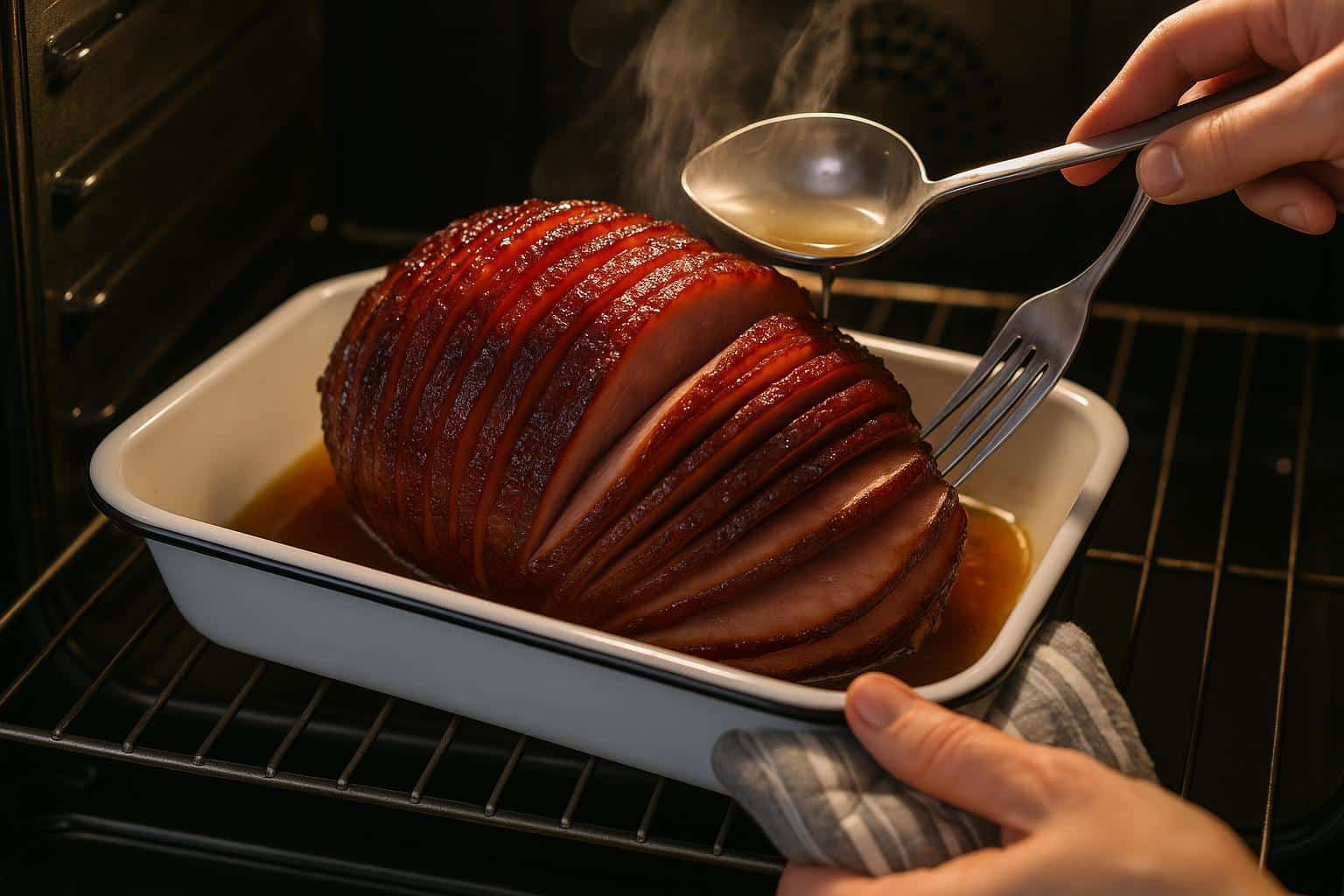
Liquids transfer heat quickly. Basting early speeds softening right where you want strength. It also washes away rendered fat and gelatin that help slices cling.
Glaze belongs at the end. Until the ham is warm through, added liquid acts like lubricant, not protection.
Resting Locks The Shape In
Pulling a spiral ham and cutting immediately invites movement. Resting allows proteins to settle and moisture to redistribute. This increases resistance between slices.
During rest, the spiral firms slightly. Skip this step, and the ham can collapse even after careful reheating.
Convenience Cuts Need Restraint
Spiral slicing trades strength for ease. That tradeoff works only if the meat is handled gently afterward.
This is why a spiral sliced ham reheated like a solid roast fails so often. The cut pattern already changed how the meat behaves under heat. Treating it like an intact ham ignores that change.
Collapse Builds On Itself
Once a few slices slip, the rest follow. Heat, weight, and moisture loss compound quickly. By the time separation is obvious, recovery is impossible.
Prevention is quieter and simpler. Slow heat. Firm wrapping. Thoughtful positioning. Patience.
Structure Matters As Much As Temperature
Reheating usually gets reduced to hitting a number on a thermometer. With spiral cuts, structure deserves equal attention.
Keeping the carving spiral intact means respecting how slicing altered the meat’s behavior. When heat moves gradually, moisture stays present, and the ham is supported while warming, the spiral holds. When any one of those drifts, the cut unravels and takes texture with it.
