


Every summer, right around the peak of the watering season, homeowners open a utility bill that makes them wince. Outdoor watering is the biggest reason a water bill balloons in warm months, and in many households the lawn and garden account for more water than everything happening inside the house combined. The instinct, understandably, is to just water less and accept a browner yard as the price of a smaller bill.
Here is the good news: you almost never have to make that trade. Most of the money running down the gutter is not being spent keeping your lawn green. It is being wasted through poor timing, bad habits, and small equipment problems you cannot see. Fix those, and you can cut your outdoor water use significantly while keeping a lawn that stays green and healthy. It is not about watering less out of guilt. It is about watering smarter.
- Water Deeply and Less Often
- Water Early, Before the Sun Takes Its Cut
- Learn How Much Your Lawn Actually Needs
- Find and Fix the Leaks
- Aim the Water at the Lawn, Not the Sidewalk
- Upgrade the Equipment That Is Working Against You
- Let a Smart Controller Do the Thinking
- Adjust With the Seasons
- Rethink the Thirstiest Corners of Your Yard
- When in Doubt, Get the System Audited
- Small Changes, Real Savings
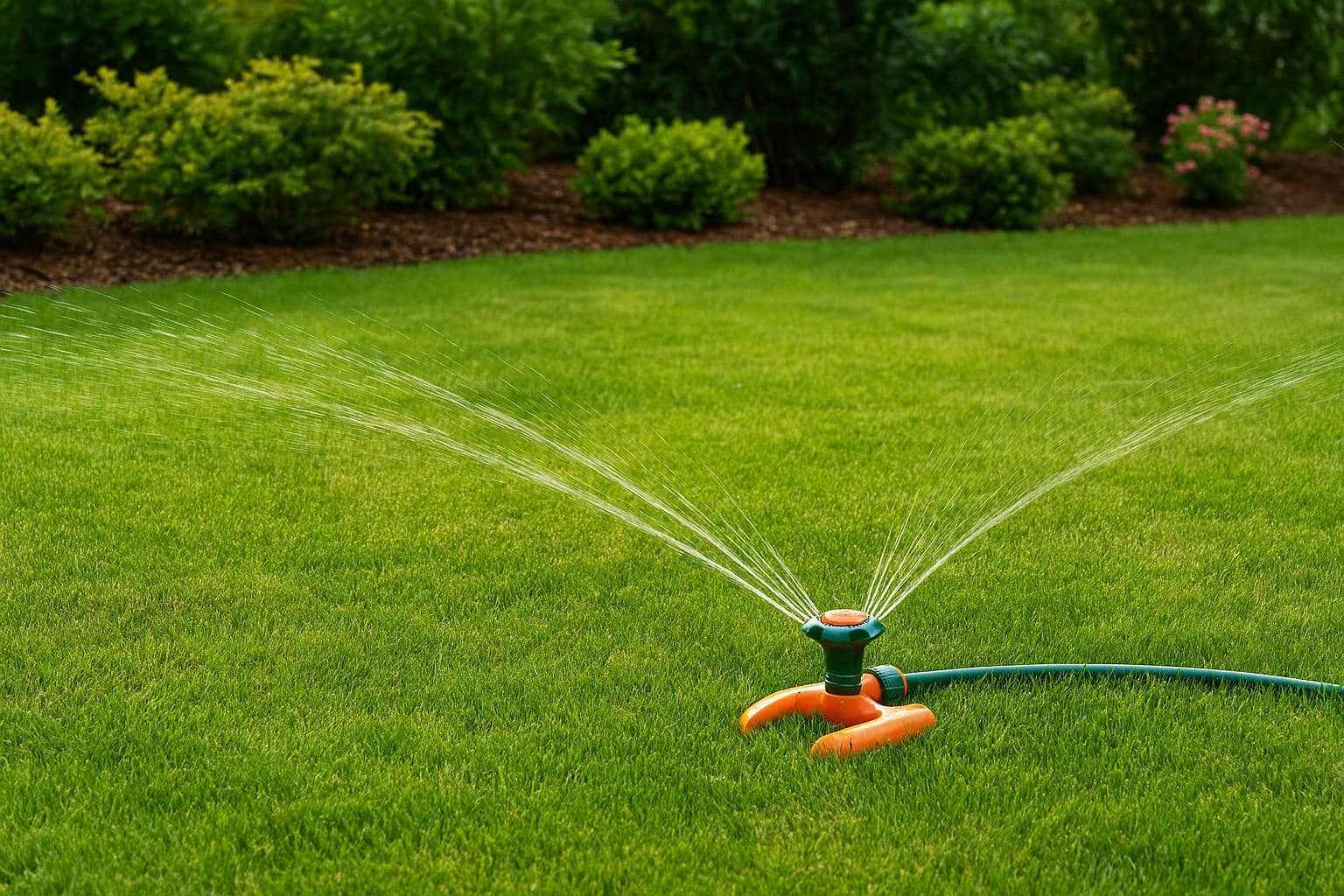
Water Deeply and Less Often
If you change only one habit, make it this one. Most people water their lawns for a short stretch every day, or close to it. It feels responsible. It is actually one of the least efficient ways to water grass.
Frequent, shallow watering keeps the top inch of soil damp and trains grass roots to stay near the surface, where they are lazy, weak, and vulnerable to heat. Deep, infrequent watering does the opposite. When you soak the soil down several inches and then let it dry out before the next watering, roots chase the moisture downward and grow deep. A deep-rooted lawn is more drought-tolerant, more resilient, and stays green on far less water.
In practice, that usually means watering two or three times a week rather than daily, but running each zone longer when you do. Your lawn will look the same or better, and you will run the system far fewer times over a month.
Water Early, Before the Sun Takes Its Cut
Timing quietly wastes a huge amount of water. If your sprinklers run in the heat of the afternoon, a big share of every gallon evaporates before it ever soaks in. Water in the evening and the lawn sits wet all night, which invites fungus and disease.
The sweet spot is early morning, roughly between 4 and 9 a.m. The air is cool and still, so almost all the water reaches the soil instead of drifting off as mist or evaporating on contact. The lawn then has the day to dry at the surface, which keeps disease at bay. Shifting your run times to early morning costs nothing and can meaningfully lower the amount of water you need to get the same result.
Learn How Much Your Lawn Actually Needs
A lot of overwatering comes from simply guessing. Most lawns need about an inch to an inch and a half of water per week, including rainfall, to stay healthy. Many people apply two or three times that without realizing it.
You can measure what your system actually puts down with a trick that costs nothing: set a few empty tuna cans or straight-sided containers around a zone, run it for fifteen minutes, and measure the depth of water collected. That tells you your system’s output and how long you really need to run each zone to hit that inch. Most homeowners discover they have been running their sprinklers far longer than necessary. Dialing the run times back to what the lawn actually needs is often the single biggest line-item saving on the bill.
Find and Fix the Leaks
Here is where real money hides. A sprinkler system is a network of underground pipes, valves, and heads, and any one of them can fail quietly. A cracked line, a stuck valve, or a broken head can leak gallons every single cycle without you ever noticing, because it is happening underground or in a corner of the yard you rarely visit.
Walk your system while it is running, zone by zone, at least once a season. Look for heads that spray sideways, geysers where a head has snapped off, soggy spots that never dry out, and dry patches that signal a clog. A single broken head can waste more water in a month than all your careful scheduling saves. Catching these problems early is one of the highest-return maintenance habits a homeowner has, and most fixes are quick and inexpensive compared to the water they save.
Aim the Water at the Lawn, Not the Sidewalk
Take a look at where your sprinklers are actually throwing water. It is remarkably common to see heads soaking the driveway, the sidewalk, or the side of the house. Every drop that lands on concrete is money that did nothing for your yard.
Adjusting the spray pattern and arc of each head so the water lands only on grass is a five-minute job that pays for itself immediately. While you are at it, check that heads have not been knocked out of alignment by a mower or foot traffic, which is one of the most common reasons a system slowly gets less efficient over time.
Upgrade the Equipment That Is Working Against You
Older sprinkler systems are often just inefficient by design. Traditional spray heads blast a lot of water into the air quickly, where much of it evaporates or runs off before the soil can absorb it. Newer high-efficiency nozzles and rotary heads apply water more slowly and evenly, in bigger droplets that resist evaporation and soak in instead of running off.
Swapping outdated heads for efficient ones can cut a zone’s water use noticeably while actually improving how evenly your lawn gets watered, which means fewer brown spots. If your system is more than a decade old and has never been updated, the equipment itself may be one of the biggest reasons your bill is high.
Let a Smart Controller Do the Thinking
The old-style sprinkler timer has one flaw: it runs the same schedule whether it is a hundred degrees or pouring rain. That is how people end up watching their sprinklers run in the middle of a rainstorm.
A smart, weather-based controller connects to local weather data and adjusts watering automatically, skipping cycles when it rains and dialing back when the weather cools. Homeowners who install one often see real reductions in outdoor water use with zero loss in lawn quality, simply because the system stops watering when the lawn does not need it. Many water utilities even offer rebates that offset the cost. It is one of the few upgrades that saves water and saves you the mental effort of managing the schedule yourself.
Adjust With the Seasons
Your lawn’s water needs change dramatically through the year, but most people set their schedule once in spring and never touch it. Grass needs far less water in the cooler weeks of spring and fall than it does at the height of summer. Running a peak-summer schedule into September is pure waste.
Make a habit of revisiting your controller a few times a year and scaling the watering up and down with the season. As the days shorten and cool, cut back. Your lawn will be fine, and your autumn bills will thank you.
Rethink the Thirstiest Corners of Your Yard
Not every part of your landscape needs to be thirsty turf. Garden beds, shrubs, and trees are watered far more efficiently by drip irrigation, which delivers water slowly right to the roots with almost no evaporation or runoff. Converting beds from spray heads to drip is one of the most water-saving changes you can make.
It is also worth asking whether every square foot of lawn is earning its keep. Shrinking turf in areas you do not really use, and replacing it with mulched beds, drought-friendly plants, or a small patio, permanently lowers the amount of water your yard demands, year after year.
When in Doubt, Get the System Audited
If your bill is high and you cannot pin down why, a professional irrigation audit is one of the smartest moves you can make. A trained technician can test each zone, measure how evenly it applies water, catch the leaks and misaligned heads you would never spot, and tune the whole system so it delivers the right amount of water to the right places. What they find often pays for the visit many times over in reduced waste.
In water-conscious regions like the Salt Lake Valley, where hot, dry summers put every sprinkler system to the test, working with a specialist like Water Wise Sprinkler and Irrigation of Salt Lake City can turn a leaky, guess-based setup into a tuned system that keeps the lawn green on a fraction of the water. A good audit does not just lower this summer’s bill. It fixes the underlying waste so the savings continue every season.
Small Changes, Real Savings
A lower water bill and a green lawn are not opposites. Almost every homeowner is losing water to the same handful of culprits: watering too often and too shallow, watering at the wrong time, running a broken or outdated system, and never adjusting for the weather or the season. Fix those, and the waste disappears while the lawn stays healthy.
Start with the free changes. Shift your watering to early morning, water deeply a few times a week instead of a little every day, and walk your system to catch the leaks. Then work up to the equipment upgrades and, if the bill still stings, get a professional set of eyes on it. You will keep the yard you want and stop paying for the water you were never really using.

