


Organizations often focus heavily on digital security, installing firewalls, encryption, and monitoring software to protect sensitive data. While these measures are essential, physical records are equally vulnerable. Paper files, printed reports, notebooks, and other tangible materials frequently contain critical information that, if mishandled, can lead to breaches, regulatory fines, or operational setbacks. Extending data protection beyond digital systems means creating a strategy that treats physical and digital information with equal care. Organizations that do this reduce risk, maintain compliance, and create confidence among employees, clients, and partners.
Understanding the risks of physical information
Physical records introduce a range of risks that are often overlooked. Documents can be misplaced, taken by unauthorized personnel, or improperly discarded. Even minor lapses, like leaving sensitive files on a desk or in unlocked cabinets, create exposure points. Paper records often travel between departments, sites, or offices, and each movement increases the chance of loss or unauthorized access.
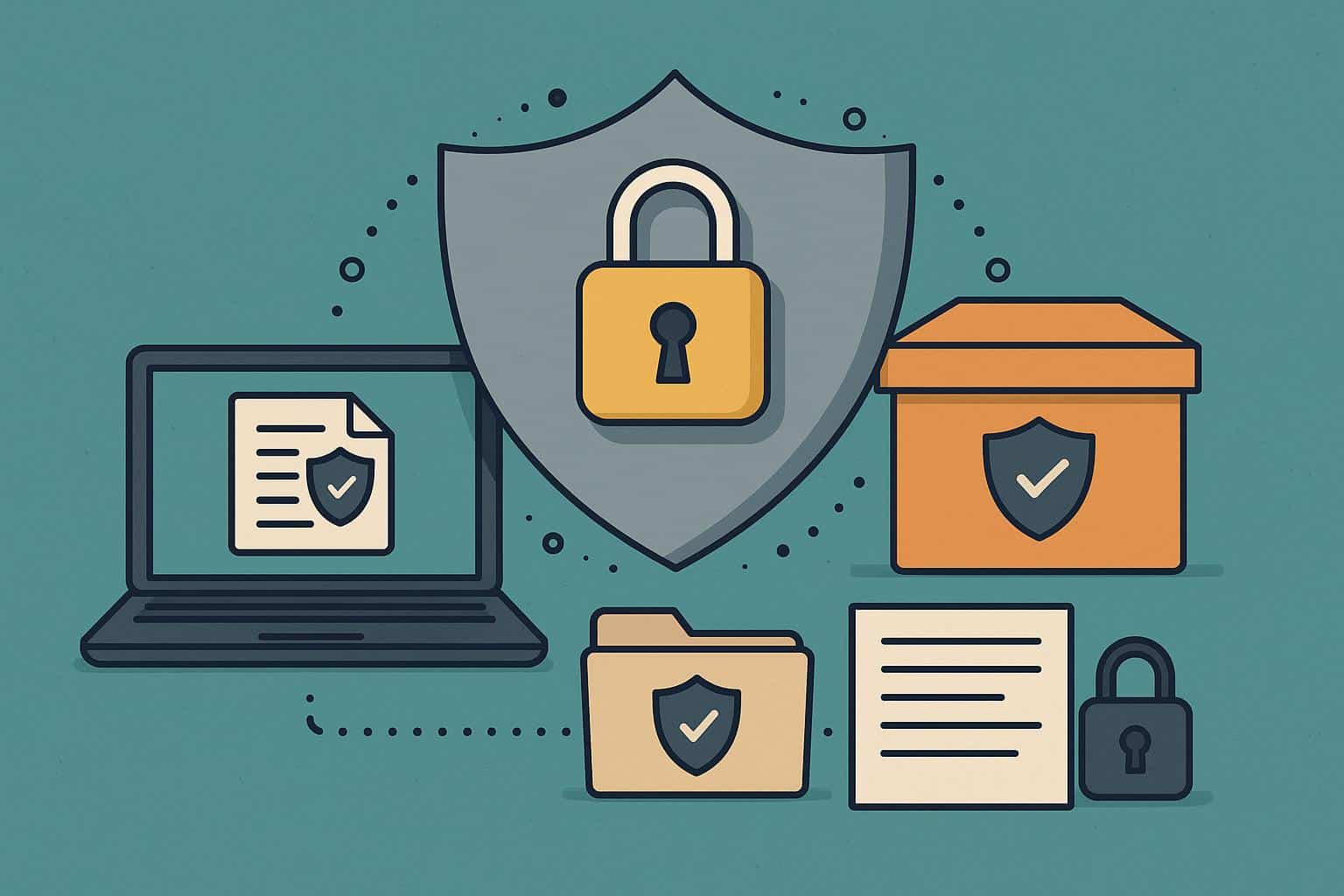
Common scenarios leading to breaches include unsupervised storage rooms, improperly labeled or untracked documents, and outdated or ad hoc disposal practices. Unlike digital records, which can be monitored automatically, paper requires deliberate oversight at every stage to prevent accidental exposure. Understanding these risks is the first step toward creating a comprehensive protection strategy.
Integrating physical records into an overall data protection strategy
A strong data protection strategy treats physical records as critical assets rather than secondary concerns. Policies for digital data should extend to paper records, including classification, access controls, retention, and destruction procedures. Organizations benefit from creating uniform standards that apply to all information, regardless of format.
This integration ensures consistency across departments and locations. Employees understand the rules, from secure storage and controlled access to authorized sharing and proper disposal. It also strengthens compliance efforts, as regulators increasingly evaluate how organizations handle all types of sensitive information, not just digital records.
Secure storage and access control
Proper storage is a cornerstone of protecting physical information. Sensitive records should be kept in controlled environments with limited, role-based access. Filing rooms, cabinets, or storage units should be locked and monitored to prevent unauthorized entry.
Access logs and documentation add accountability. Tracking who retrieves records and when discourages mishandling and allows organizations to demonstrate oversight during audits. Controlled storage also reduces the likelihood of accidental exposure, such as leaving files in public areas or unsecured offices.
Lifecycle management for physical records
Physical records, like digital ones, have a lifecycle. They begin at creation, move through active use, may transition to inactive storage, and eventually require disposal. Managing each stage carefully reduces risk and ensures compliance with retention policies.
Organizations should document all movement of sensitive files, including transfers between departments, offices, or external partners. Chain of custody practices are particularly important when documents leave the originating site, ensuring that each step is accountable and traceable. Standardized procedures for retention, storage, and retrieval create predictable workflows and reduce mistakes.
Secure destruction as a critical safeguard
Disposing of physical records is often the most overlooked stage of the lifecycle, yet it carries significant risk. Simply throwing documents away or recycling them without oversight can expose sensitive information to theft or misuse.
Professional destruction services offer a reliable solution. They provide controlled collection, secure transport, and verified destruction, ensuring records are destroyed in accordance with regulatory requirements. In California, businesses rely on a secure shredding service near San Jose to safely and efficiently dispose of sensitive documents. Using trained providers reduces risk while freeing internal teams from handling potentially sensitive materials.
Employee training and awareness
Even the best policies fail without informed staff. Employees need clear guidance on how to handle physical records responsibly, including storage, access, and disposal procedures. Training should include real-world examples and scenarios to make policies practical rather than abstract.
Ongoing refresher sessions reinforce expectations and ensure new hires understand the organization’s standards. Employees who recognize their role in protecting information are less likely to make mistakes that create exposure or compliance issues. A culture of responsibility across teams strengthens overall data protection efforts.
Audits, monitoring, and continuous improvement
Regular audits help ensure physical information is managed correctly. Organizations should periodically review storage conditions, access logs, and disposal practices to identify weaknesses. Findings can inform targeted improvements, making protection more effective over time.
Monitoring metrics, such as retrieval accuracy, disposal volumes, and incident reports, also supports ongoing refinement. Continuous evaluation keeps practices aligned with operational changes and regulatory updates, preventing gaps that could compromise security.
Balancing efficiency with strong protection
Protecting physical records doesn’t have to slow down daily work. Efficient procedures, clear guidance, and practical storage solutions allow teams to access and manage information quickly while maintaining strong security.
Coordination between digital and physical safeguards creates seamless protection. For example, combining secure storage, access logs, and employee awareness programs ensures that sensitive information remains safe without introducing unnecessary bottlenecks. Striking this balance encourages compliance and maintains operational momentum.
Planning for unexpected events
Unexpected events, such as office moves, system upgrades, or emergencies, can disrupt workflows and expose physical records to risk. Planning for these situations in advance is crucial.
Documented procedures, combined with training, provide guidance for staff to manage records securely during transitions. Backup storage, temporary secure locations, and clear chain of custody rules help prevent loss or unauthorized access during disruptions. Being prepared minimizes stress and protects critical information even in unforeseen circumstances.
Conclusion
Comprehensive security requires extending data protection beyond digital systems to physical records. This involves deliberate management, training, and oversight, including controlled storage, access management, lifecycle planning, and employee awareness. Treating physical and digital information equally builds trust, ensures compliance, and supports confident operations.
