


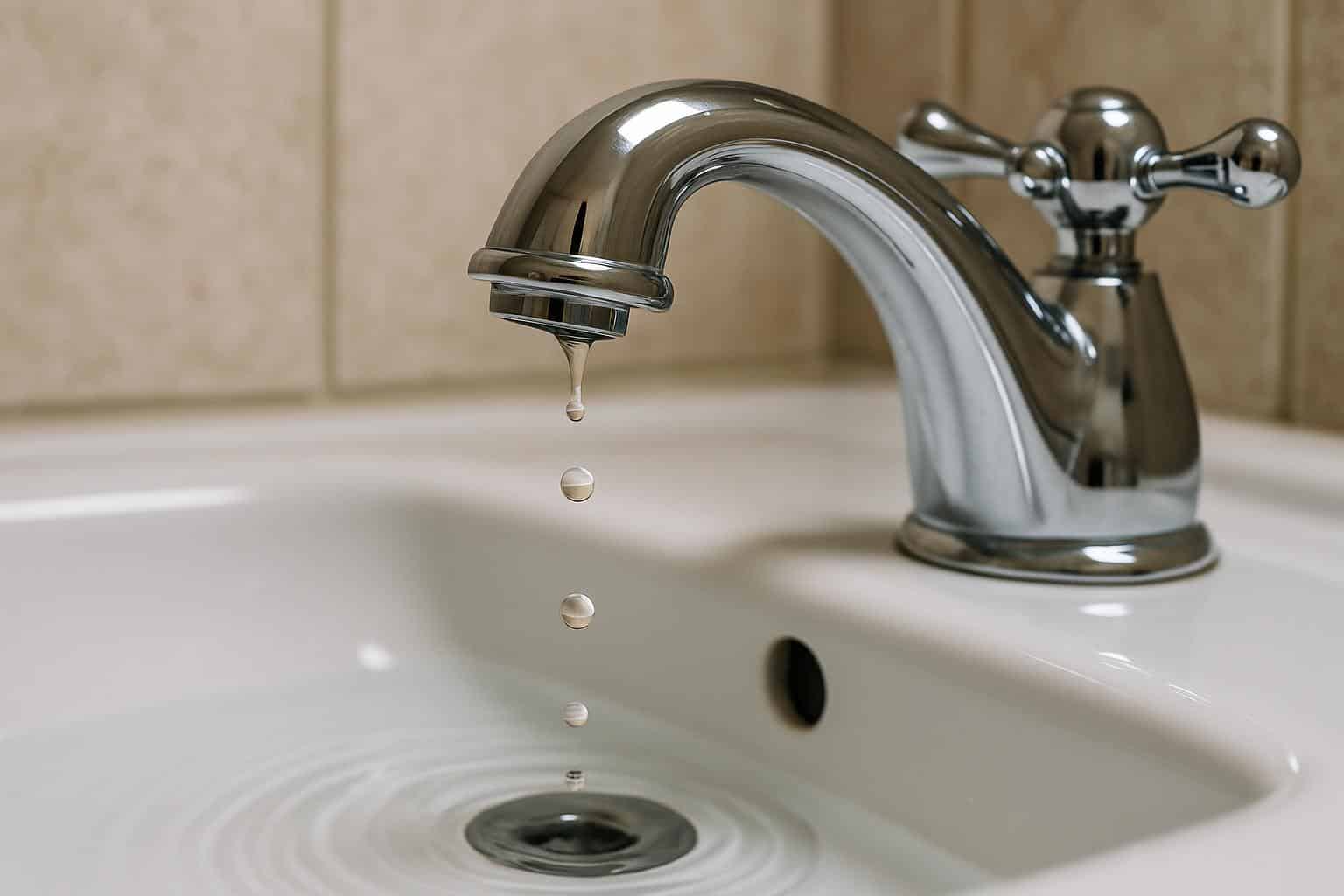
That drip, drip, drip from your bathroom sink is more than an annoyance. A single faucet leaking at one drip per second pours roughly 3,000 gallons of water down the drain every year. That’s enough to run more than 180 loads of laundry. And you’re paying for every single drop.
We’re going to walk through the real math of a leaky faucet, look at why these drips start in the first place, and give you a straightforward plan to find and fix them before your water bill becomes the scariest thing in your mailbox.
Turning Drips into Dollars
Water waste isn’t just about the environment, though that matters plenty. It’s about your wallet. The average household loses around 10,000 gallons of water each year to leaks, according to the Environmental Protection Agency in their 2023 household leak data. Ten thousand gallons is a staggering number when you stop to picture it.
The cost depends on where you live. Water rates vary wildly across the country, but a typical American household pays between $1.50 and $3.00 per 1,000 gallons. Do that math on a faucet dripping at one drip per second, and you’re looking at $4.50 to $9.00 a year just for that one fixture. That sounds small, right?
Now factor in the fact that most homes have two or three leaky fixtures, plus a running toilet, which can waste up to 200 gallons a day on its own. Suddenly the EPA’s estimate that household leaks can waste up to 10,000 gallons a year, costing an extra 10 percent on your water bill, makes painful sense.
Here’s the kicker though. The water itself is only half the story.
Wait, the Hot Water Costs More
If the leaky faucet is on the hot side, you’re paying to heat water that just goes down the drain. The U.S. Department of Energy notes in their 2024 home energy guide that water heating accounts for about 18 percent of a home’s energy use. That’s the second biggest energy hog in your house, right behind heating and cooling your air.
So a hot water leak means you’re double-billing yourself. You pay for the water, then you pay for the electricity or gas to heat it, then you pay to watch that heated water disappear. A slow hot water drip can add a noticeable chunk to your energy bill over a year, especially if you have an older, less efficient water heater.
If you live in an area with a sewer bill that’s tied to your water usage, which most municipalities do, you’re getting triple-charged. Your sewer bill is often calculated based on how much water you use, whether it goes down the drain or not. Leaky faucets funnel that metered water straight into the sewer system, and you absorb the full cost.
There’s a simpler way to look at all of this. Fix the drip, and you stop paying for water you never use, energy you never benefit from, and sewer processing you never needed. It’s one of the few home repairs that pays you back immediately.
Why Faucets Start Leaking in the First Place
Most people assume a leaky faucet means the whole fixture is shot. It rarely does. The culprit is almost always a small, cheap part that wears out from regular use.
The prime suspect is the rubber washer or O-ring. Every time you turn the handle, that washer presses down to stop the flow. Over time, the constant friction and water exposure cause it to harden, crack, or flatten. Once it loses its shape, water sneaks past it. These washers cost a dollar or two and take about ten minutes to replace.
The second suspect is the valve seat, the metal piece that the washer presses against. Hard water, which is common in many parts of the country, can corrode the valve seat, leaving a rough surface that even a new washer can’t seal against.
Then there’s the aerator, that little screen at the tip of the spout. If mineral deposits clog it up, water pressure builds and can cause leaking around the base of the faucet. A quick vinegar soak usually clears it out.
Knowing the cause matters because it changes the fix. A worn washer is a DIY job. A corroded valve seat might need a professional touch. And if your faucet is older than 15 years, replacing the whole fixture often makes more financial sense than chasing parts.
The Silent Leak You Can’t Hear
Here’s what keeps me up at night. Leaky faucets are loud enough to notice, but there’s a whole category of leaks that make no sound at all. These are the ones that quietly destroy your home.
Undetected leaks behind walls, under slabs, or in your irrigation system account for a huge portion of that 10,000 gallons the EPA talks about. A pinhole leak in a supply line can spray water behind your drywall for weeks before you see a single stain.
So how do you find water you can’t see or hear?
Start with a simple test. Turn off every faucet, flush every toilet, and make sure the washing machine and dishwasher aren’t running. Then find your water meter and check the little triangle or red dial on it. If that indicator is spinning, you’ve got a leak somewhere. The faster it spins, the bigger the leak.
If you want to narrow it down further, check the water usage history on your utility bill. If it spikes in the winter when you’re not watering the lawn, something’s leaking.
This is also where the pros earn their keep. A plumber with the right equipment can use acoustic listening devices and thermal imaging to pinpoint a leak behind a wall without tearing the place apart. When you’re dealing with hidden water damage, the cost of a professional inspection is cheap insurance against a five-figure mold and structural repair bill.
What a Fair Price for a Fix Looks Like
Let’s be real about cost. This is the part where a lot of homeowners freeze up. You don’t know what a fair price is, so you either pay too much or you put it off entirely.
For a simple washer replacement, you’re looking at a handyman or plumber charging between $75 and $150 for the service call, plus the few bucks for the part. That’s the sweet spot where hiring someone actually makes sense.
Catching this early also saves you from the cascade of problems a neglected leak creates. A dripping faucet can wear out the valve seat, which then requires a more involved repair. Persistent moisture can damage your sink cabinet, warp your countertop, and create the perfect breeding ground for mold. That ten-minute fix turns into a weekend project and a four-figure bill when you let it slide.
There’s no avoiding one basic truth: water damage is the most common and most expensive non-weather-related home insurance claim there is. Every week you wait on a leak, you’re rolling the dice.
Your Turn to Stop the Drip
You don’t need to be a handyman to handle most of these. The washer fix is genuinely a beginner-friendly job. Here’s a quick snapshot of what to do:
Turn off the water supply valves under the sink before you touch anything.
- Take the handle off with a screwdriver or Allen wrench.
- Unscrew the packing nut to expose the stem and the washer at the bottom.
- Replace the old washer with an exact match, then reassemble everything in the reverse order.
- If you pull it apart and find the parts are corroded, cracked, or just plain worn out beyond the washer, that’s your sign to call for backup.
And speaking of backup, if your plumbing system itself is old, corroded, or you’ve got several fixtures failing at once, it’s worth getting a full assessment. A whole-house inspection catches little problems before they become emergencies. A reputable local team like a lakehurst plumbing company can spot the warning signs you’d never notice on your own.
An Unlikely Number Worth Knowing
The most eye-opening stat in this entire conversation comes from the U.S. Geological Survey, which publishes detailed data on residential water use. Their 2022 survey found that indoor leaks account for roughly 13 percent of total indoor water use in the average American home. Think about that for a second. Thirteen percent of every gallon you use indoors is wasted before it ever serves a purpose.
That’s not a rounding error. That’s a meaningful slice of your utility budget and a measurable drain on your local water supply.
In drought-prone states, municipalities have started paying homeowners to find and fix these leaks because the water savings are so significant. Some rebate programs cover the entire cost of a professional leak detection service. It’s worth checking with your local water utility to see if they offer anything similar. Free money to fix a problem you already have? That’s an easy yes.
So take a walk through your house tonight. Listen at each sink. Check under the cabinets for dampness. Look at that water meter before you go to bed and again in the morning. A few minutes of attention today saves you from a headache, a big bill, and maybe a serious repair down the road. The drip is telling you something. It’s time to listen.

