


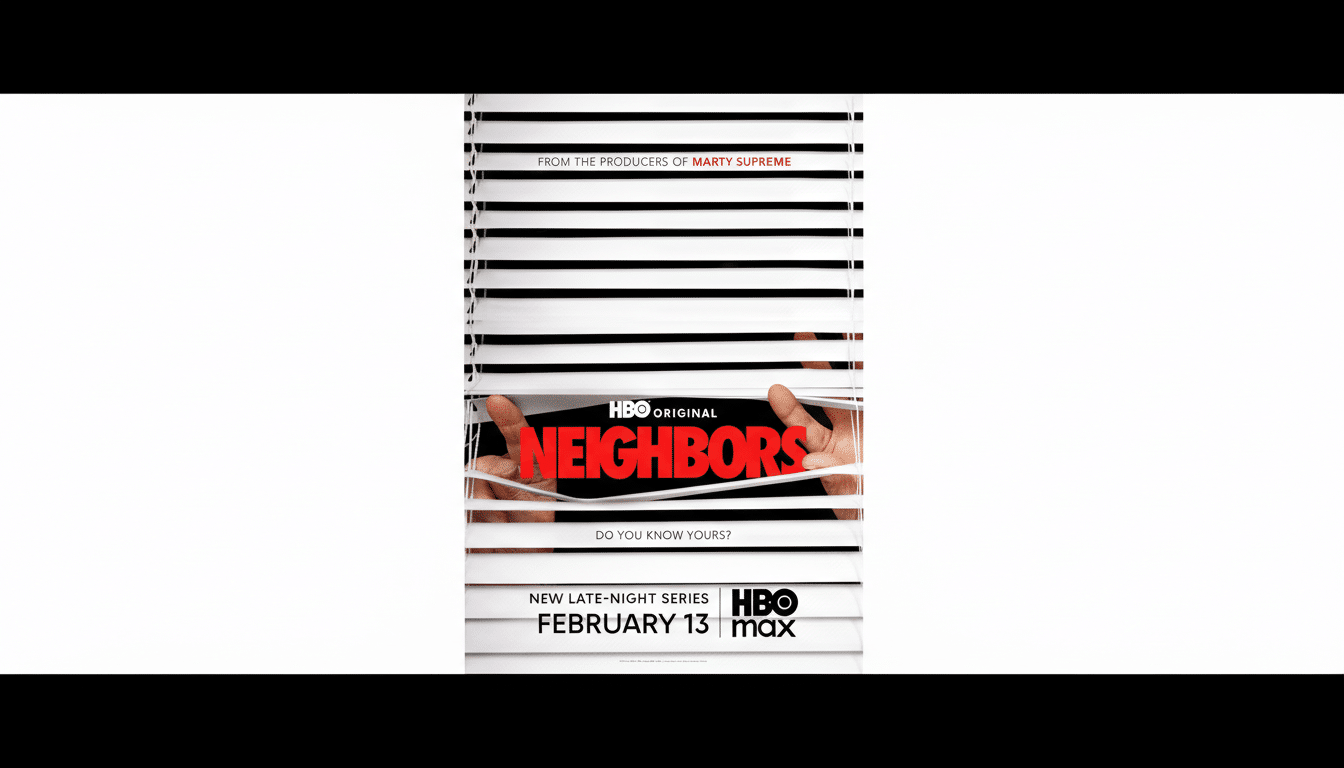
If you’ve ever scrolled r/AmItheAsshole and thought these train‑wreck dilemmas couldn’t possibly happen in real life, HBO’s new unscripted series Neighbors arrives to prove otherwise. Produced with A24, the six‑episode docuseries renders hyperlocal beefs with the urgency of a courtroom and the voyeuristic pull of a viral thread, turning HOA tiffs and driveway drama into a living, breathing AITA feed.
AITA Energy Without the Shield of Anonymity
Reddit’s AITA community has grown into a cultural clearinghouse for conflict, with more than 10 million members parsing who’s right, who’s wrong, and who’s simply insufferable. What keeps readers hooked isn’t just the verdict acronyms — it’s the reveals: the buried motive, the oblivious entitlement, the line someone didn’t know they crossed. Neighbors channels that same dopamine loop, minus the screen names.

Creators Harrison Fishman and Dylan Redford embed with real neighbors at war, often over seemingly benign triggers — mowing patterns, a new gate, a wall around a home — that mushroom into conspiracy theories, online pile‑ons, and unhinged escalation. The series cross‑cuts two feuds per episode, a structure that amplifies the frantic energy but wisely keeps the camera on the people at the center: the Halloween diehards treating yard decor like a blood sport; a self‑styled “First Amendment auditor” treating cul‑de‑sacs as case law; animal owners whose menageries overwhelm property lines; and the true‑believer preppers and Q‑adjacent posters convinced righteousness is on their side.
In one jaw‑dropping beat emblematic of the show’s tonal whiplash, a violent threat is followed by an invite to fire up the grill. That tension — menace one minute, magnolia‑scented hospitality the next — is exactly the moral seesaw AITA readers know well. Everyone’s filming everyone else, too, which turns everyday friction into fodder for broader judgment. Some of these skirmishes ricochet onto TikTok (which counts well over a billion users) or even land on televised arbitration like Judy Justice, collapsing the distance between backyard argument and global spectacle.
Why These Neighborhood Feuds Explode Online
Neighbors captures an American property mindset that treats the deed as a blank check. That individualist streak is hardly new, but social platforms make it performative and permanent. Pew Research Center has documented persistently low interpersonal trust and deep polarization — conditions that prime even small misunderstandings to metastasize when an audience is watching and an algorithm rewards outrage.
The series lands amid tightening neighborhood rulebooks, too. The Community Associations Institute estimates that roughly 74 million Americans — about 29% of the population — live in community associations where bylaws govern fences, façades, pets, and parking. Those frameworks are designed to reduce friction, yet they also create more points of enforcement and, by extension, more conflict when neighbors disagree on interpretation or power.
Ironically, mediation often becomes just another front line. Episodes of Neighbors typically culminate in sit‑downs that fizzle, a striking contrast with community mediation norms. The National Association for Community Mediation reports that facilitated dialogues regularly reach agreement rates above 70%, highlighting how entrenched identity and online validation can override compromise when cameras — and comment sections — are rolling.
The A24 Documentary Touch on Intimacy and Scale
Stylistically, Neighbors pairs A24’s eye for character with HBO’s doc pedigree, favoring intimate access over omniscient narration. That choice lets contradictions breathe: the polite yard tour that veers into delusion, the legal jargon deployed to justify a petty slight, the sudden theatricality once a phone is recording. Cross‑cutting between parallel feuds sometimes adds noise, but it also underscores a national mood — hundreds of micro‑sovereigns defending inches of turf like matters of state.
There’s a queasy ethics to the watch. Like AITA, the show asks us to weigh behavior while knowing we’re seeing curated slices and self‑produced evidence. The generative‑AI era has already blurred the line between authentic testimony and manufactured narrative, and Neighbors is savvy about that meta layer: it shows participants staging content even as they denounce the other side’s supposed lies.
Verdict Culture Meets Real-World Consequences
What makes Neighbors compelling — and unsettling — is how neatly it translates verdict culture into lived stakes. Digital judgments like YTA, NTA, or ESH feel tidy on a screen; in a cul‑de‑sac, they curdle into restraining orders, code citations, mounting legal bills, and years‑long stalemates. The show’s quiet thesis lands hard: when identity is fused to being right, no compromise feels safe.
In that light, Neighbors isn’t just AITA brought to life — it’s a portrait of a country where the comments never close, and where the impulse to win the thread can cost more than a patch of lawn.
