


Google Translate is making the move from utility to tutor that much clearer with an expansion of its Practice mode, which allows English speakers to learn German and Portuguese in-app now. Available in more countries, the feature is still technically labeled beta. This also extends English lessons to people who speak other native languages, which suggests a quicker rate of language-learning upgrades than many had anticipated.
Practice Mode Applies Beyond the First Pairs
Practice mode initially concentrated on a small group of pairings: Spanish or French for English speakers, and English for Spanish, French or Portuguese speakers. The most recent update alters that calculus. Now, English speakers can learn lessons in German and Portuguese, while English instruction is growing for native speakers of Bengali, German, Hindi, Italian, Dutch, Romanian, Swedish and Chinese.
Notably, some users note seeing these new options within the app even before official support material has fully reflected them.
That discrepancy is typical for rolling features, but it’s a reminder that the expansion is now shipping.
What the New Google Translate Lessons Are Like
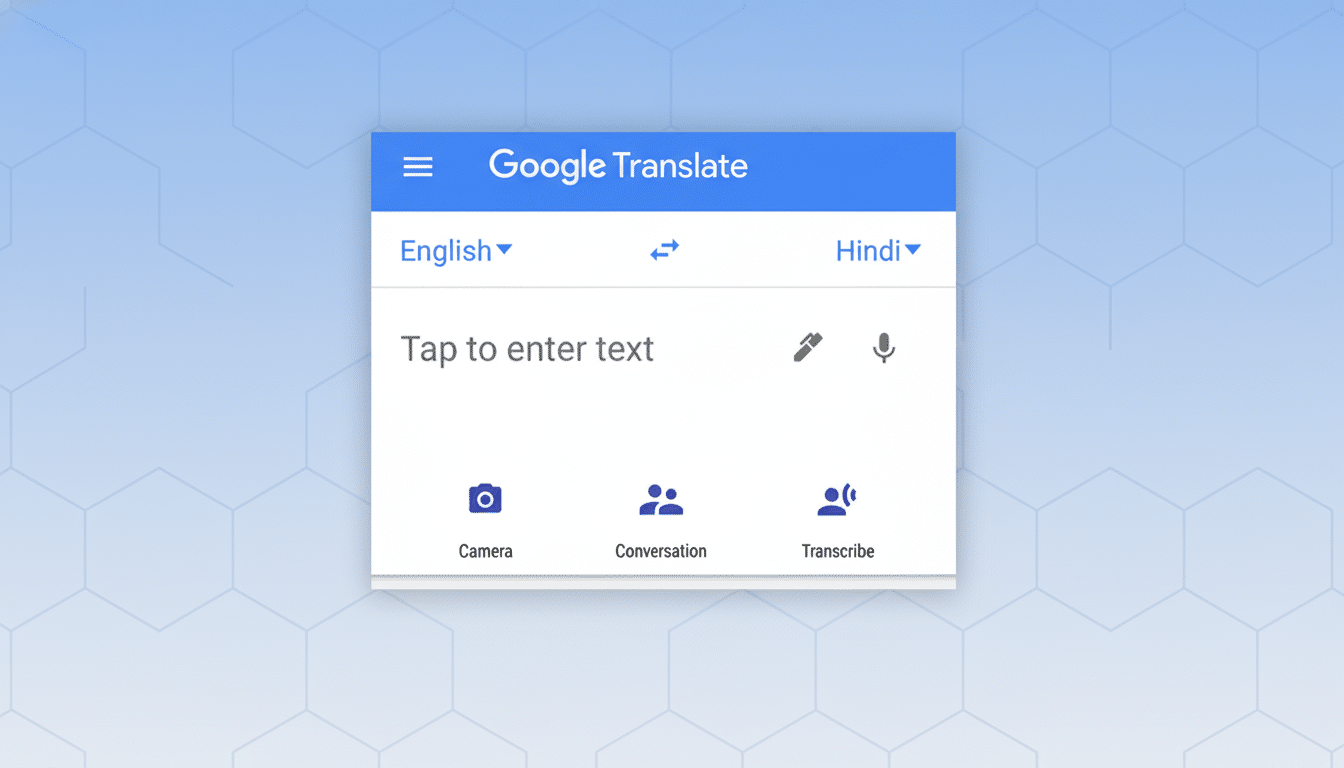
Practice mode coexists with classic features of Translate and embraces short, daily exercises. You can expect bite-size prompts, listening and speaking exercises completed with your phone’s microphone, and fast review loops to hammer in vocabulary and language structures. The flow is more like guided micro-lessons and videos than long-form coursework, which makes sense for the app’s on-the-go ethos.
An advantage is instant context. Learners can bounce from a drill to camera, voice or text translation on the fly if curiosity strikes, and go back and forth between structured practice. That combination of real-world translation and practice is somewhat unique among language apps, and could be particularly useful in travel or work situations where you need to learn a phrase on the spot and use it in the same session.
Why the English Expansion in Practice Mode Matters
Expanding English instruction to Bengali, Hindi, and Chinese speakers also is directed at some of the world’s largest language communities. The British Council estimates that approximately 1.5 billion people are learning English globally, so even a small increase in access can have an oversized effect. For students in multilingual countries, the opportunity to practice English within a piece of software they already use for translation reduces friction for daily study.
This update also suggests a longer-term plan. Translate now works in more than 240 languages since Google recently made improvements, but learning pairs had long been Anglo-centric. That the first new languages are German and Portuguese for English speakers feels welcome; the true watershed will be when Practice mode enables training between two non-English languages. That would be a solution to a long-standing English-centric bias in many educational digital tools.
How It Compares With Dedicated Language Learning Apps
The edge of Translate is ubiquity and utility. Loaded on many Android phones, the app hooks into system-level features and plays well with text, voice, and the camera. Practice mode piggybacks off that footprint to push users toward micro-learning — no extra subscription or sign-up required.
Specialist platforms such as Duolingo and Babbel still provide more in-depth curricula, placement tests, richer grammar explanations and long-term progress tracking. But Translate’s inlining is appealing if you’re a casual learner. And there’s a broader business case: As CSA Research has found, 76% of consumers prefer buying products from vendors with information in their own language, offering another example of how improved language access can reverberate into commerce and productivity.
What to Watch Next as Practice Mode Expands Globally
Now, key questions are about breadth and balance.
- Will it add more non-English language-learning pairs in Practice mode?
- Will it refine difficulty mapping aligned to CEFR levels?
- Will it create clearer progress analytics?
- How soon will it roll out lessons to languages that Translate already handles for standard translation?
But for now, the takeaway is simple: Translate isn’t just a phrasebook anymore. With German and Portuguese lessons now available for English speakers and a broader onramp for students learning English, the app is evolving toward an all-in-one system that splits the difference — instant translation when you need it, guided learning when you want it — in one location.
