


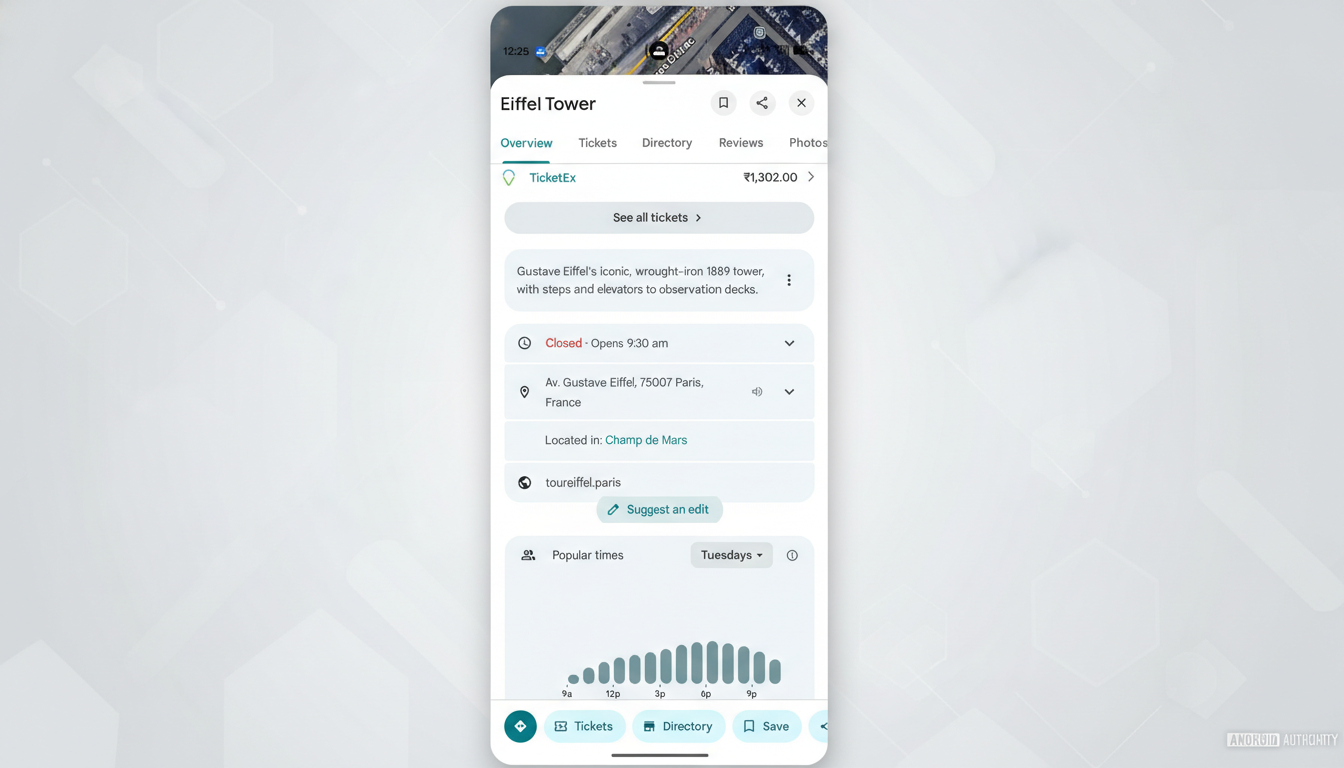
Google is testing a Gemini-powered revamp of the Suggest an edit flow in Google Maps, turning the familiar form into a conversational interface that accepts natural language. Early evidence in a recent Maps build points to a chatbot-style experience designed to capture richer, faster community contributions.
Edits still route to Google’s moderation systems before publication, but the front-end changes dramatically. In limited testing, requests take a few seconds to process, reflecting the added AI step. The feature is not broadly live yet and appears to be in development, likely headed for staged rollout and A/B testing.
What Changes With Gemini In Suggest An Edit
Instead of tapping through rigid fields, users can simply describe what needs fixing. For example: “This cafe moved to 123 Oak Street and now opens 8 a.m. to 6 p.m., closed Sundays,” or “Merge this duplicate with the Main Street listing.” Gemini parses the message, maps it to structured fields like address, hours, phone, and website, and can prompt follow-up questions if details are missing.
The interface still shows the place’s existing attributes for transparency, but the chat input makes it easier to submit multiple changes at once. Expect contextual nudges—such as asking for a photo to confirm new signage—or suggestions to clarify ambiguous edits like “is this a seasonal closure or permanent?”
Why It Matters For Google Maps Data Quality
Google Maps catalogs information on more than 200 million places, used by over a billion people worldwide. Community input underpins the freshness of that data. Google has previously said it processes tens of millions of user contributions every day across Maps and Search, ranging from new places to hours, attributes, and photos. Reducing friction in how people submit updates can directly lift data coverage and accuracy, especially for the long tail of venues.
Natural language input is well-suited for nuanced edits that don’t fit neat forms: temporary closures, seasonal hours, pop-ups, rebrands, or clarifications like “wheelchair-accessible entrance is on the alley” or “this trailhead parking now requires a permit.” A conversational flow can capture the nuance, then translate it into structured updates that downstream systems can verify.
Moderation Speed, Accuracy, and Abuse Risks
Behind the scenes, Google combines automated checks with human review. With Gemini in the loop, the system can pre-validate edits by cross-referencing the Knowledge Graph, historical hours patterns, recent reviews, Street View and imagery metadata, and phone or SMS verifications. That should help reduce obvious errors and route high-risk changes for deeper scrutiny.
Abuse remains a concern. Google reports blocking millions of fake business profiles and tens of millions of policy-violating reviews annually. A chat-driven flow introduces risks of overconfident or ambiguous submissions, so expect guardrails: explicit confirmations before high-impact edits (like moves or closures), requests for evidence, and clearer explanations when changes are rejected or adjusted.
What This Means For Local Guides And Businesses
For Local Guides and power contributors, Gemini could compress the time to submit complex edits and surface smarter prompts, such as consolidating multiple fixes into one message. The points and badges program remains separate, but less friction generally leads to more reliable contributions and better community coverage.
Businesses may see more timely corrections to hours, addresses, and categories—helpful for visibility and customer trust. Owners should keep their Business Profile verified, monitor suggested edits in their dashboard, and encourage photo evidence for major changes to speed approvals.
Rollout Outlook And Early Performance Indicators
References to the feature have been spotted in a recent Google Maps 26.05.x build, along with an unfinished user interface. Google typically gates such features with server-side flags, so availability will likely expand gradually by region and user cohort as the company tunes latency, prompts, and moderation thresholds.
Gemini already permeates Maps, from improved walking and cycling guidance to smarter summaries. Extending it to community edits would be a meaningful step, potentially accelerating how fast the map reflects real-world changes. For best results early on, contributors should write clear, specific messages—“Update hours to 8 a.m.–6 p.m., closed Sun; phone is 555-0134”—and attach a recent photo when possible.
