


Google’s argument for this next stage of AI is easy to understand but hard to stomach: The most helpful assistant is the one that knows you best.
That edge rests on a decade-plus of email, search, Maps, photos, shopping and Android signals that tens of millions of people produce every day. That’s an advantage few rivals can match — and it is prodding a conversation about where personalization ends and surveillance begins.
Why Personal Data Is Google’s Special Sauce for AI
AI thrives on context. Google wields services with huge scale — Search, which claims almost 90 percent of the world’s search market share according to StatCounter, Android on more than three billion active devices, Gmail with more than a billion users and YouTube with billions logging in each month. That scale provides its models with a chronic signal of your preferences, habits and intent that others do not.
“We see a responsibility and a need to ensure that the quality of information served up by Google’s algorithms is improving, not just being passed along,” Robby Stein, VP of Product for Google Search, told me in an interview last month where he helped explain the new personalization features.
In one way — obvious or costly depending on your privacy tolerance and appetite for convenience — this is how you turn advice-seeking queries into recommendations that are better because they’re specially made for you. At heart, that’s the bet behind some of Gemini’s increasingly numerous hooks into Gmail, Calendar, Drive and Maps — processing those fragments into a personalized model of “you.”
How Gemini Gets to Know Your World Across Your Apps
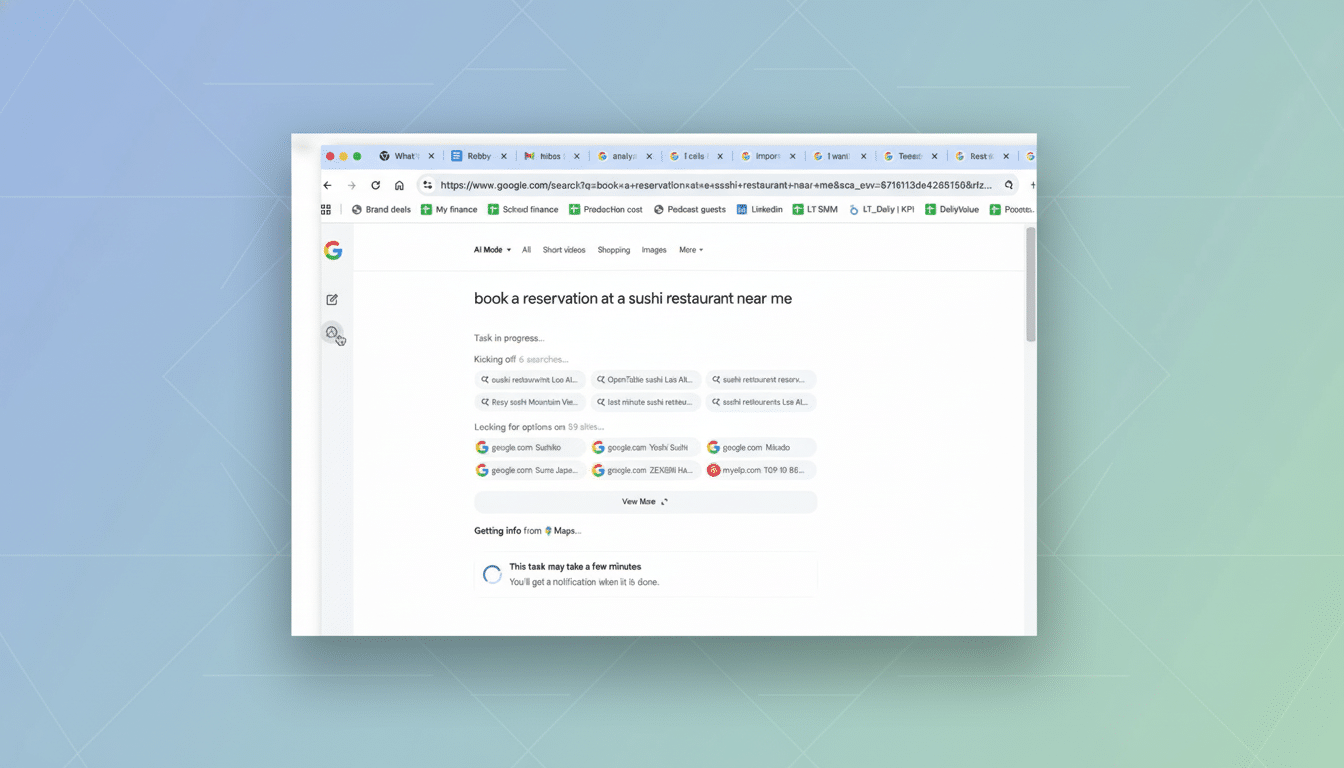
Consider how this plays out. Gemini is able to read your email receipts to figure out the kind of brands you’re actually buying; sync calendars to glean free windows; mine Docs for co-production project timelines; and cross-reference Maps history in order to propose realistic travel plans. Instead of “best hiking boots,” you’re looking at “waterproof boots similar to the pair you prefer, in your size, on sale at the store you like.” It’s frictionless — and highly sticky.
Google has also introduced Deep Research and other context-aware features that transition from a single query to an ongoing session, learning as you compare options over days. If you’ve been searching for a laptop with a particular GPU, Gemini can make sure the computer gods send you a little alert when the price comes down or stock reappears, extending search into an active and self-improving personalized follow-up.
The Privacy Trade-Offs and User Tools in Google’s AI
Personalization at this level raises some sharp privacy concerns. Majorities of Americans feel they have little power over how companies use their data, according to Pew Research Center, and concern about misuse has also lingered in poll after poll. The risk for Google is clear: if the helpfulness crosses an invisible line, users will start to see the assistant not as indispensable but as intrusive.
Google says users can control which of their apps feed Gemini through the Connected Apps settings and that some data may be reviewed by humans to improve systems. It says not to discuss anything sensitive. The company also highlights privacy technologies like on-device processing, federated learning and differential privacy in some cases. But the pragmatic reality is: Google’s going to make AI its default interface in all of its products, and opting out risks feeling like opting out of the web as we know it.
History is why trust will have to be earned, not assumed. Google agreed this year to a $391.5 million multistate settlement over location-tracking practices, and regulators are still scrutinizing data flows. The US Federal Trade Commission has intimated its expectations of data minimization; the EU’s GDPR and upcoming AI Act ratchet up accountability around sensitive data and automated decision-making. Those forces will determine how far Google can press its advantage.
Google’s Response: Transparency and Choice
In any case, Stein says Google will make it “really clear” when search replies are personalized — important for user trust and to comply with rules from regulators. You can also expect visible labels, finer-grained toggles and a more clear-cut separation between generic and personalized responses. The company will also likely increase notifications that mirror continued intent, such as price-drop alerts for items you looked up.
Consent is the larger design challenge. It isn’t good enough to bury the choices in settings. Studies from the International Association of Privacy Professionals demonstrate that transparent, contextual prompts increase comprehension and decrease opt-out rates. If Google can make consent feel continuous and intelligible — and not just a one-off checkbox — we can scale personalization without any fatigue.
Rivals Have Data Too, but Not at Google’s Scale or Depth
Competitors can generate powerful, but narrower, graphs. Apple also relies on-device intelligence, iCloud context and a robust privacy stance, while Microsoft uses the Microsoft 365 Graph and Windows activity. Amazon has an idea of what you browsed and bought. Meta has a treasure trove of social and interest data. Google’s advantage is the wide array and frequency of signals of intent across search, communications, navigation, photos and commerce — updated nearly in real time.
That diversity can lead to tangible impact. Customized results lead to less bounce and more task completion; specific nudges, meanwhile, can raise conversion rates and retention. And for a company whose core business is still ads and commerce, even tiny wins at enormous scale add up quickly.
What to Watch Next as Google Personalizes Its AI
There are three markers to watch to see if Google can turn knowledge into lasting AI advantage:
- Transparent defaults and genuinely easy controls.
- More local processing on devices so that sensitive context doesn’t need to be shipped back to the cloud.
- A consistent experience where users can see what profile their AI has generated about them and delete or edit it.
If Google gets this right, AI won’t simply respond to questions — it will be an embodied memory that helps you in everything you do. If it falters, the same memory becomes an albatross. In the race for AI, what Google knows about you is a trump card. Whether users take that trade-off depends on how respectfully — and how obviously — that knowledge is wielded.
