


A new leak suggests Samsung will be keeping a firm grip on the front camera for its next generation of Galaxy S flagships, as all models in the Galaxy S26 range are reported to carry over a 12MP selfie sensor complete with autofocus. That trajectory means we can expect Samsung to rely on computational photography to make an impact, rather than a revolution in hardware.
What the latest Galaxy S26 selfie camera leak says
Veteran reporter Roland Quandt, who has a good track record of pre-launch scoops, wrote on Bluesky that the Galaxy S26 series will not move beyond a 12MP front camera at all, and every phone in the range will get autofocus.
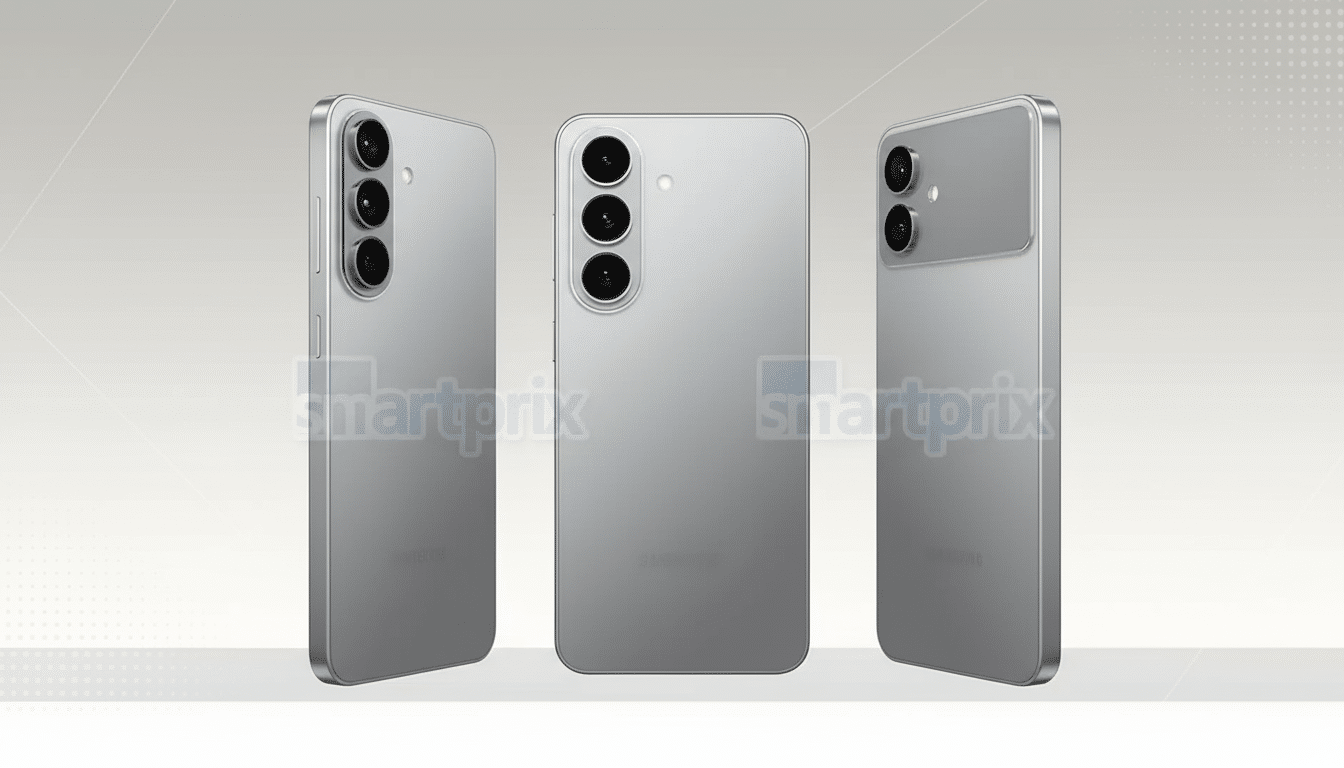
If true, the base model, bigger version, and Ultra will all have that resolution in a move that would mirror Samsung’s strategy since the Galaxy S22 range.
This continuity gels with more recent Samsung philosophy, whereby the company has personally preferred nuance and software over headline-chasing megapixel jumps on the selfie side of things.
Previous flagships have employed a 12MP f/2.2 module, and the continuity has helped keep punch-holes compact, tuning predictable, and video performance solid.
Why Samsung may stick with a 12MP selfie camera
Sticking with 12MP means Samsung can strike a solid balance: quick focus, decent dynamic range, and reasonable file sizes for sharing on social media or messaging (without the need for the space-saving option). It also allows the company to pour resources into image processing — which is often where modern phones make their biggest visible strides — rather than reinventing optics or cutouts.
From a supply-chain perspective, sticking with a proven sensor family reduces risk and supports consistent yields. Samsung has done this before, pairing repeat hardware with new HDR pipelines, face detection models, and enhanced skin-tone rendering. Counterpoint Research and other industry trackers have repeatedly noted that camera quality perception is now driven as much by processing as sensor swaps, especially on front cameras.
What to expect in image quality
If the resolution holds at 12MP, expect upgrades to surface via software. Look for cleaner low-light selfies through multiframe noise reduction, more consistent exposure on faces via subject-priority HDR, and finer texture rendering that avoids plastic-looking skin. Improved background separation in portrait mode — driven by better depth estimation and hair-edge handling — would be a logical focus.
Video is another likely target. Recent Galaxy front cameras already support high-resolution capture, and next-gen processing could improve stabilization, rolling-shutter control, and face tracking for vlogging and video calls. On-device AI tools — such as automatic reframing, gaze correction, and subtle relighting — are also natural extensions that don’t require a sensor overhaul.
How it stacks up against rivals
Competition on the selfie front has intensified. Several Chinese flagships now ship with 32MP or even 50MP front cameras — think of devices from Vivo and Xiaomi — often paired with wider apertures to brighten indoor shots. Apple, on the other hand, has reportedly shifted to a square front sensor on its latest iPhone generation, enabling landscape-friendly selfies while holding the phone vertically.
Resolution alone isn’t destiny, though. Testing bodies like DXOMARK reward accurate skin tones, stable exposure, and low noise over sheer raw megapixels. Samsung’s results-first approach could still result in a year-over-year improvement, even if it might not always be obvious to the naked eye without some side-by-side comparisons — assuming whatever tone mapping the company is doing gets tighter and restrained highlights help prevent excessive texture smoothing.
Potential hardware tweaks despite 12MP resolution
Even if the headline number is still 12MP, there’s room to make quiet hardware improvements: a slightly larger sensor, an ever-so-slightly wider aperture for low light, or lens coatings that are incrementally better at cutting down flare.
Autofocus behavior could also be adjusted to achieve faster subject lock at arm’s length and more consistent group selfies.
Other leaks in the camera stack, meanwhile, have pointed to the Galaxy S26 Ultra potentially mimicking its predecessor for much of its rear setup — and bringing wider apertures on primary and telephoto shooters. The standard and Pro models have been said to remain ambitious, reinforcing the notion that 2026’s flagship formula is one of evolution, not revolution.
What this means for buyers considering the S26
If you were looking for an increase in the selfie game, manage those expectations. The smarter bet is on sophisticated processing that helps portraits and video look more natural and less noisy — including in a dim room with mixed lighting.
Watch Samsung’s camera app features in early software previews — what appears there should tell you more about the selfie experience on the S26 than a megapixel number by itself would.
