


Ford is forming a partnership with Renault to accelerate efforts to introduce a new wave of low-cost electric cars for the European market — part of an internal crackdown on underperforming divisions fueled in part by fears that aggressive new competitors and a deflationary price war have put the automaker at risk. The planned rollout involves two Ford-badged EVs based on Renault’s Ampere platform, which will be produced in northern France and designed by Ford with an emphasis on customer experience. The two groups are also looking at collaboration on light commercial vehicles.
The tie-in gives Ford a more rapid and cheaper path to competitive European EVs, as well as providing Renault with greater scale for Ampere, its dedicated EV and software business. It is not often that two entrenched legacies box together on the basics: cost, speed and the capacity to compete in sections of the market where Chinese brands have moved the goalposts on price.
- Why This Alliance Is Forming Now in Europe’s EV Market
- What the Ford–Renault Electric Vehicle Deal Covers
- The Cost and Technology Playbook Behind the Tie-Up
- Focus on Light Electric Commercial Vehicles and Fleets
- Risks and the Competitive Clock for Both Automakers
- What to Watch Next as Ford and Renault Plan EVs
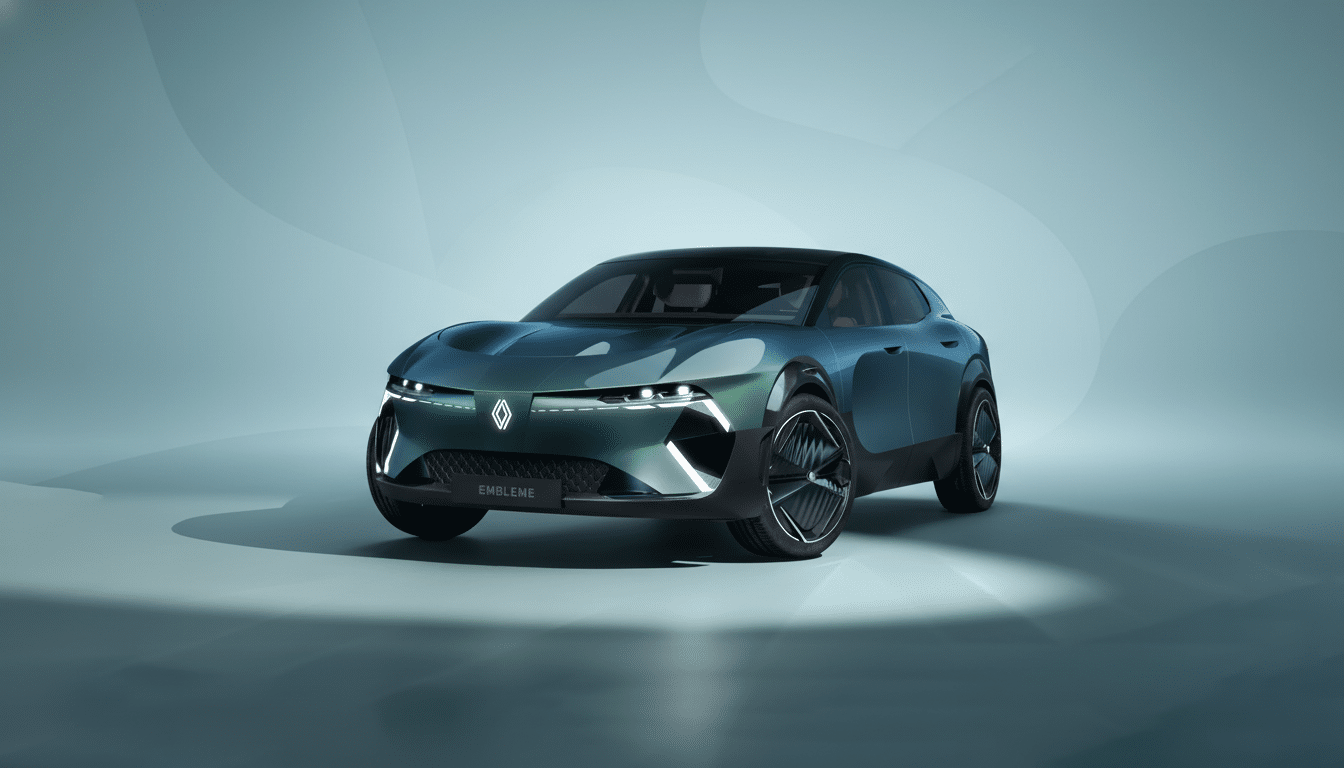
Why This Alliance Is Forming Now in Europe’s EV Market
Europe is the most battle-scarred EV battleground for Western automakers. “In 2023, BEVs represented some 15 per cent of the EU new car market (source: ACEA). New for old does not apply here anymore. The market is now split: premium sells, but growth goes to value-led segments where MG (SAIC) and BYD are gaining strong traction.” Chinese brands could, if incumbents don’t respond on price and availability, capture around 20 per cent EV share in Europe within a few years, according to Transport & Environment.
Ford has acutely felt that pressure. Its European strategy has shifted with a juggle between investments in Cologne for next-gen EVs and halting losses without getting undercut by rivals. A tie-up with Renault provides a ready-made small-to-mid electric vehicle toolkit and local supply chain on the cheapest possible basis — without developing an all-new platform. For Renault, the deal raises Ampere’s volumes at a time when scale is the most critical lever to lower sticker prices for EVs.
What the Ford–Renault Electric Vehicle Deal Covers
The two partners are planning to create two affordable Ford-branded EVs for sale in Europe, aimed at being introduced later this decade. Ford will have control over exterior and interior design, user experience and brand calibration. The cars will be manufactured by Renault at its ElectriCity industrial complex in northern France, using an existing staff and logistics to reduce manufacturing costs of the new models and cut start-up times.
Beneath the skin, both will make use of Ampere’s architecture; this is the scaffold on which the new Renault 5 E-Tech and imminent Renault 4 electric are to be based. That translates to a small footprint, over-the-air updates and a battery system engineered for various chemistries and suppliers. The positioning is obvious: take on cut-price value EVs like the MG4 and BYD Dolphin, segments where transaction price and running costs are king.
The Cost and Technology Playbook Behind the Tie-Up
For EVs, it’s the product of cost. Global battery pack prices were estimated by BloombergNEF to have averaged $139/kWh in 2023 after several years of declines. Automakers are also cutting costs with LFP chemistry, simplified vehicle electrical architectures and fewer bespoke parts to hit mass-market price points. The idea behind Ampere’s modular approach was to capitalize on these levers.
Another point of attack is Renault’s northern France ecosystem. The ElectriCity ecosystem includes body assembly and e-powertrain manufacturing, as well as battery partnerships — Envision AESC for high-volume packs and Verkor for higher-performance cells, which in turn reduce logistics costs and inventory risk. For Ford, harnessing that ecosystem should allow the company to compress the bill of materials and accelerate time to market relative to starting from scratch with a specifically European small-car EV platform.
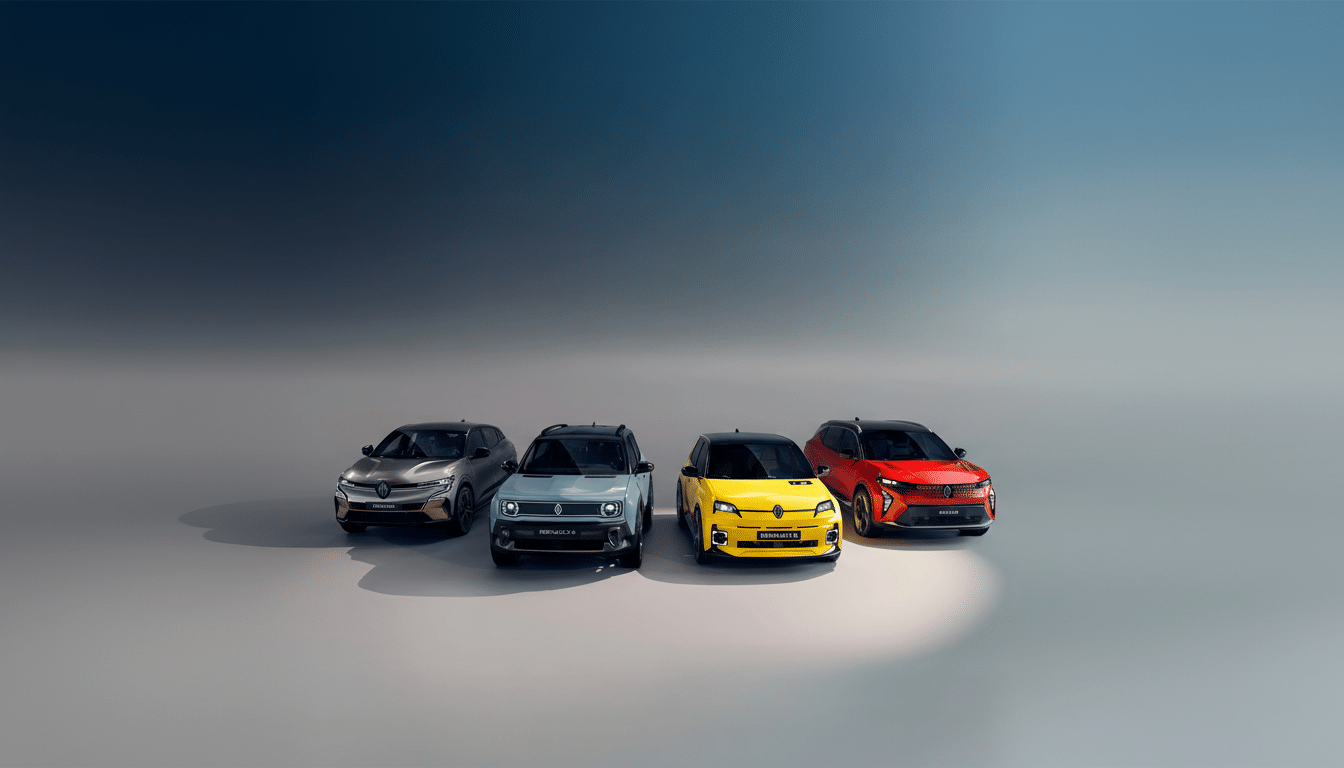
Software is just as important. Ampere’s stack also easily allows for the development of updates and implementations of features, which should act to prolong the life and revenue potential of lower-margin vehicles. Look for Ford to skin the interface, and handle driver-assist calibration and connected services while sharing underlying compute and middleware to keep complexity low.
Focus on Light Electric Commercial Vehicles and Fleets
And beyond passenger cars, both companies see an opening in electric vans. Ford Pro is Europe’s commercial segment leader with Transit, and Renault relies on its Kangoo and Master models to reinforce its position among urban fleets. An exploration of a common shared toolkit for eLCVs — comparable batteries or motors, or underbody modules — could deliver significant scale benefits and quicker homologation across EU markets. For fleet buyers tracking total cost of ownership, reducing outlay by a few thousand euros at purchase and increasing uptime through shared service networks can push the scales toward electric.
Risks and the Competitive Clock for Both Automakers
The window is not unlimited. Trade policy for China-made EVs in Europe is still unsettled, with tariffs under consideration; changes might reshape price dynamics once more. Consumer demand is also uneven across nations, depending on incentives and charging access. And alliances are difficult beasts: Enmeshing software road maps, supplier contracts and quality standards across companies takes brutal program management.
Ford had already leaned on Volkswagen’s MEB for the Explorer EV to hasten its entry into Europe; this step further indicates it wants even leaner cost structures for smaller, higher-volume segments. The bet for Renault is that Ampere’s scale — bolstered by a global partner — will bend its cost curve fast enough to compete with MG and BYD without eroding margins.
What to Watch Next as Ford and Renault Plan EVs
Highlights will include supplier nominations for batteries and power electronics as well as factory retooling schedules at ElectriCity — and the first design previews from Ford that indicate where these models fit versus vehicles like the Explorer EV and Puma.
Also keep an eye out for any news on a joint light commercial vehicle program, if one’s in the works, and for signs of LFP adoption that could drive entry prices down.
The subtext of the partnership is unambiguous: In order to win in Europe’s EV middle market, competitors need to stop competing through bespoke complexity and start competing through scale. Ford and Renault are gambling that by joining forces they can get there faster.
