


Fitbit’s co-founders, James Park and Eric Friedman, are back with a new venture called Luffu, and its first product is a family health app now opening a limited beta. The pitch is straightforward but ambitious: one intelligent hub that organizes a household’s health information, surfaces timely insights, and makes it easier to coordinate care across the people who actually share responsibilities—parents, kids, and caregivers.
After building one of the most recognizable names in wearables, the duo is targeting a persistent pain point in consumer health: information is scattered across devices, portals, and paper. Luffu’s promise is to collect what matters, keep it current, and turn raw data into guidance you can act on.
- What Luffu Promises for Families Managing Health Data
- How the App Works to Organize Family Health Info
- Why This Move Matters for Caregivers and Families
- Competition and Differentiation in Family Health Apps
- Privacy and Trust Questions for a Health Data Hub
- Beta Access and What’s Next for Luffu’s Family App

What Luffu Promises for Families Managing Health Data
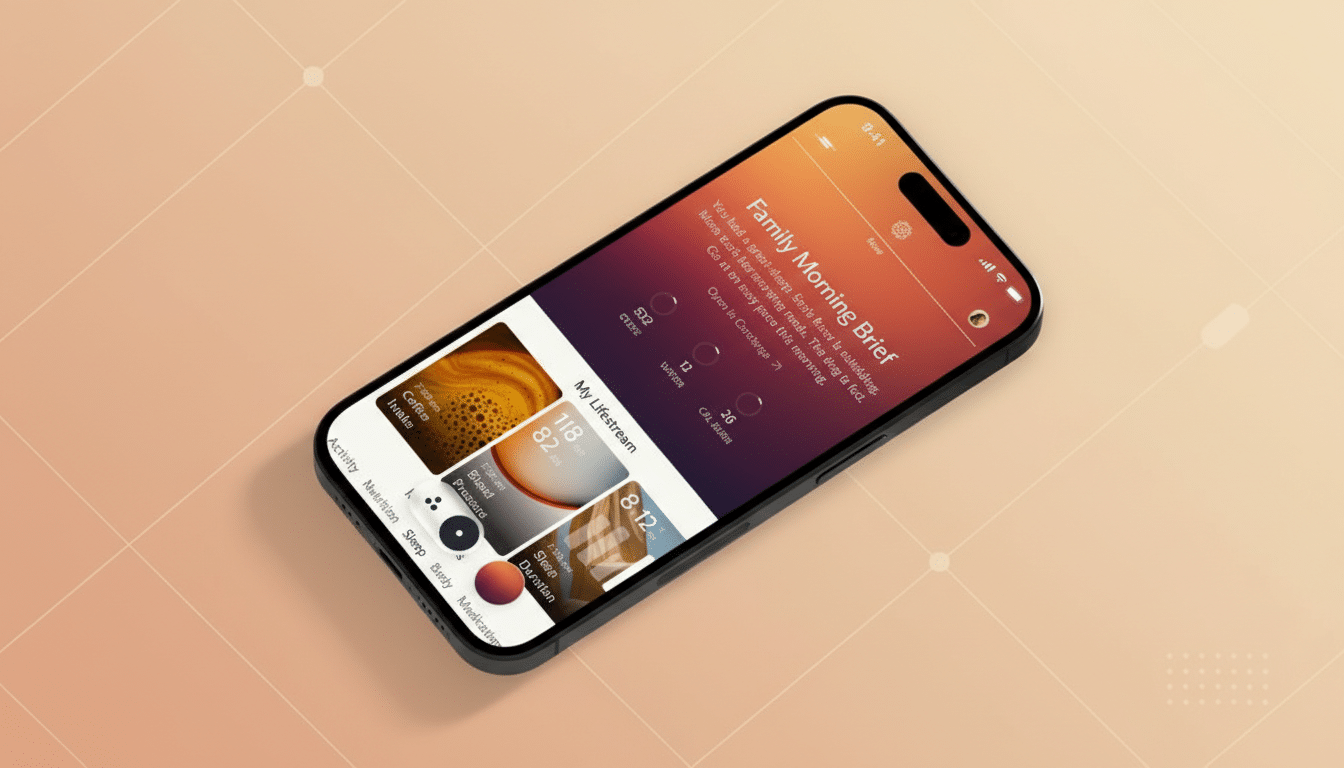
The app is designed to aggregate a family’s health and medical details—from connected devices and popular wellness apps to items shared by voice, text, or photos—and keep everything organized in one place. Think vitals, medications, diet notes, symptoms, lab results, and doctor visits, all living in a unified timeline instead of six different logins and a kitchen drawer full of forms.
Luffu says it will use AI to monitor patterns and push useful alerts, such as flagging abnormal trends or nudging when a task might be missed. It also supports natural-language queries for specific people in the family. In practice, that could look like, “Did Alex take their asthma inhaler today?” or “How have mom’s blood pressure readings changed this week?”
Crucially, users can share selected information with trusted individuals—siblings, babysitters, or a long-distance relative—so coordination does not depend on one person being the default historian for the family’s health.
How the App Works to Organize Family Health Info
Luffu’s value hinges on ingestion and context. The company says the app quietly syncs from connected devices and third-party apps in the background, while also letting families add snippets via everyday inputs—snapping a photo of a discharge summary, dictating a symptom note, or forwarding a lab PDF. The software then normalizes that data so the app can compare like with like over time.
Pattern detection is meant to reduce the cognitive load: the system watches for changes, prompts follow-up when needed, and summarizes trends in simple language. While many health apps log numbers, few convert a cross-device mess into a shared understanding among multiple people responsible for care.
Why This Move Matters for Caregivers and Families
For all the progress in digital health, families still juggle data across portals and products. The Office of the National Coordinator for Health IT reported that a majority of Americans have accessed a patient portal, yet most people still manage multiple sources, each with its own context and login. Meanwhile, millions of households are acting as care teams; research from AARP estimates that more than 50 million Americans provide unpaid care to an adult or child each year.
Park and Friedman helped mainstream everyday health tracking with Fitbit. Their experience in sensors, habit formation, and user-friendly design gives Luffu a credible angle on solving the family coordination problem—particularly the hard parts around making data interoperable, actionable, and shareable without turning the user into a full-time administrator.
Competition and Differentiation in Family Health Apps
The family health space is crowded but fragmented. Apple’s Health app supports health sharing, Google’s Health Connect is improving data exchange on Android, and provider portals like MyChart are essential for clinical records. Yet many tools are either device-centric or clinic-centric. Few deliver a household-wide record that blends wearables, wellness, and real-world notes into one view designed for day-to-day coordination.
Past attempts hint at the opportunity. Apps such as CareZone popularized medication lists and caregiver sharing, while device ecosystems from Withings and others simplified capture of vitals at home. Luffu’s differentiation will likely rest on two things: how seamlessly it unifies disparate sources and how reliably its AI surfaces insights that people actually use.
Privacy and Trust Questions for a Health Data Hub
Any consumer health platform lives or dies on trust. The key questions Luffu will need to answer are familiar: who can see what, how consent works across family members, how data is encrypted at rest and in transit, and whether users can export or delete their information. Independent security audits and transparent model behavior—what data fuels which insights—will be essential for credibility, especially if Luffu expands into hardware.
The stakes are high. According to federal health spending tallies, Americans spend trillions annually on healthcare, and much of the burden of organization falls on families. A tool that preserves privacy while cutting friction could quickly become a daily utility rather than a novelty.
Beta Access and What’s Next for Luffu’s Family App
Luffu is running a limited public beta, with a waitlist open for early users. The company says it plans to expand beyond software into complementary hardware, suggesting a longer-term playbook that spans both ambient capture and active tracking. For now, the beta will indicate whether Luffu’s core loop—collect, contextualize, and coordinate—resonates with real families.
If you manage care for more than one person—or you’re the unofficial data wrangler in your household—this is the kind of app to watch. The question is not whether families need better tools; it’s whether Luffu can make the complex feel simple, and sustain that promise as it scales.
