


It’s official at last: Samsung is going to release a Galaxy Z TriFold, but if you’re champing at the bit and ready to throw your money at it, you may want to hit the pause button on that. If you crave the foldable that already gets the fundamentals right, the Galaxy Z Fold 7 is the safer bet now.
Why a First‑Gen TriFold Is a Gamble for Early Buyers
It's a fact: New form factors almost always get the wobbles on launch. Samsung’s very own first Galaxy Fold is perhaps the best textbook case of this, with launches delayed and displays facing failures that caused a rework. The TriFold adds one more hinge and another crease in the display—two more complicated mechanical and material stress points that just need time out in the wild to validate.
- Why a First‑Gen TriFold Is a Gamble for Early Buyers
- Hardware That’s Already Mature on Galaxy Z Fold 7
- Battery and Display Math That Matters for Daily Use
- Durability and Repair Reality for Foldables Today
- Price and Value Equation for TriFold Versus Fold 7
- The Smart Buy for Now: Why Fold 7 Makes More Sense
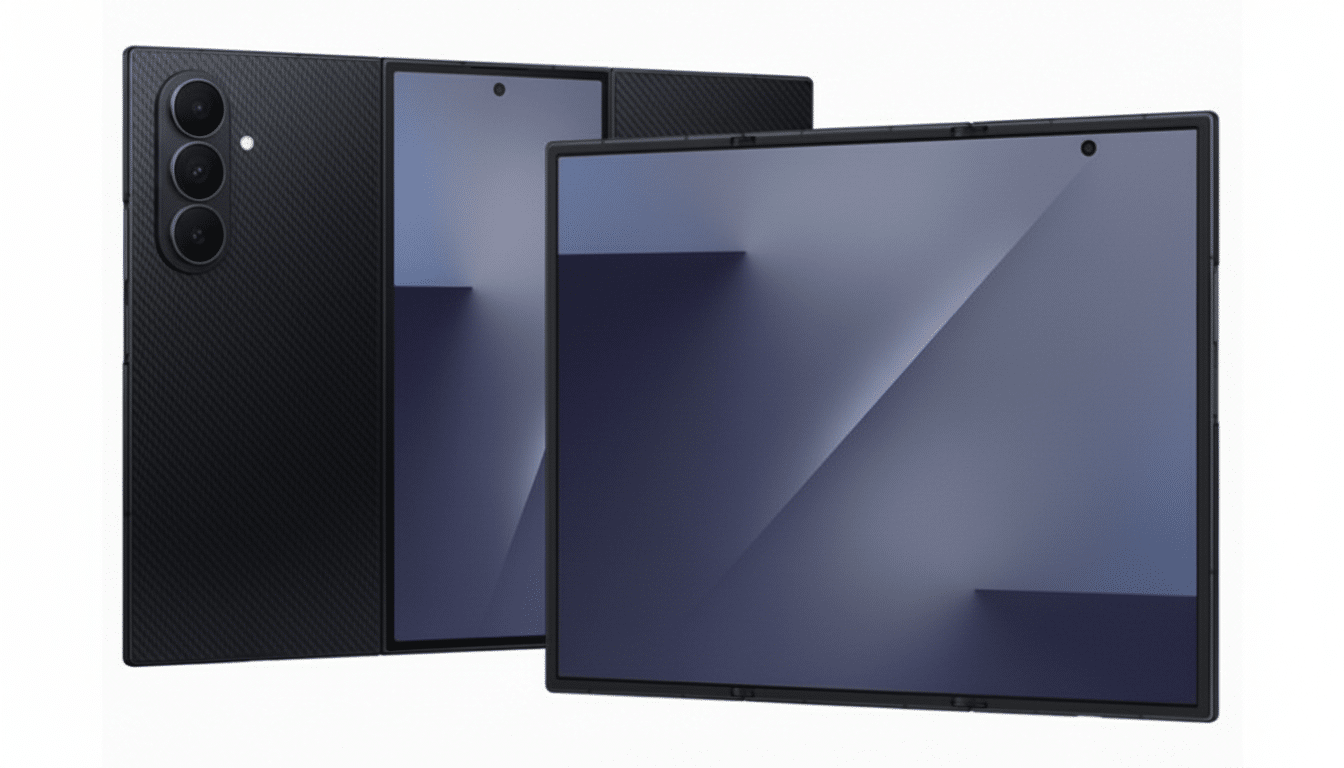
More moving parts also equal more areas for dust and debris to enter. If the tolerances are tight, well, real pockets and backpacks don’t care. Early hardware doesn't bring its quirks out to play in a well‑controlled demo—they tend to emerge after thousands of open–close cycles, or as devices are used in varied conditions.
Hardware That’s Already Mature on Galaxy Z Fold 7
The Galaxy Z Fold 7 is the result of seven generations of iteration. Samsung has gradually cut back thickness and weight, improved hinge feel, and toughened the main display cover while minimizing crease visibility. You feel those refinements every time you open the machine.
It also comes with a 200MP main camera and the Snapdragon 8 Elite for Galaxy, the identical core silicon tier that Samsung is using for the TriFold. One UI’s most important features—big‑screen tricks like taskbar multitasking, app continuity, and windowing—are already quite polished on the Fold. Those software behaviors again have to be rethought for a three‑panel layout, and that kind of integration takes time.
Battery and Display Math That Matters for Daily Use
On paper, the TriFold’s 5,600mAh pack should be a win against the Fold 7’s 4,400mAh cell. Realistically, the power drain of an OLED is mostly correlated with screen surface area and brightness, and the TriFold’s internal canvas is larger and more complex to drive. Add more display controllers and hinge sensors, and the efficiency hit gets even larger.
The Snapdragon 8 Elite for Galaxy is no slouch, but it’s not quite the latest generation, and that thermal headroom shrinks as we become ever more fastidious about slimming chassis parts. Until independent testing measures screen‑on time across real workloads, the Fold 7 is the safer endurance play.
Durability and Repair Reality for Foldables Today
Up‑and‑down folding remains a sore spot for fluid resistance, as you can’t fight physics on that account: The mechanisms themselves need space to work, and room exists for water and other materials to seep in around the bits that do touch.
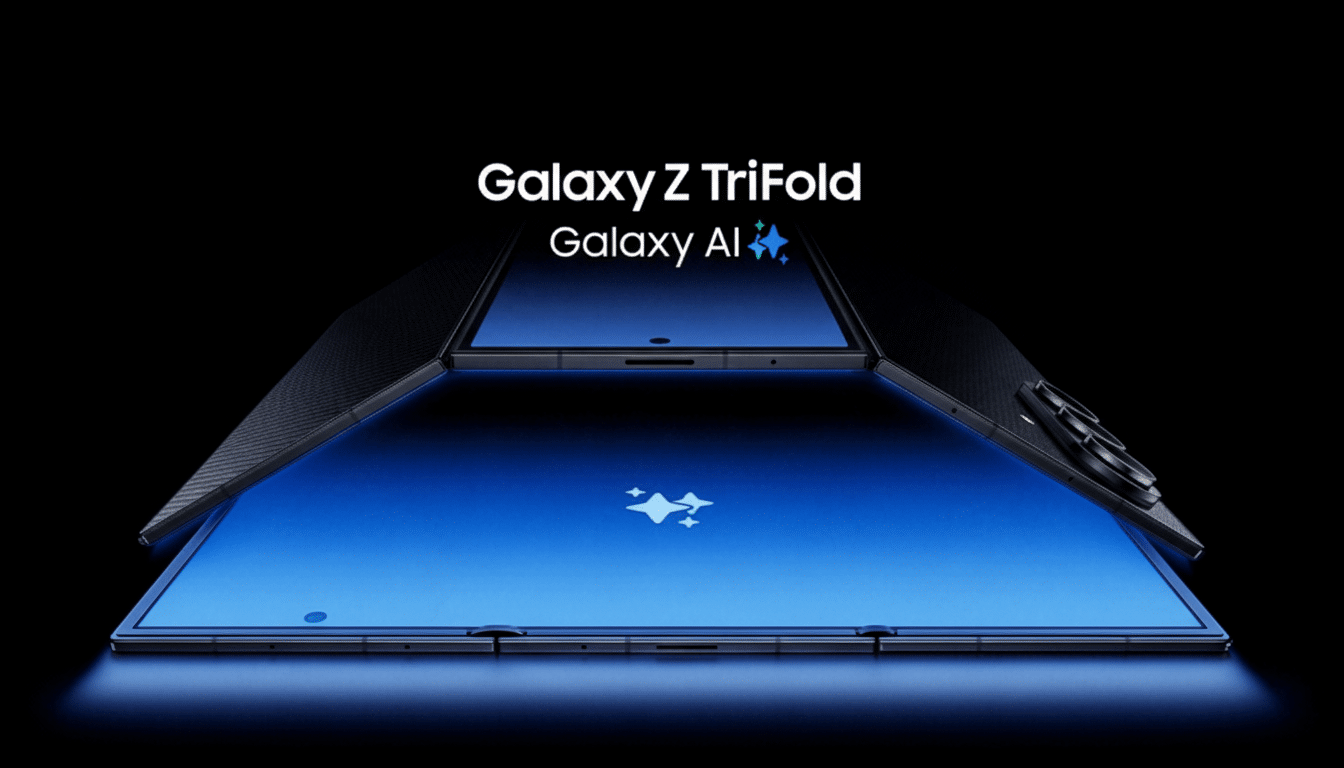
Samsung’s newest foldables are IP48: solid, but not at that IP68 rating many traditional slabs—and even the Pixel 10 Pro Fold—can claim.
According to the IEC, that extra hinge on the TriFold is an additional point of ingress, and each crease adds a potential stress concentration.
For its TriFold buyers, Samsung is providing a one‑time 50% repair discount in case things go south—which, in addition to being a nice perk, is also almost telling. Inner display assemblies for book‑style foldables currently run several hundred dollars to replace in the US, according to carrier and independent repair estimates. It won’t be any cheaper with a bigger, dual‑folding panel.
Price and Value Equation for TriFold Versus Fold 7
The Galaxy Z Fold 7 begins at around $1,999, and a larger, more intricate TriFold would almost certainly have base prices higher than that—maybe upward of $2,500. That’s a high‑dollar buy‑in for a first‑generation concept.
Context matters: industry analysts IDC and Display Supply Chain Consultants have both attributed about 2% of global smartphone shipments to foldables, which are growing fast. Early adopters pay the “tax” while platforms mature. The Fold 7 lets you have the benefits of a tablet‑class screen in your pocket without the premium price for unproven mechanisms.
The Smart Buy for Now: Why Fold 7 Makes More Sense
For a foldable that gives you what you need today, the Galaxy Z Fold 7 is the sensible pick: thinner and lighter than previous generations, powerful enough for desktop‑style multitasking, and supported by Samsung’s extended software support window and Galaxy AI features. It is a gadget with known strengths and manageable trade‑offs.
The TriFold could become the bridge between a full tablet and a phone. Let it get there first. Wait out the first wave, observe how durability and battery life fare in the field, and then reconsider when the design gets a second pass. In the meantime, the foldable that currently rocks is also the one you can purchase with confidence: the Galaxy Z Fold 7.
